


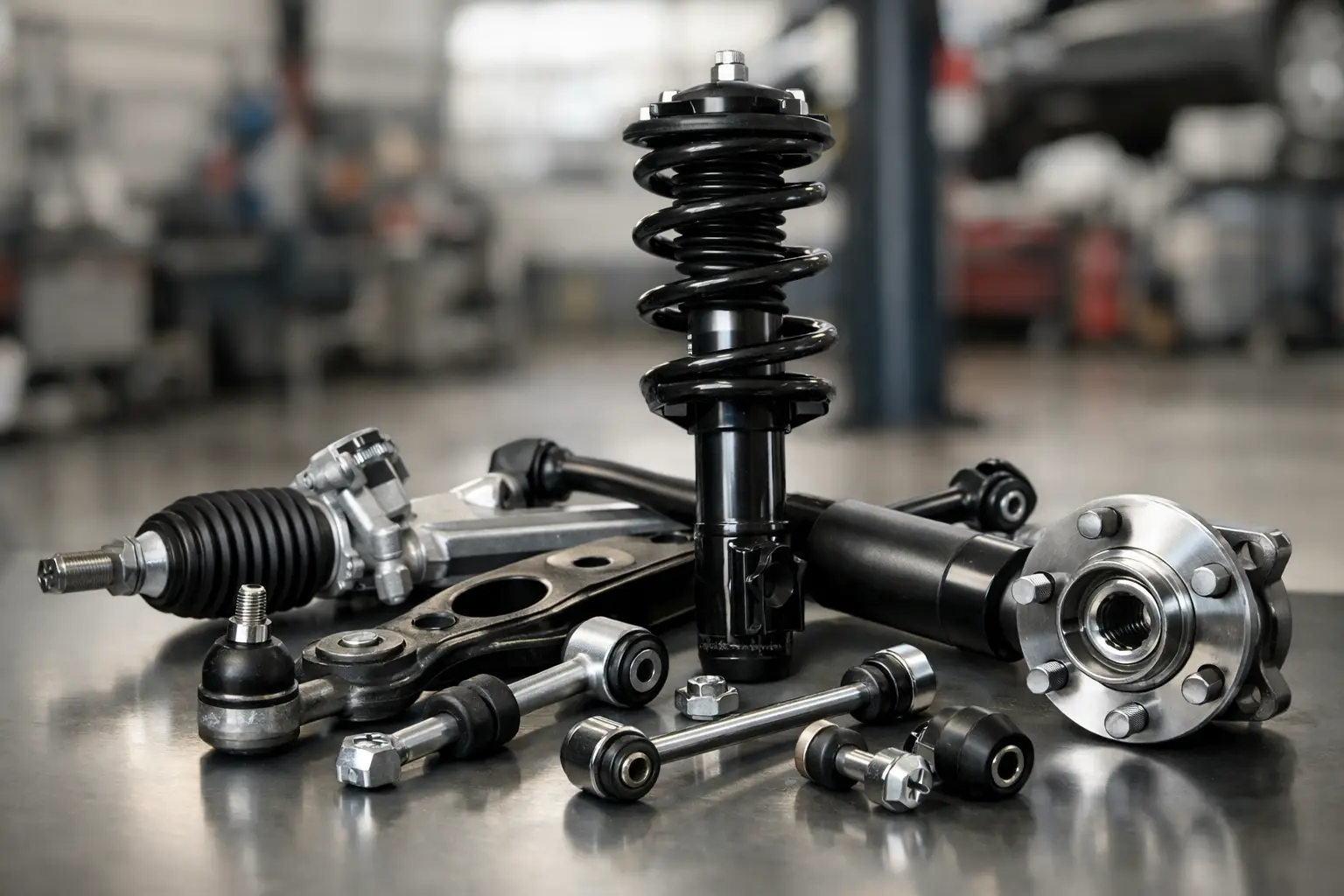
What Are Steering and Suspension Components?
A car that pulls to one side, feels loose over bumps, or produces a knocking sound during turns is usually telling you something early. In many cases, the issue comes down to understanding what are steering and suspension components, what each part does, and how wear in one area can quickly affect ride comfort, handling, and safety.
For workshops, this matters because accurate diagnosis saves time and reduces repeat jobs. For retailers and parts buyers, it matters because these are fast-moving categories where fitment, durability, and consistent quality make a real difference. For everyday drivers, the result is simpler - better control, better comfort, and more confidence on the road.
Steering and suspension components are the parts that help a vehicle change direction, stay stable, absorb road shock, and keep the tires in proper contact with the road surface. They work as a system, not as separate groups of parts. That is why a worn suspension part can affect steering feel, and a worn steering part can create uneven tire wear or poor road holding.
The steering side is responsible for translating driver input at the steering wheel into wheel movement. The suspension side supports vehicle weight, manages body movement, and cushions the impact from potholes, speed bumps, and uneven roads. When both systems are working properly, the car tracks straight, corners predictably, and rides with control instead of excess bounce or harshness.
At the center of the steering system is the steering rack or steering gear. This part converts the turning motion of the steering wheel into side-to-side movement that directs the front wheels. In many passenger vehicles, the rack works together with inner rack ends and outer tie rod ends to transfer movement precisely to the steering knuckle.
Tie rod ends are small parts with a major job. They connect the steering system to the wheels and allow controlled movement while the suspension travels up and down. When tie rod ends wear, drivers may notice loose steering, vibration, abnormal tire wear, or a vehicle that does not respond cleanly during lane changes.
Rack ends, also called inner tie rods in some applications, sit between the steering rack and the tie rod ends. If these become worn, steering play often increases. Mechanics know that even a small amount of looseness here can affect alignment feel and customer confidence after a repair.
Some vehicles also use additional steering-related joints and linkages depending on their design. The exact setup varies by model, which is why accurate catalog matching and fitment matter. A part that looks similar is not always correct in dimensions, thread pitch, or mounting geometry.
This is where many vehicle owners get confused. Steering points the wheels, but suspension controls how the wheels stay planted and stable while the car is moving. The two systems are constantly interacting.
Take a ball joint as an example. It is usually considered part of the suspension, but it also supports steering movement by allowing the steering knuckle to pivot. If the ball joint develops excessive play, steering precision suffers. The same goes for control arm bushings. They are suspension parts, but when worn, they can cause unstable braking, wandering, and an inconsistent steering response.
In practical terms, this means a workshop should never inspect one system in isolation. If a customer complains about poor handling, the root cause could be in the steering parts, the suspension parts, or both.
The suspension system includes several core parts that manage stability, comfort, and wheel control. Control arms connect the vehicle chassis to the wheel assembly and guide wheel movement through suspension travel. These arms often contain bushings that absorb vibration while allowing controlled motion.
Ball joints act as pivot points between the control arm and steering knuckle. They must be strong enough to carry load and flexible enough to allow movement. Once they wear out, clunking sounds, poor alignment, and unstable handling can follow.
Shock absorbers and struts control spring movement. Without them, the car would continue bouncing after every bump. A worn shock absorber does not just make the ride uncomfortable. It can also increase braking distance and reduce tire contact during cornering or on rough roads.
Strut mounts sit at the top of the strut assembly and help isolate noise and vibration while supporting steering rotation in many front suspension designs. When strut mounts fail, drivers may hear knocking sounds or feel stiffness and roughness during steering.
Stabilizer links, also called sway bar links, connect the stabilizer bar to the suspension. Their job is to reduce body roll during cornering. They are relatively small parts, but when they wear, they often create noise over uneven roads and reduce cornering stability.
Wheel hubs and hub bearings are also closely tied to suspension and steering performance. They allow smooth wheel rotation while supporting vehicle load. If a bearing wears, the driver may hear humming or feel vibration, and if ignored, the problem can become serious.
No steering or suspension component lasts forever. These parts operate under continuous load while dealing with road impact, heat, water, dust, and daily stop-and-go driving. In markets with mixed road conditions, frequent potholes, speed humps, and heavy urban traffic can shorten service life.
Driving style also matters. Hard cornering, overloaded vehicles, and repeated impact from rough roads place more stress on control arms, bushings, shocks, tie rod ends, and ball joints. Sometimes the issue is not abuse but simply mileage. Rubber degrades, grease breaks down, and protective boots crack over time.
This is why quality control matters in the aftermarket. A steering or suspension part is not only about whether it fits into place. It also needs material strength, correct tolerances, proper sealing, and reliable durability under real-world conditions.
The warning signs are usually noticeable before complete failure. A driver may feel looseness in the steering wheel, hear knocking over bumps, notice uneven tire wear, or experience a car that drifts off line. Some vehicles show excessive body roll, front-end vibration, or a harsh ride that was not there before.
There are also cases where the symptom seems minor but points to a larger issue. For example, a slight clunk during low-speed turning could come from a stabilizer link, strut mount, ball joint, or tie rod end. That is why proper inspection matters more than guessing based on noise alone.
For workshops, replacing only the obviously failed part can sometimes leave the customer with a partial improvement rather than a proper repair. If one side is badly worn, the matching side may not be far behind. It depends on mileage, condition, and budget, but this is where honest recommendations build trust.
Steering and suspension repairs are closely tied to safety, so there is little room for compromise. Poor-quality parts may lead to premature wear, noise, poor alignment retention, or difficult installation. Even when the price is lower at the start, repeat labor, customer complaints, and vehicle downtime usually cost more in the long run.
Reliable aftermarket supply should offer consistent specifications, stable quality, and broad coverage across popular vehicle models. That matters to workshops that need predictable installation and to retailers who want fewer returns. It also matters to everyday drivers who simply want their vehicle to feel right again after repair.
Brands with wide model coverage and quality-controlled replacement parts help make that process more efficient. For example, Saiko supports a broad passenger vehicle market with steering and suspension categories that workshops and dealers can source with greater confidence.
Not every repair needs a full front-end overhaul, but replacing parts in a piecemeal way is not always the best value either. If shock absorbers are weak and the strut mounts are already noisy, addressing both together often makes more sense than paying for repeated labor later. The same logic can apply to tie rod ends and rack ends, or control arms and ball joints, depending on design.
This is where practical decision-making matters. Workshops should consider mileage, the condition of related parts, alignment requirements, and how the customer uses the vehicle. A daily commuter, a family car, and a fleet vehicle may each justify a slightly different repair plan.
Drivers and parts buyers should also remember that steering and suspension performance is cumulative. One worn part may feel manageable, but several partly worn parts together can make a vehicle feel unstable, noisy, and tiring to drive.
When the correct steering and suspension components are installed properly, the difference is usually immediate. Steering feels more direct, road noise and knocking are reduced, the ride becomes more settled, and the vehicle tracks more predictably.
That said, a repair is only complete when alignment and inspection are handled properly. Replacing steering and suspension parts without checking alignment can leave tire wear and handling issues unresolved. Good parts and correct installation go hand in hand.
A vehicle does not need to feel obviously unsafe before attention is justified. If the ride has become rougher, the steering less precise, or the front end noisier, that is often the right time to inspect the system. Catching wear early protects tires, improves comfort, and helps keep every trip more controlled from the first turn to the final stop.
Recent Posts
Drove Through Flood Water? The Parts Under Your Car That Need a Look Next
19 Oct 2026
A Record Year on the Road Means a Record Year Ahead for Maintenance
12 Oct 2026
Budget 2027 Puts E-Hailing Car Maintenance on the National Agenda
12 Oct 2026
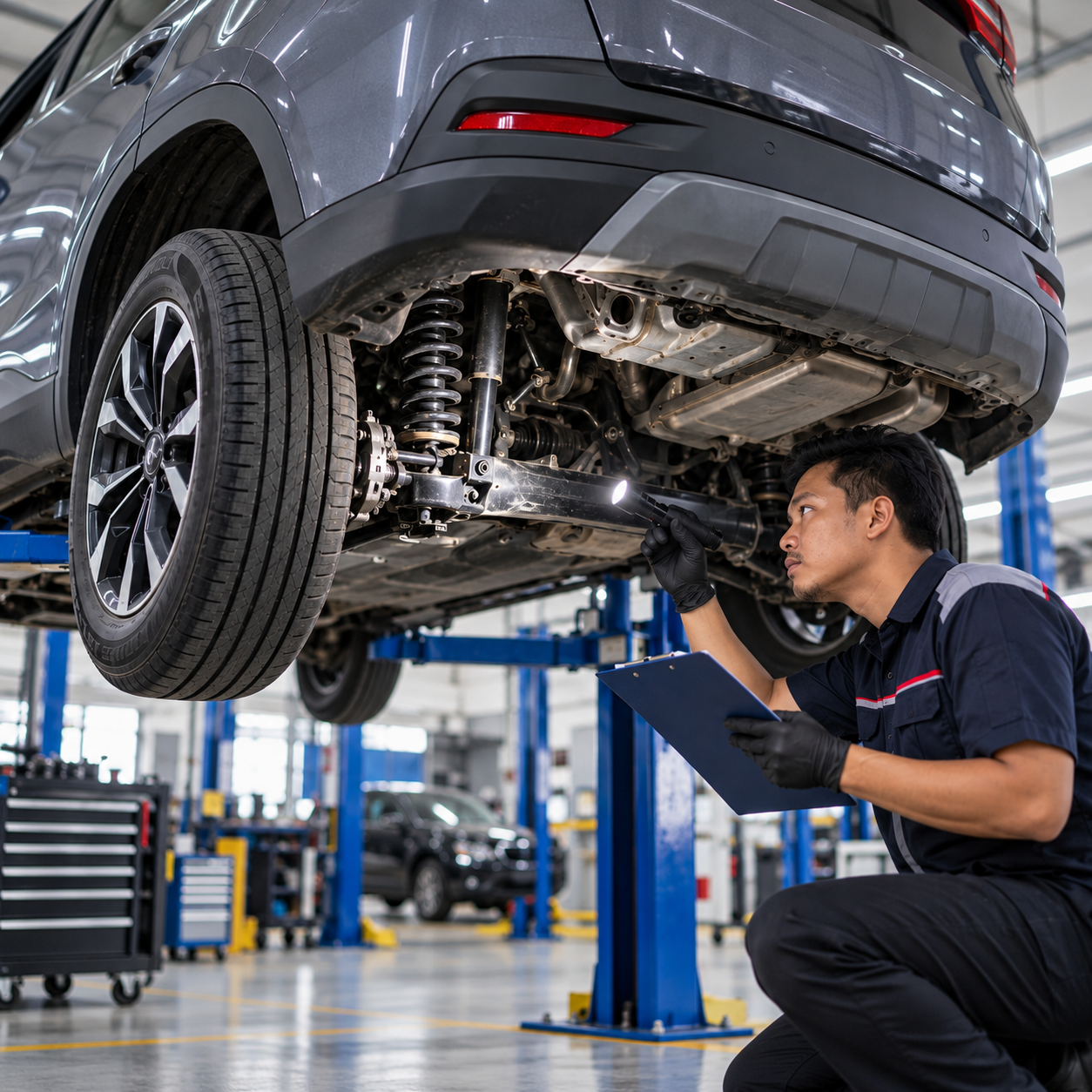
A Rear Axle Recall Is a Reminder: The Back of the Car Matters Too
12 Oct 2026
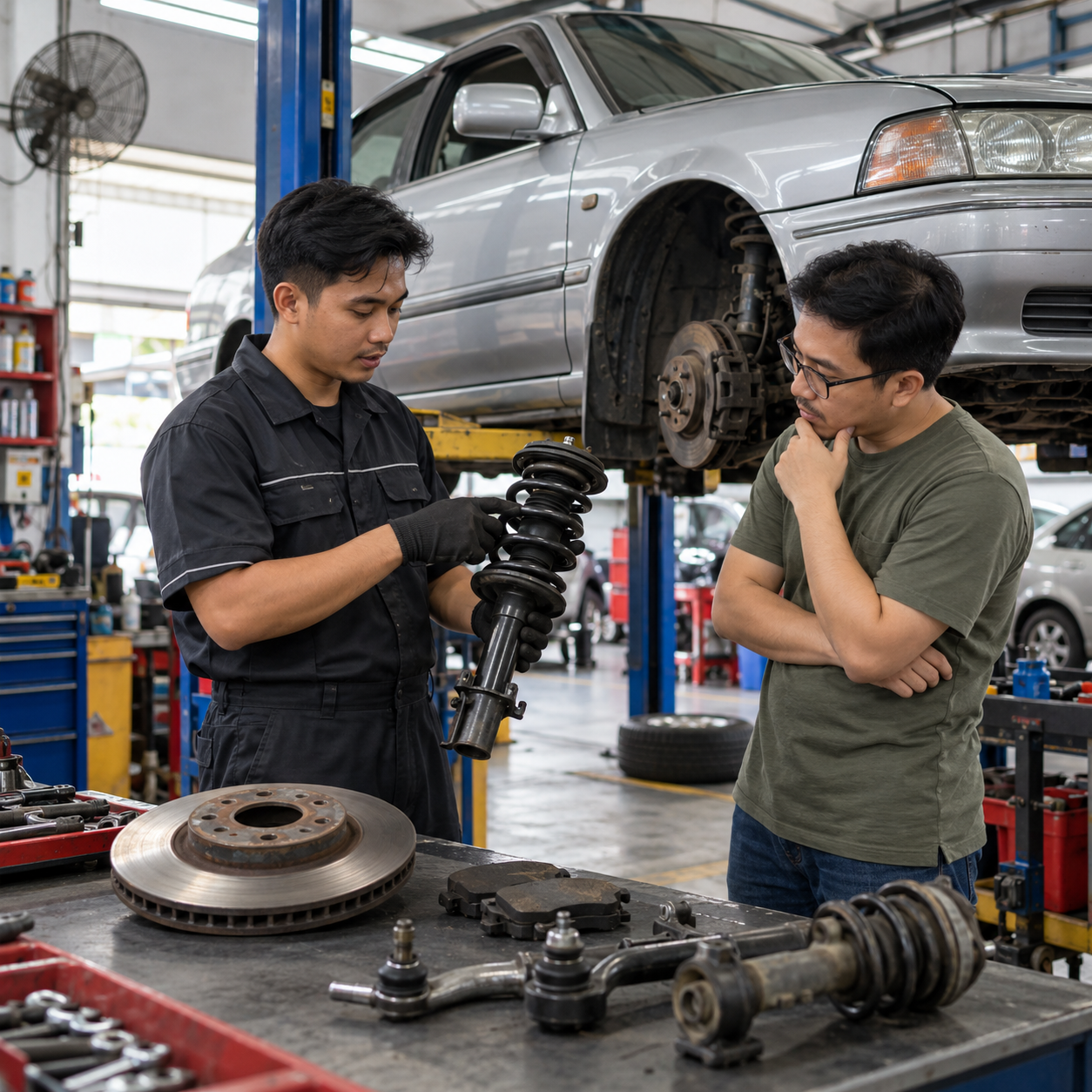
Scrap or Maintain? What a Proposed Old-Car Rebate Means for Malaysia's Older Vehicles
09 Oct 2026
 Whatsapp Us NowSaiko Automotive

