


How to Identify Worn Tie Rods Fast
A car that suddenly feels loose at the steering wheel usually gives you a warning before a larger steering problem shows up. If you are wondering how to identify worn tie rods, the first clues often appear during everyday driving - slight wandering, uneven tire wear, or a front end that no longer feels as precise as it used to.
Tie rods are small parts with a big job. They connect the steering rack to the steering knuckle, which allows the wheels to turn when the driver turns the steering wheel. When they begin to wear, steering accuracy drops, tire wear can increase, and overall vehicle control may suffer. For workshops and parts buyers, spotting the issue early helps prevent repeat alignment problems, customer complaints, and avoidable damage to related steering components.
A worn tie rod does not always fail overnight. In many cases, it starts with internal looseness in the joint, a torn dust boot, or contamination from dirt and moisture. At first, the symptoms may seem minor. Over time, that play can become more obvious and affect steering response, tire life, and road stability.
This is why tie rod condition matters beyond comfort. Steering parts are safety-critical. A vehicle with excessive play in the steering linkage may feel vague at low speed and unstable at highway speed. That is bad for drivers, and it is also bad for workshops trying to deliver reliable repairs.
The road test is often where the first signs appear. A driver may notice the vehicle drifting left or right even after an alignment, or the steering wheel may feel less direct than normal. Some cars develop a knock or clunk from the front end when turning at low speed or driving over rough surfaces.
Uneven tire wear is another common sign. If the toe angle changes because a tie rod joint has developed play, the tire may scrub the road surface instead of rolling evenly. This can create accelerated wear on the inner or outer tread blocks. That said, uneven tire wear does not automatically mean the tie rods are worn. Tire pressure, suspension geometry, wheel balance, and other steering components can produce similar patterns. The point is to treat it as a useful clue, not a final diagnosis.
A loose or shaky steering wheel is another signal. If the wheel needs constant correction on a straight road, the linkage may no longer be holding alignment as firmly as it should. Some drivers describe it as a floating feeling. Others notice delayed response, where the steering wheel moves slightly before the car reacts.
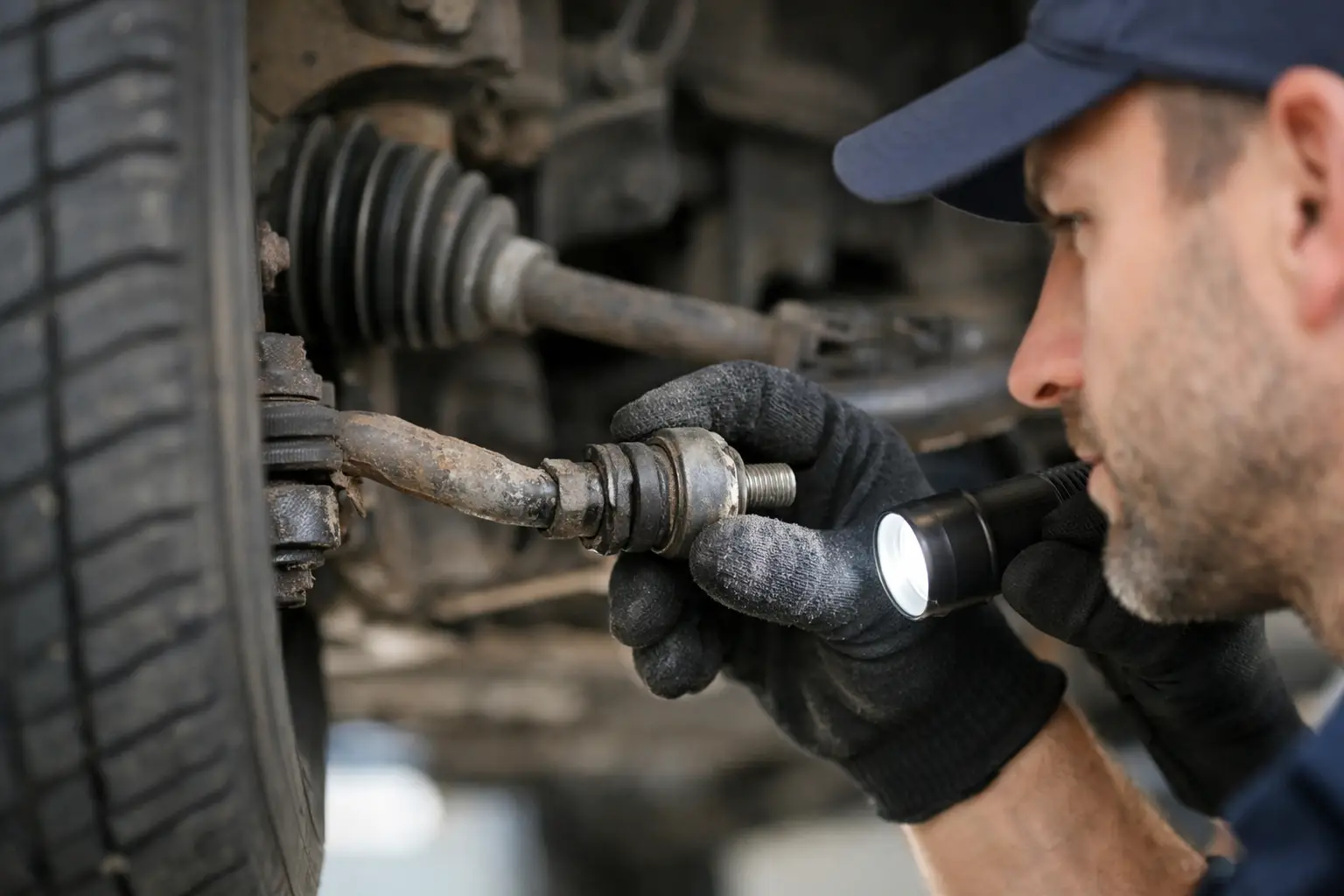
A visual check can reveal a lot, especially on vehicles that have seen rough roads, water exposure, or high mileage. Start by looking at the outer tie rod end. The rubber boot should be intact and seated properly. If it is torn, split, or leaking grease, the joint may already be contaminated.
Rust around the joint area can also be a warning sign, especially if the protective boot has failed. In some cases, grease may appear dried out or missing altogether. If the joint looks dry and exposed, wear tends to accelerate.
You should also look for damage to the threads, locking nut, or signs of impact. A bent component does not always come from normal wear. It may point to curb impact or previous improper handling during repair. For a workshop, this distinction matters because replacing only one visibly loose part may not solve the whole steering issue if there is hidden damage elsewhere.
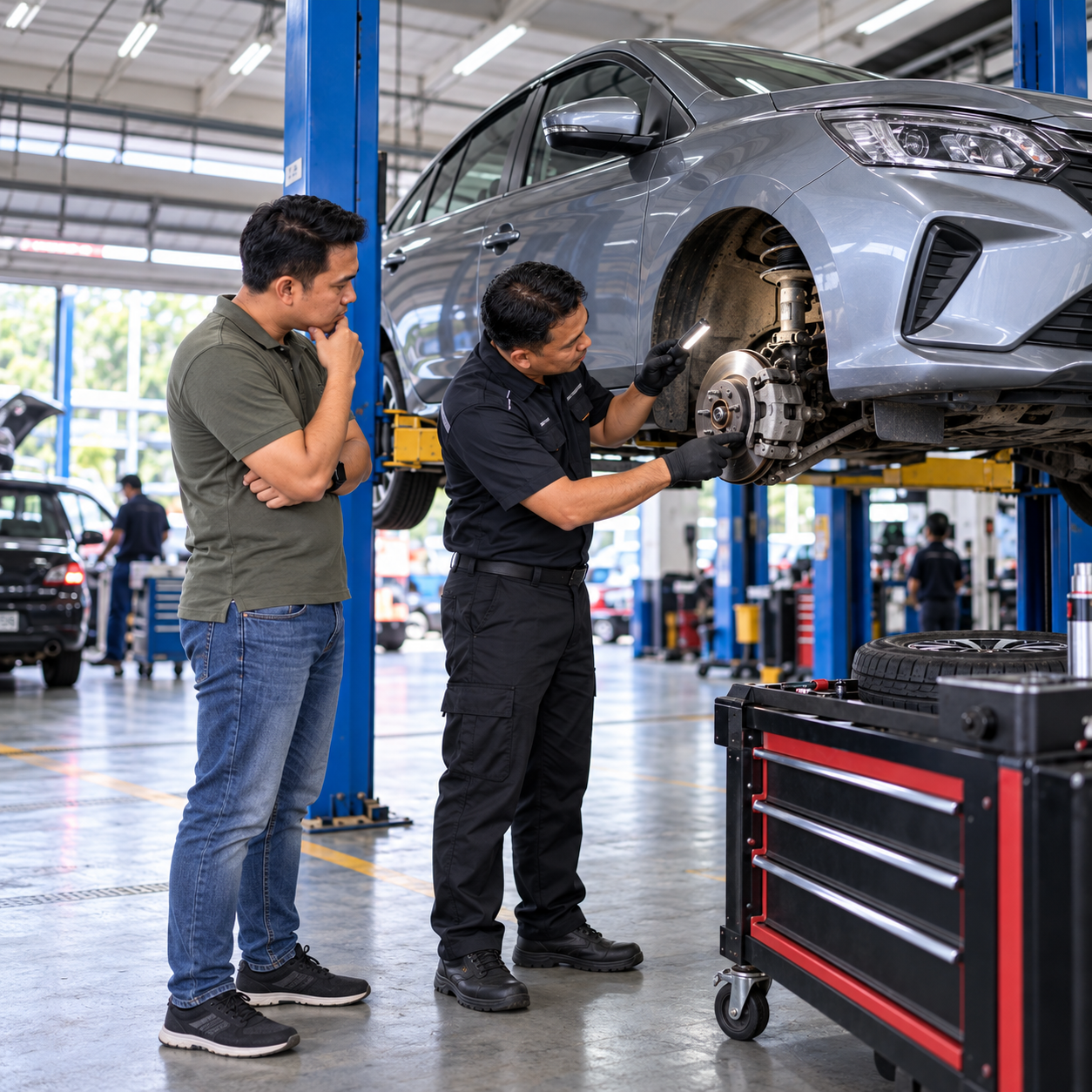
A proper inspection is the most reliable way to confirm wear. The front wheels need to be unloaded so the steering components can be checked for free play. Once the vehicle is lifted safely, grasp the tire at the 3 o'clock and 9 o'clock positions and gently move it side to side.
If there is noticeable movement, the next step is to watch the tie rod while the wheel is being rocked. A worn outer tie rod end may show visible looseness at the ball joint. A worn inner tie rod may show movement closer to the rack side. The key is to separate wheel bearing play from steering linkage play. That takes careful observation because both can produce movement at the wheel.
If the steering system moves immediately and smoothly with no slack in the joints, the tie rods may still be serviceable. If there is a delay, clicking, or obvious side-to-side looseness in the joint, wear is likely present. On some vehicles, inner tie rod inspection can be less straightforward because the rack boot covers part of the assembly. In those cases, an experienced technician may need to feel for internal looseness more carefully.
Both inner and outer tie rods can wear, but they may present a little differently. Outer tie rod ends are more exposed, so torn boots and visible joint wear are easier to spot. They are also commonly checked during routine front-end inspections.
Inner tie rods are more protected but can still wear over time, especially if contamination gets past the rack boot or if the vehicle operates under repeated steering load on rough roads. A worn inner tie rod may produce steering looseness that feels harder to pinpoint from a quick visual check. If an alignment will not hold and no obvious outer joint wear is found, the inner tie rod becomes a likely suspect.
For repair planning, this difference matters. Replacing only the outer tie rod when the inner tie rod is also worn can leave the steering system with play and lead to a return visit. That is why a complete steering inspection saves time and protects workshop credibility.
One of the most common mistakes is assuming every front-end noise comes from the tie rods. Ball joints, control arm bushings, stabilizer links, wheel bearings, and strut mounts can all create similar symptoms. A clunk on turns or over bumps points you in the right direction, but it does not confirm the exact failed part.
Another mistake is treating alignment results as the whole answer. If toe is out of specification, the car may need an alignment, but worn tie rods can be the reason the setting moved in the first place. Aligning a car with steering play is rarely a lasting fix.
It is also easy to overlook the condition of the boots. Some joints still feel acceptable when checked quickly, but a torn boot means grease protection has already been compromised. In practice, that part may not have much service life left, especially in harsh operating conditions.
If a tie rod shows measurable play, boot failure with contamination, or unstable steering behavior, replacement is the practical answer. Steering components are not the place to stretch service life. Delaying replacement can lead to poor tire wear, reduced steering precision, and in severe cases, unsafe driving conditions.
For workshops and parts distributors, quality matters here. A replacement tie rod should offer consistent manufacturing quality, proper material strength, and dependable fitment. Those factors help reduce installation issues, support accurate alignment, and give the driver confidence on the road. This is where trusted aftermarket supply makes a difference. Brands with broad vehicle coverage and quality-controlled steering parts, such as Saiko, help workshops source the right component with less guesswork.
Any time a tie rod is replaced, wheel alignment should follow. Even if the new part is adjusted close to the original length, alignment angles can still shift enough to affect tire wear and steering feel. Skipping this step can make a good repair feel unfinished.
It is also wise to inspect related steering and suspension components at the same time. If one joint has worn out, neighboring parts may also be aging. Checking rack ends, ball joints, control arms, and bushings during the same visit helps avoid repeat labor and gives the vehicle owner a clearer picture of overall front-end condition.
For everyday drivers, the message is simple. If the steering feels different, do not ignore it. For workshops, the better approach is just as clear - confirm the source of play carefully, replace worn parts with dependable components, and finish the job with proper alignment. Steering problems rarely improve on their own, but early attention usually keeps the repair smaller, safer, and more cost-effective.
Recent Posts
Automotive Trade Is on the Table in the Malaysia-EU FTA. Here's Why It Matters at the Parts Counter
23 Oct 2026
The Road Transport Act Just Got Tougher. Here's What It Means for Your Car's Parts
21 Oct 2026
Drove Through Flood Water? The Parts Under Your Car That Need a Look Next
19 Oct 2026
A Record Year on the Road Means a Record Year Ahead for Maintenance
12 Oct 2026
Budget 2027 Puts E-Hailing Car Maintenance on the National Agenda
12 Oct 2026
 Whatsapp Us NowSaiko Automotive

