


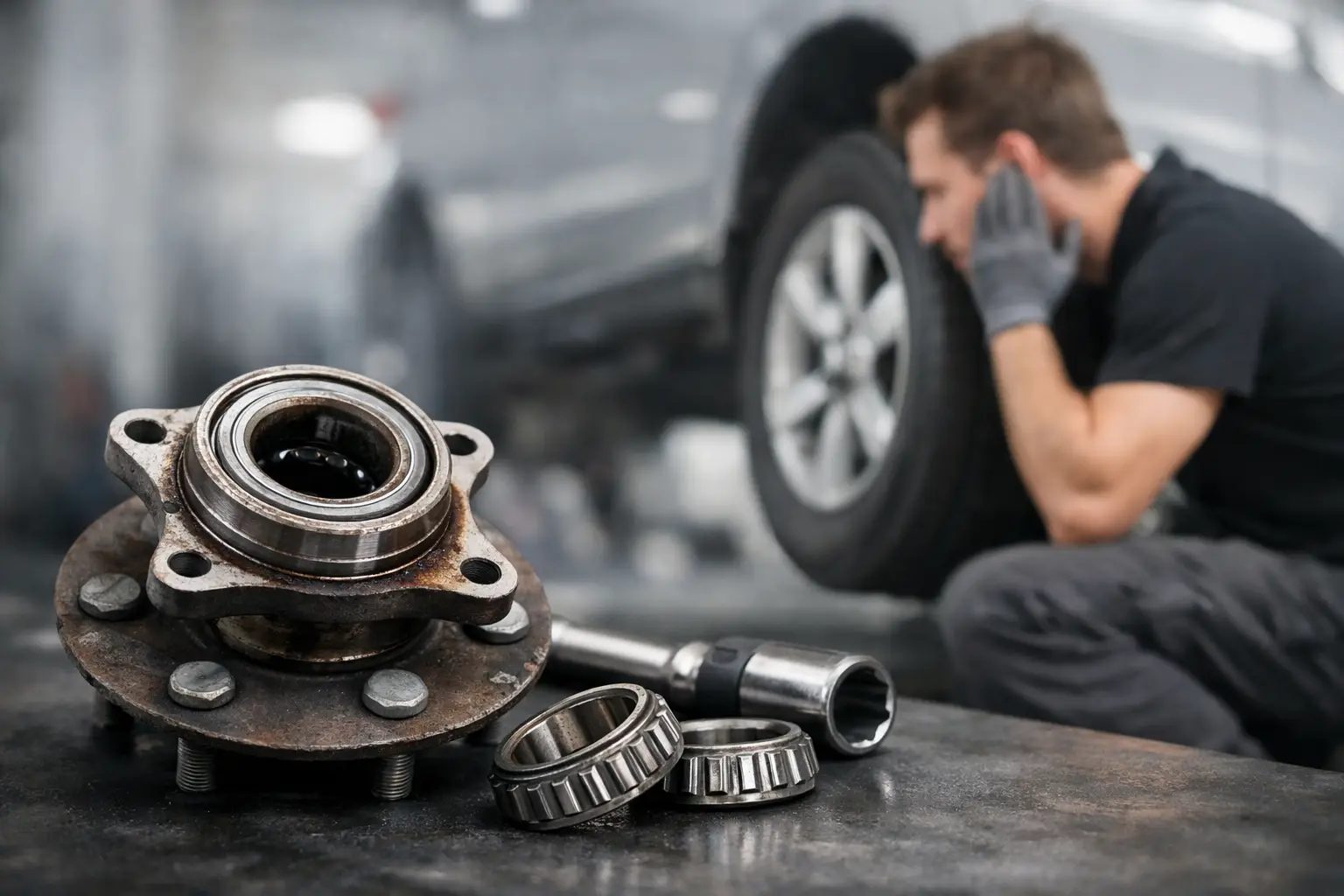
Wheel Hub Bearing Noise Causes and Fixes
A low hum that grows louder with road speed is easy to ignore at first. But wheel hub bearing noise is rarely a harmless cabin sound. It can indicate a worn bearing, damaged hub assembly, incorrect installation, or a related problem around the wheel and suspension. For drivers, workshops, and parts retailers, identifying the source early helps prevent uneven tire wear, poor handling, and a repair that becomes more expensive than it needs to be.
A failing wheel hub bearing does not always make one obvious sound. Most commonly, it creates a humming, droning, growling, or rumbling noise that becomes more noticeable as the vehicle accelerates. Unlike engine noise, the sound generally follows vehicle speed rather than engine RPM. Put the car in neutral while coasting, where safe and legal to do so, and the noise may remain because the wheels are still rotating.
The sound can change during a gentle turn. If the noise gets louder while turning left, the right-side bearing may be carrying more load and may be worn. If it becomes louder during a right turn, the left side deserves closer inspection. This is a useful clue, not a final diagnosis. Tire patterns, road surface, and drivetrain noise can produce similar changes.
A more advanced failure may cause grinding, metallic scraping, or a cyclic roaring sound. At that stage, do not treat the vehicle as normal transport. Excessive bearing play can affect wheel stability, brake performance, and steering feel.
Wheel bearings support the vehicle's weight while allowing the wheel to rotate with minimal friction. They work under constant load, heat, vibration, and exposure to water and road debris. Once the bearing surfaces, rolling elements, or seals are damaged, the smooth rotation that drivers expect is replaced by vibration and noise.
Age and mileage are common causes, but local driving conditions matter just as much. Repeated pothole impacts, rough roads, curb strikes, flooding, and frequent heavy loads can shorten bearing life. Water entering through a compromised seal can wash away or contaminate lubricant. Corrosion then damages the precision surfaces inside the bearing.
Poor installation is another preventable cause. Pressing force through the wrong bearing race, reusing a damaged axle nut, applying incorrect torque, or fitting a hub onto a corroded steering knuckle can create preload problems. The bearing may become noisy soon after installation even though the part itself was new.
Low-cost assemblies can also be a false economy. Inconsistent machining, weak seals, unsuitable grease, or poor dimensional control may lead to noise, looseness, or ABS-related issues earlier than expected. A hub bearing is a safety-related rotating component, so fitment and manufacturing quality should carry more weight than the lowest purchase price.
A proper inspection prevents unnecessary parts replacement. Tire noise is one of the most common misdiagnoses. Feathered tread, cupping from worn shock absorbers, or uneven alignment can create a loud hum that resembles a bearing. Rotate the tires and road-test the vehicle again. If the sound moves or changes significantly, the tires may be the main cause.
Brake components can cause scraping or clicking, especially when a dust shield is bent against the brake disc or a stone is trapped near the rotor. A worn CV joint usually produces rhythmic clicking during tight turns under power, rather than a steady highway-speed drone. A failing differential or transmission bearing may also create a whine or rumble, but its behavior can vary with throttle input as well as speed.
At the workshop, raise the vehicle safely and check each wheel for roughness and play. Grasping the tire at the 12 and 6 o'clock positions may reveal movement, though some sealed bearings can be noisy long before obvious looseness appears. Rotate the wheel by hand and listen for roughness. A mechanic's stethoscope, chassis ears, or a road test by an experienced technician can narrow down the source more accurately.
A mild hum should be scheduled for diagnosis soon. Grinding, severe vibration, a steering pull, visible wheel wobble, or an ABS warning light requires more urgent action. Many modern hub assemblies include a wheel-speed sensor or magnetic encoder ring. Damage to this system can affect ABS, traction control, and stability control operation.
Do not assume a bearing will fail gradually enough to fit your schedule. Some remain noisy for many miles, while others deteriorate quickly after water intrusion or a hard impact. The practical decision depends on the severity of the noise, measured play, vehicle use, and the technician's inspection. A car used for long highway trips, family transport, delivery work, or heavy loads should not be driven with a suspected serious bearing fault.
The right replacement starts with accurate vehicle identification. Model year alone is not always enough. Confirm the make, model, engine, drivetrain, wheel bolt pattern, ABS configuration, and VIN details where available. Vehicles within the same model range may use different hub sizes, splines, sensor designs, or mounting patterns.
A complete hub assembly can simplify installation on many vehicles because the bearing, flange, and sometimes the sensor are supplied together. A press-in bearing may cost less in some applications, but it requires the right tooling and correct handling. Workshops should consider labor time, corrosion condition, and the risk of damaging a new bearing during pressing before choosing between the two designs.
| What to check | Why it matters | |---|---| | Exact vehicle fitment | Prevents mounting, spline, and sensor mismatches | | OE-standard testing | Supports consistent load capacity and service life | | Seal quality | Helps keep out water, dust, and road contamination | | ABS sensor compatibility | Protects braking and stability-control function | | Precision-machined mounting surfaces | Reduces installation issues and vibration risk | | Supplier support and availability | Helps workshops complete repairs without long delays |
For Malaysian workshops and parts retailers, SAIKO offers quality-controlled wheel hubs and hub bearings with coverage across a broad range of Japanese, Korean, Malaysian, and international passenger vehicles. Established in 2007, the brand is supported through a nationwide dealer and distributor network, giving buyers a practical value-focused option when dependable fitment and product availability matter.
A good replacement part still needs correct installation. The mating surface on the steering knuckle or axle flange must be cleaned carefully. Rust scale, burrs, and trapped debris can prevent the hub from seating squarely, leading to runout or premature wear. Avoid striking the bearing or hub with a hammer unless the vehicle manufacturer's procedure specifically allows it.
For press-in bearings, force must be applied to the correct race. Pressing on the inner race while fitting the outer race, or the reverse, transfers damaging load through the rolling elements. Torque specifications are equally critical. Under-torquing can allow movement; over-torquing can create excessive preload or damage threads. Use a calibrated torque wrench and replace one-time-use fasteners where specified.
After installation, confirm that the wheel rotates freely, the brake disc seats correctly, and no warning lights remain. A road test should include checks for abnormal noise, steering vibration, and proper ABS operation. If the original failure was linked to pothole damage or an impact, inspect the tire, wheel, lower arm, ball joint, tie rod end, strut, and alignment as well. Replacing only the noisy bearing may not solve the underlying cause.
No wheel bearing lasts forever, but sensible maintenance reduces avoidable damage. Avoid driving through deep standing water when possible, especially if the vehicle has hot brakes and hubs. Repair damaged wheel seals, torn CV boots, and loose suspension components promptly. Keep wheel nuts torqued correctly, and do not allow careless tire-shop practices to damage studs or mounting surfaces.
Pay attention after tire, brake, or suspension work. A new hum, vibration, or ABS warning light is easier to investigate immediately than after weeks of driving. Regular inspections are particularly worthwhile for vehicles that travel rough roads, carry passengers or cargo frequently, or operate in wet conditions.
The most useful next step is simple: have a suspected noise checked before it becomes a handling or safety concern, then choose a correctly matched hub bearing installed to specification. That approach protects the repair, the tires, and the confidence drivers expect every time the vehicle reaches highway speed.
Recent Posts
A Record Year on the Road Means a Record Year Ahead for Maintenance
12 Oct 2026
A Rear Axle Recall Is a Reminder: The Back of the Car Matters Too
12 Oct 2026
Scrap or Maintain? What a Proposed Old-Car Rebate Means for Malaysia's Older Vehicles
09 Oct 2026
Price Transparency Is Coming to the Parts Counter. Here's What Else You Should Check
07 Oct 2026
Parts Availability Is the New Aftersales Battleground. Here's Why It Matters to Every Driver
05 Oct 2026
 Whatsapp Us NowSaiko Automotive

