


Passing Inspection Isn't the Same as Being Roadworthy
Every vehicle inspection in Malaysia rests on one simple assumption: the vehicle that rolls into the test lane is the same vehicle that goes back out onto the road. Last week, that assumption was tested in Kuantan. In an enforcement exercise called Ops Bengkel, JPJ Pahang and the Ministry of Domestic Trade and Cost of Living (KPDN) uncovered a scheme in Gebang where so-called "cosmetic agents" rented good-quality tyres to commercial vehicle operators for inspection day. Once the vehicle passed, the rented tyres came off and the old ones, which may not have been roadworthy, went back on.
paultan.org reported on 22 October 2026 that the going rate was RM100 to RM150 per vehicle. Puspakom backed JPJ's crackdown. Its point was simple: an inspection reflects a vehicle's condition only at the moment it is tested. Swap the parts afterwards and the certificate describes a vehicle that no longer exists.
The lesson applies far beyond lorries in Pahang.
An inspection is a snapshot. Puspakom inspectors check the vehicle in front of them against JPJ requirements, and the company stressed that those standards apply uniformly across all vehicles and centres. In the words of Puspakom CEO Mahmood Razak Bahman: "Our inspectors assess the vehicle in front of them, and we do that without compromise."
No inspection centre can see what happens after a vehicle leaves. That is why Puspakom urged fleet operators and commercial vehicle owners to treat maintenance as an ongoing obligation, not a checklist.
The tyre swap is the most blatant version of a much more common habit: preparing a vehicle for the test rather than for the road. In less dramatic forms, that looks like:
Each leaves a gap between what the paperwork says and what is actually on the highway.
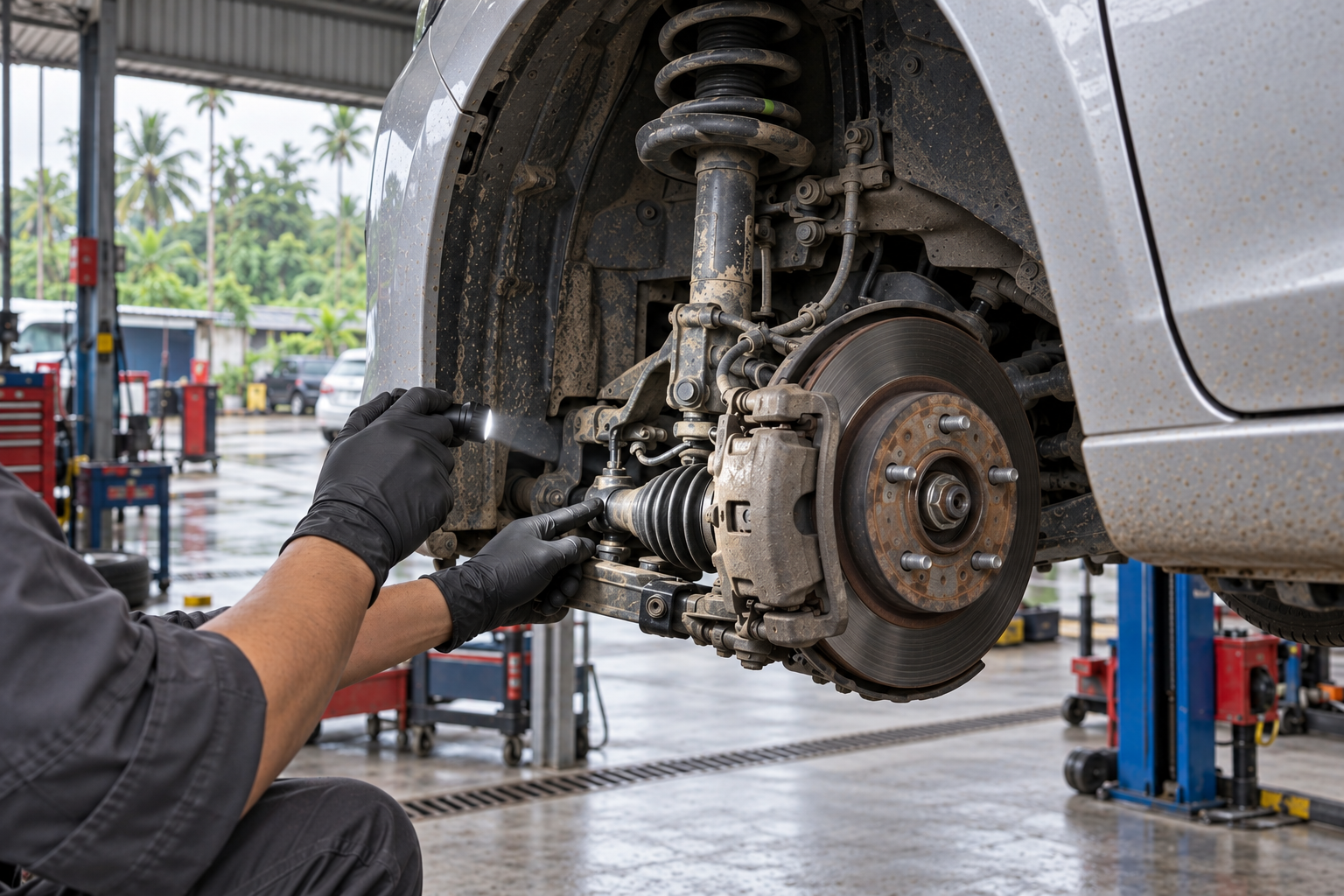
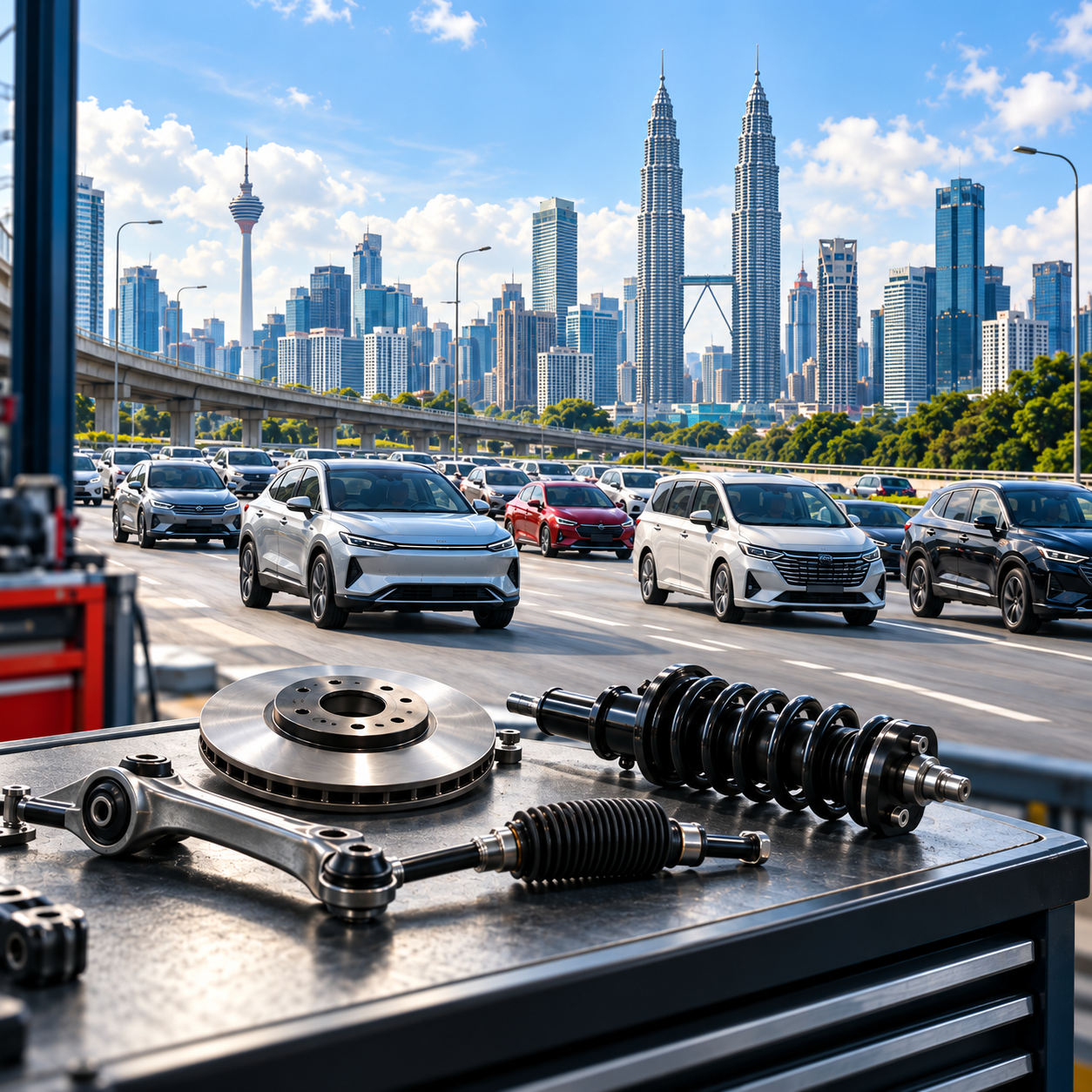
Tyres are easy to see. Many of the components that matter most for control and stopping are not. They sit behind the wheel, under the arches and inside rubber boots, and they wear gradually enough that drivers adapt without noticing. For a heavily loaded commercial vehicle, or a family car doing long daily commutes, that wear builds up quickly.
The parts that deserve attention between formal inspections include:
Each of these is a link in one chassis system. When one link weakens, the others work harder. A worn ball joint loads the bushings, a sagging spring strains the damper, and an uneven brake pad can mark a disc. This is why SAIKO frames steering and suspension as a single ecosystem: compromising one part compromises overall safety.
You do not need a test lane to spot many of the early signs that a component is reaching the end of its life. Drivers, fleet supervisors and workshop technicians should watch for:
SAIKO's own workshop guidance suggests replacing a suspension kit every 50,000 km or two years, with coil springs at around 100,000 km. For commercial vehicles that cover long distances under load, scheduling preventive replacement against those intervals is more reliable than waiting for a component to fail or an inspection to catch it.
The Kuantan case will likely be remembered as an enforcement story. For the wider industry, it is also a reminder of why quality and consistency matter at the parts level. A component that only needs to survive a test is a very different product from one built to last for years of real driving.
That difference is where SAIKO has focused since 2007. We supply quality-controlled automotive replacement parts across more than 400 vehicle models through a nationwide dealer network. Our steering and suspension range is designed as direct OE-fit replacements, built around features such as sealed dust boots and POM bearing technology in our ball joints. In SAIKO's 7.0 kN stress survival test, our tested part completed 247,274 cycles without damage, compared with 100,000 cycles for the OEM part and 50,000 cycles for an unnamed aftermarket competitor. That is up to 2× longer than OEM and up to 4× longer than competitors.
For fleet operators, the business case is clear. Parts that last longer mean fewer unplanned stops, fewer roadside failures and a vehicle that matches its paperwork every day of the year, not just on inspection day. For private owners, it means confidence every time the family gets in the car.
Behind every part is a team that cares about getting this right, from product development to dealer technical support.
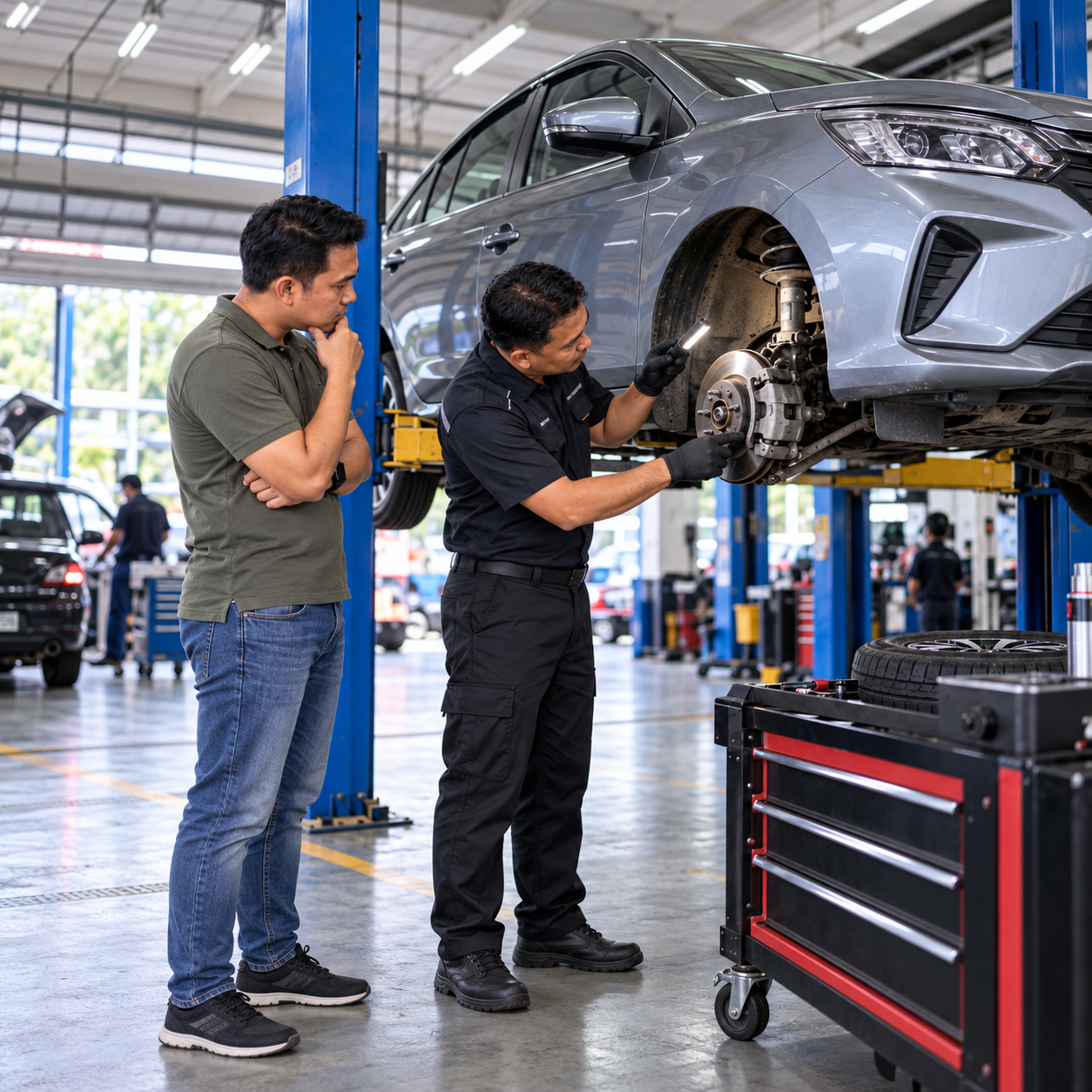
Passing an inspection should confirm a well-maintained vehicle, not stand in for one. Have your steering, suspension and brakes checked by a qualified workshop, and choose parts built for the road rather than for the test lane.
Find a SAIKO dealer near you at saiko.com.my
Recent Posts
Automotive Trade Is on the Table in the Malaysia-EU FTA. Here's Why It Matters at the Parts Counter
23 Oct 2026
The Road Transport Act Just Got Tougher. Here's What It Means for Your Car's Parts
21 Oct 2026
Drove Through Flood Water? The Parts Under Your Car That Need a Look Next
19 Oct 2026
A Record Year on the Road Means a Record Year Ahead for Maintenance
12 Oct 2026
Budget 2027 Puts E-Hailing Car Maintenance on the National Agenda
12 Oct 2026
 Whatsapp Us NowSaiko Automotive

