


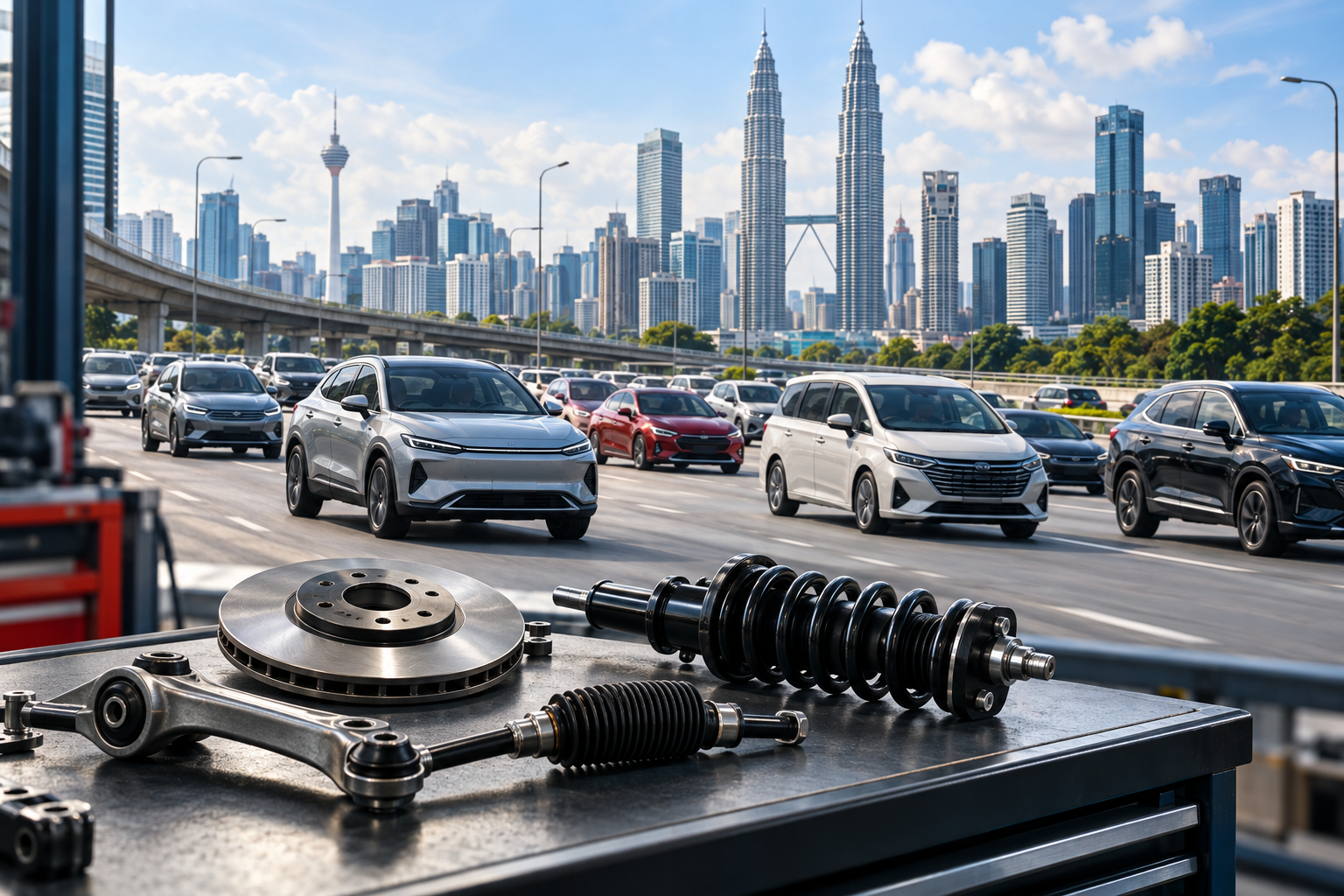
A Record Year on the Road Means a Record Year Ahead for Maintenance
Every new car sold today is a car that will need tyres, brakes and suspension work tomorrow. That is why the latest Malaysia car registrations 2026 figures matter well beyond the showroom. They are an early signal of what the country's workshops, parts suppliers and drivers will be dealing with for the next decade.
On 11 October 2026, paultan.org reported that 640,875 new vehicles were registered in Malaysia between January and September 2026, according to Road Transport Department (JPJ) data. That is the highest first-nine-months total on record, up 4.4% on the same period in 2025, and puts the country on course for a fifth consecutive record year.
The headline total is only part of the story. The report highlighted several trends worth noting:
Whether or not 2026 finishes as a record, the direction is clear. Malaysia's car parc, the total number of vehicles on the road, keeps growing, and it is becoming more varied every year.
A new car spends its early years under warranty, often serviced at the dealer. But wear-and-tear parts don't wait for a warranty to end. Brake pads, shock absorbers, stabilizer links, bushings and tie rod ends begin wearing from the first kilometre.
Over time, the cars registered in record numbers between 2022 and 2026 will move into the stage of life where chassis work becomes routine. That has practical consequences:
For drivers, the lesson is to plan ahead. Knowing when your car is likely to need steering, suspension and brake work makes it easier to budget and avoid being caught off guard.
Yes. A different powertrain doesn't change what holds the car on the road. With EV and hybrid registrations in 2026 already ahead of all of 2025, this question will come up more often at workshops.
Some points are worth understanding:
In short, electrified vehicles change the pattern of wear rather than eliminating it. Steering, suspension and braking remain essential maintenance categories for every car on the road.
A growing car parc means busier workshops and, at times, longer waits for less common parts. The best way to stay ahead is to make maintenance proactive rather than reactive:
For buyers of used cars, a full chassis inspection before or soon after purchase is one of the most useful investments they can make.
Malaysia's record registrations are good news for the automotive industry. They also bring a responsibility: keeping all of those vehicles safe and dependable for years to come. As the car parc grows, so does the role of a reliable aftermarket, and so does SAIKO's commitment to expanding its range and supporting the people who fit our parts every day.
SAIKO has supplied quality-controlled automotive replacement parts since 2007, with coverage for more than 400 vehicle models and a nationwide dealer network covering Japanese, Korean, Malaysian and other passenger vehicles.
Explore SAIKO's steering, suspension and brake ranges, or find a dealer near you, at saiko.com.my
Recent Posts
A Rear Axle Recall Is a Reminder: The Back of the Car Matters Too
12 Oct 2026
Scrap or Maintain? What a Proposed Old-Car Rebate Means for Malaysia's Older Vehicles
09 Oct 2026
Price Transparency Is Coming to the Parts Counter. Here's What Else You Should Check
07 Oct 2026
Parts Availability Is the New Aftersales Battleground. Here's Why It Matters to Every Driver
05 Oct 2026
Road Tax Is Only the Start: Budgeting for the True Cost of Owning a Car
02 Oct 2026
 Whatsapp Us NowSaiko Automotive

