


Built Here: What CKD Assembly Means for Malaysia's Parts and Service Ecosystem
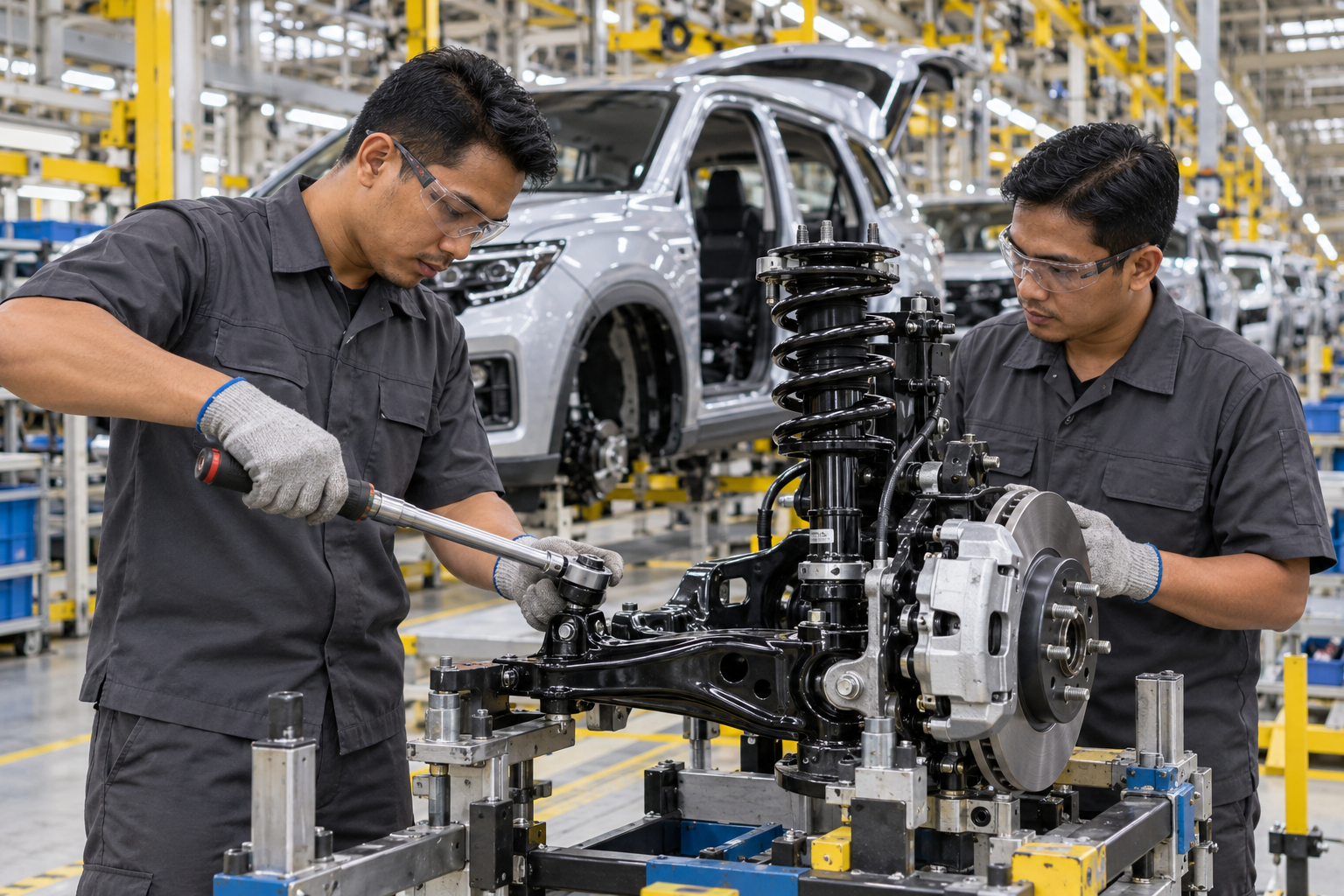
CKD car assembly in Malaysia is back in the spotlight. BYD Malaysia's plan to assemble vehicles in Kulim, Kedah, with Sime Motors' Inokom Corporation as its CKD partner has prompted a fresh look at what local assembly really delivers. In a feature published on 23 October 2026, paultan.org argued that CKD is a clear win for the country, but that it does not automatically mean cheaper cars.
For most buyers, the debate stops at the showroom price. For the people who keep Malaysia's cars running, including parts suppliers, workshops and dealers, the more interesting question is what happens over the years after the sale. Local assembly changes the ecosystem a car lives in, and that matters for every owner who will one day need a replacement part.
The terms describe how a car arrives in the country:
As the paultan.org feature put it, CKD changes how a car is made, not necessarily what it costs. Pricing still depends on government policy, exchange rates, how much is sourced locally and labour costs. The article noted that some brands, such as iCaur and Leapmotor, held their prices after moving to CKD, while Proton's eMas base prices were adjusted upward.
Tax treatment is a major factor. Internal combustion cars faced heavy duties as CBU imports, so local assembly brought big tax savings and lower prices. Electric vehicles were already tax-free as CBU imports and remain so as CKD, which leaves little room for a price drop.
The policy direction is also clear. Under MITI's CKD EV framework, revealed in March 2026, new entrants face a RM100,000 floor price and must export 80% of production, with in-country body shop, paint and trim operations. The export rule is waived for entrants that work with an existing local CKD partner, which is the route BYD has taken.
The strongest argument for CKD is not price. It is everything that grows around a factory. The paultan.org feature points to skills and technology transfer, job creation and the growth of a supporting ecosystem that reaches parts suppliers, logistics, finance, insurance, service centres, workshops and the aftermarket. It cites the automotive sector's support for more than 700,000 people nationwide and a contribution of 4–5% to GDP.
Inokom is a useful example. The company has assembled multiple brands for three decades with a fully Malaysian workforce, and has contributed RM3 billion to local vendors through components, logistics and support services.
For the aftermarket, a deeper local manufacturing base brings practical benefits:
None of this happens overnight. But a car built here tends to have a longer, better-supported life here.
Whether a car is CKD or CBU, its components wear on the same Malaysian roads, in the same heat, humidity and stop-start traffic. Once the factory warranty ends, owners face the same decisions as everyone else: where to service, and which parts to trust.
That is where a mature aftermarket earns its keep. As newer brands and models build up volume, owners will look for:
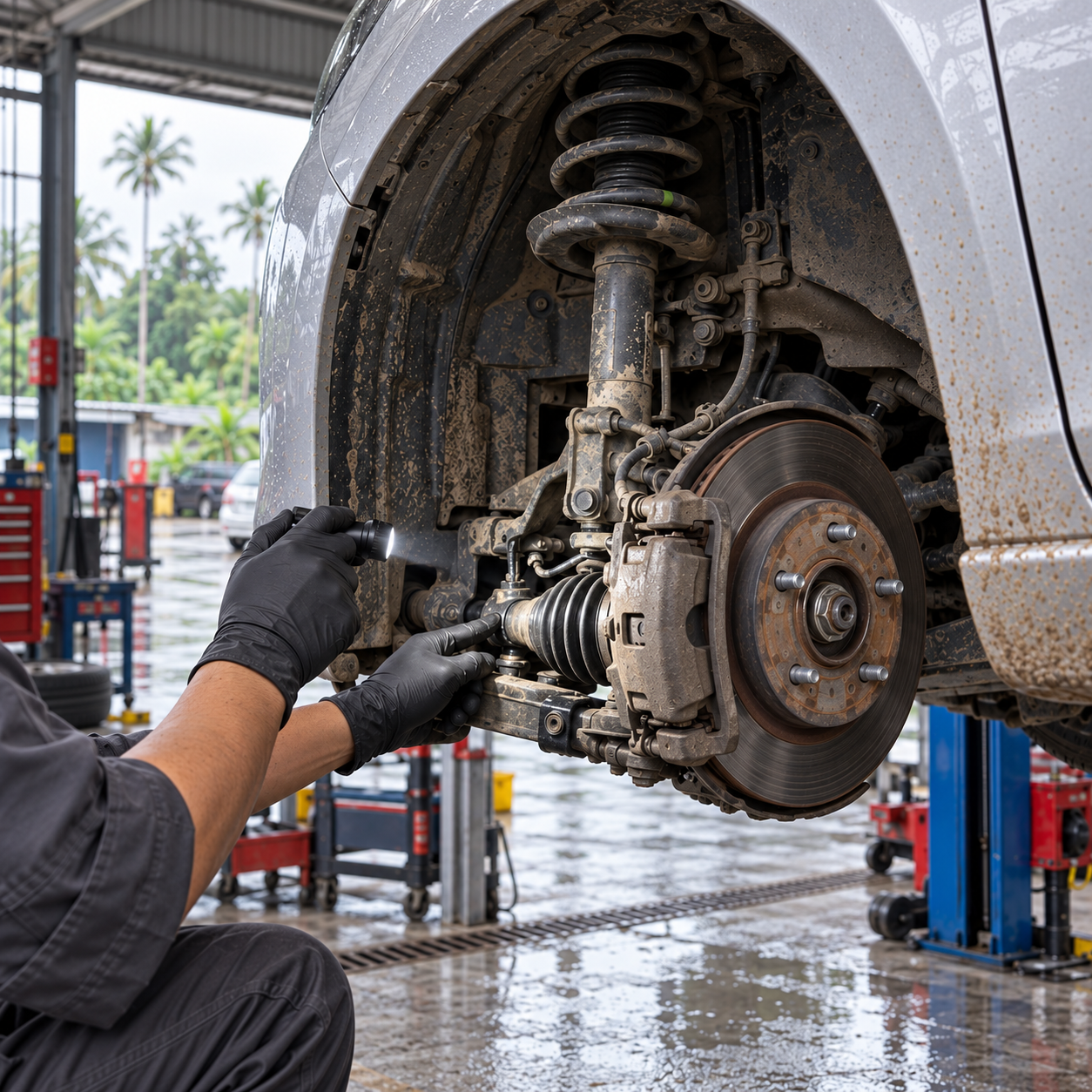
Steering and suspension parts are a good test of this. They wear gradually, they affect safety directly, and they work as one system. A worn ball joint or tired strut mount affects the components around it, which is why replacing with parts engineered to work together pays off over time.
The paultan.org feature concludes that CKD is best seen as a long-term investment in Malaysia's manufacturing future rather than a short-term path to cheaper cars. That is a view the aftermarket shares. The value of a strong local industry shows up most clearly in year five or year ten of ownership, when a car needs parts, skilled hands and reliable support.
SAIKO has been part of that long view since 2007. We supply quality-controlled automotive replacement parts across more than 400 vehicle models, covering Japanese, Korean, Malaysian and other passenger vehicles, through a nationwide dealer network. Our steering and suspension range is designed as direct OE-fit replacements, backed by local warranty support and an experienced technical team. As the country's vehicle parc becomes more diverse, we continue to expand our range so that dealers and workshops can source with confidence.
Malaysia's automotive story is also a people story. The skills built in assembly plants, parts warehouses and workshops are what keep the industry moving, and growing teams across the ecosystem, including our own, are part of that.
Wherever your car was built, it deserves parts built to last. Explore SAIKO's range and find a dealer near you at saiko.com.my
Recent Posts

RON95 at RM1.99: Cheaper Kilometres Still Wear Out Parts
30 Oct 2026
Passing Inspection Isn't the Same as Being Roadworthy
26 Oct 2026
Automotive Trade Is on the Table in the Malaysia-EU FTA. Here's Why It Matters at the Parts Counter
23 Oct 2026
The Road Transport Act Just Got Tougher. Here's What It Means for Your Car's Parts
21 Oct 2026
Drove Through Flood Water? The Parts Under Your Car That Need a Look Next
19 Oct 2026
 Whatsapp Us NowSaiko Automotive

