


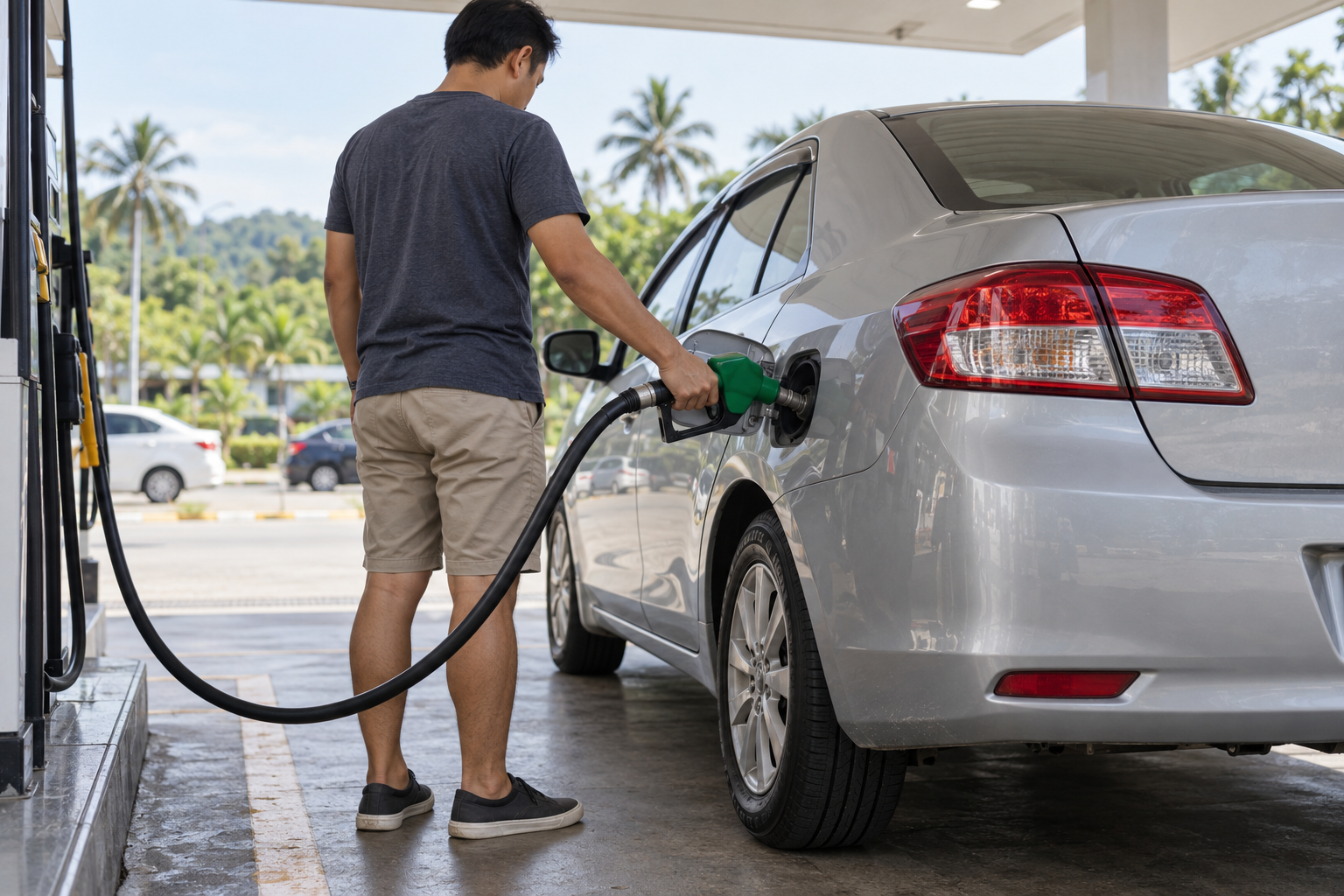
RON95 at RM1.99: Cheaper Kilometres Still Wear Out Parts
For millions of Malaysian drivers, RON95 at RM1.99 per litre is one of the most important numbers in the household budget. On 24 October 2026, paultan.org reported, citing Bernama, that Prime Minister Datuk Seri Anwar Ibrahim said the Budi95 price will stay at RM1.99 even if the annual fuel subsidy bill reaches RM42 billion to RM45 billion. With crude oil at roughly US$120 to US$130 a barrel, the unsubsidised RON95 price that week stood at RM4.32 per litre.
The fiscal debate belongs to economists and policymakers. For drivers, the practical takeaway is simpler: fuel costs at the pump stay predictable, and Malaysians will keep driving the way they do now. What fuel pricing does not change is wear and tear. Every kilometre still turns the bearings, flexes the bushings and works the brakes. Cheaper kilometres are still kilometres.
According to the report, the Prime Minister estimated that market-priced petrol would cost ordinary Malaysians an extra RM2 to RM3 a day, and around RM10 a day for those who drive to work and take children to school. The monthly Budi95 quota was restored to 300 litres on 1 September, after being cut to 200 litres in April when oil prices spiked.
Whatever one's view on subsidy policy, the effect on driving habits is clear. Stable pump prices remove one reason to cut back on trips. Daily commutes, school runs, e-hailing shifts and balik kampung drives continue at their usual pace.
That has a direct link to maintenance. Most wear on a car's chassis is driven by distance and road conditions, not the price of fuel. A household that drives 25,000 km a year will put those kilometres through its suspension, steering and brakes regardless of what it pays per litre.
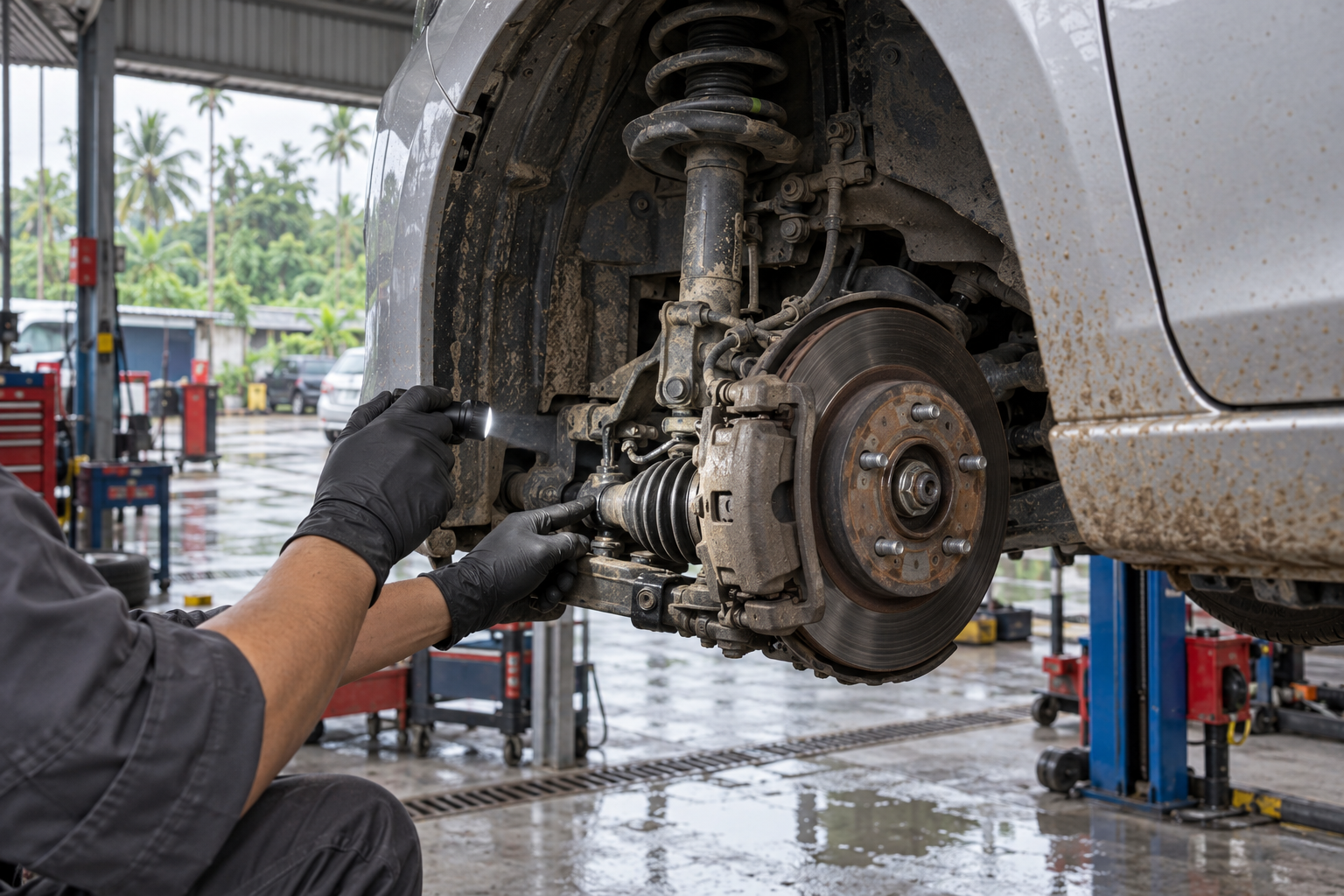
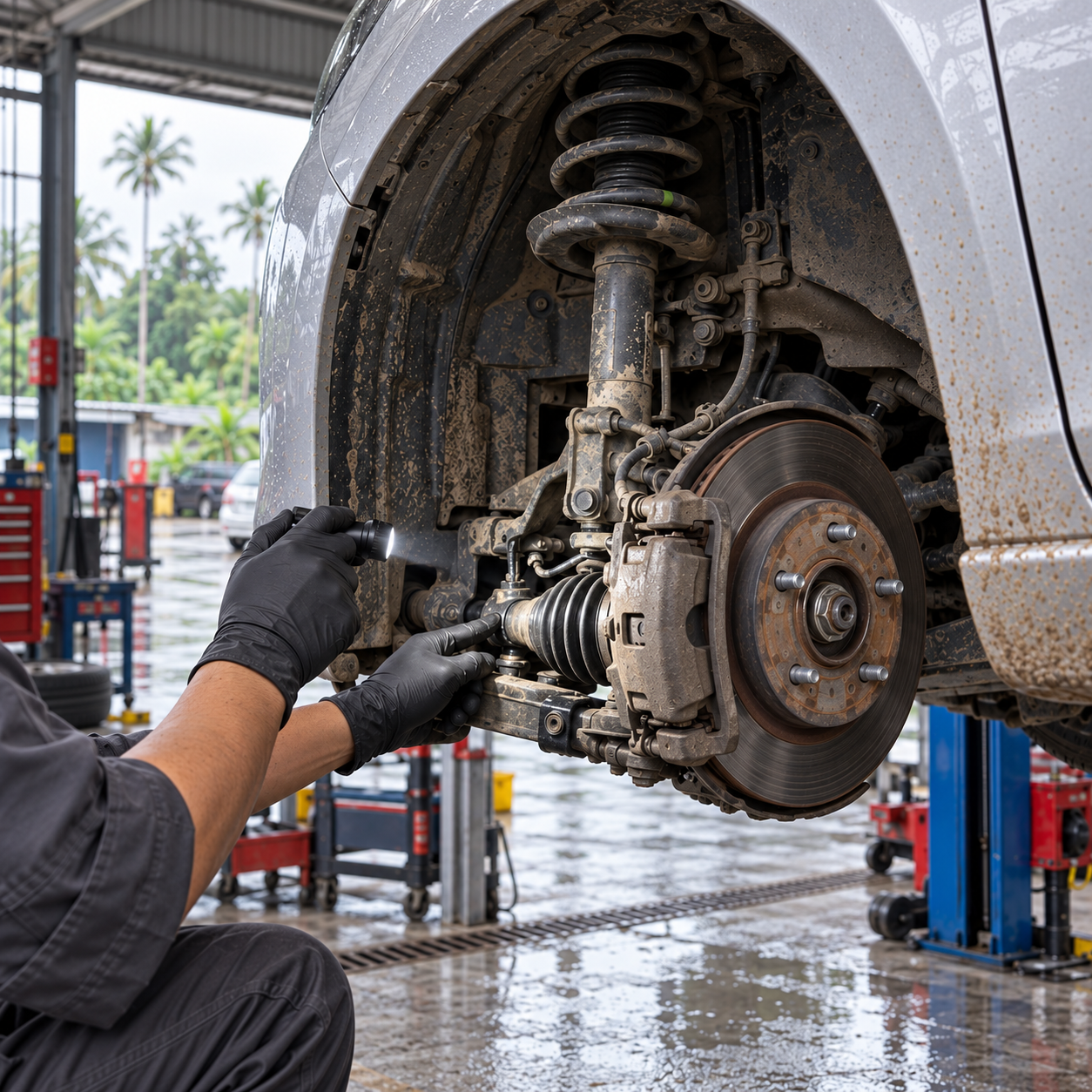
Some components are on fixed service schedules, such as engine oil and filters. Others wear gradually and are easy to forget until they make themselves heard. In stop-start city traffic and on roads with potholes, speed bumps and patchy surfaces, these deserve the most attention:
SAIKO's workshop guidance suggests replacing a suspension kit every 50,000 km or two years, and coil springs at around 100,000 km. For drivers covering high annual mileage, those milestones arrive sooner than many expect.
The most effective maintenance plans are based on how a car is actually used, not just the date on the last receipt. A few practical habits make a real difference:
High-mileage users such as e-hailing drivers, delivery riders and sales staff on the road all day benefit most from this approach. For them, a car off the road is lost income, and planned replacement costs far less than an unplanned breakdown.
Predictable fuel prices give households a little more certainty each month. Putting part of that certainty towards planned maintenance protects the bigger investment, which is the car itself. The aim is not to spend more, but to spend on parts that keep their performance longer and avoid repeat jobs.
That is the standard SAIKO has worked to since 2007. We supply quality-controlled automotive replacement parts across more than 400 vehicle models through a nationwide dealer network. Our steering and suspension components are designed as direct OE-fit replacements, and our ball joints use POM bearing technology, a sealed, self-lubricating system built for low friction and long wear life without regular greasing. In SAIKO's 7.0 kN stress survival test, our tested part completed 247,274 cycles without damage, up to 2× longer than OEM and up to 4× longer than competitors.
For drivers putting serious kilometres on the clock, durability like that means fewer workshop visits and more confidence on every trip, whether it is the daily commute or the long drive home for the holidays.
Fuel decides what each kilometre costs. Quality parts decide how many kilometres you get before the next repair. Have your steering, suspension and brakes checked at your next service.
Find a SAIKO dealer near you at saiko.com.my
Recent Posts
Built Here: What CKD Assembly Means for Malaysia's Parts and Service Ecosystem
28 Oct 2026
Passing Inspection Isn't the Same as Being Roadworthy
26 Oct 2026
Automotive Trade Is on the Table in the Malaysia-EU FTA. Here's Why It Matters at the Parts Counter
23 Oct 2026
The Road Transport Act Just Got Tougher. Here's What It Means for Your Car's Parts
21 Oct 2026
Drove Through Flood Water? The Parts Under Your Car That Need a Look Next
19 Oct 2026
 Whatsapp Us NowSaiko Automotive

