


How to Tell If Your Car Absorber Is Worn Out on Malaysian Roads
In Malaysia, most drivers and workshops simply call it an absorber. The catalogue name is shock absorber, but the job is the same: it controls the bounce of the spring so the tyre stays in contact with the road.
That contact is what lets you brake, steer and stay stable on a speed bump, a pothole, or a wet highway after a monsoon downpour. When an absorber is worn, the car can still be driven — it just stops doing those things as well as it should. The signs often creep in slowly, until a sudden stop or a PUSPAKOM inspection makes them obvious.
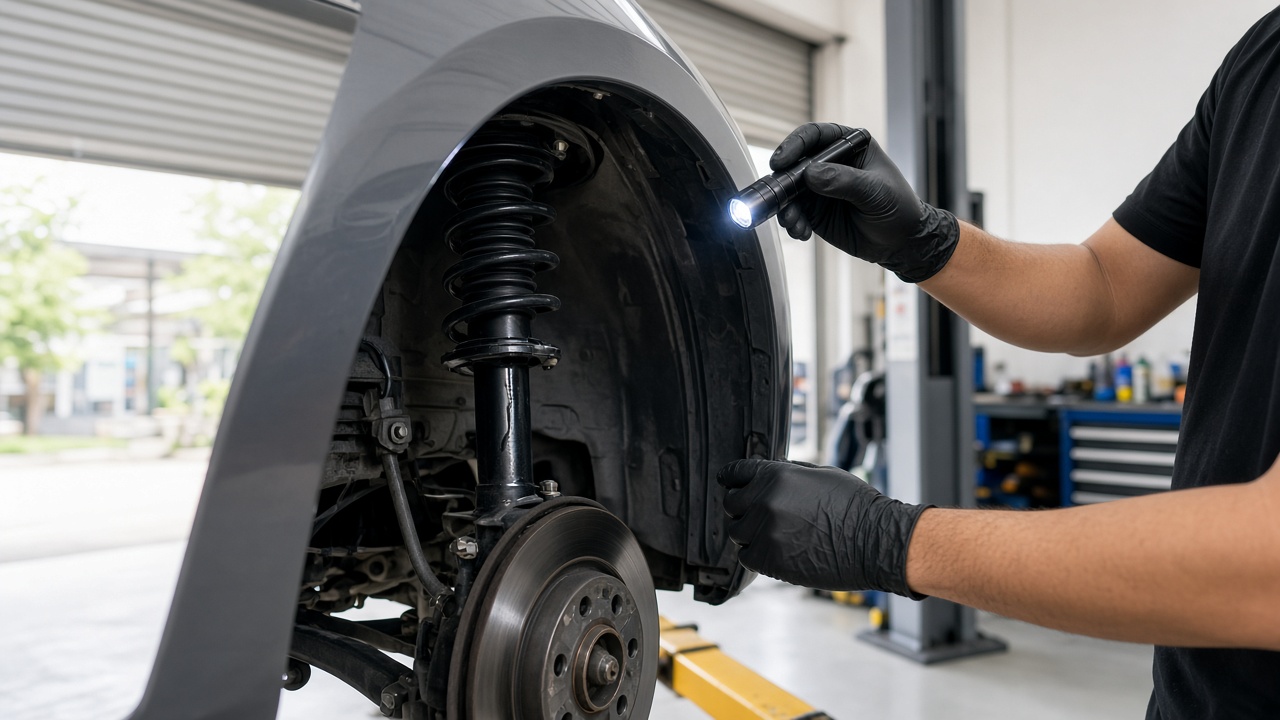
A coil spring supports the weight of the car. The absorber, mounted with that spring or as part of a strut, damps the movement so the body does not keep oscillating after a bump.
If the absorber is healthy, the car settles after one bounce. If it is tired, the body keeps bobbing and you feel float, wallow, or a knock. On a smooth car park this can be subtle. On rutted roads, speed bumps, or a highway joint in the rain, it becomes a safety issue: longer stopping distances, less stable lane changes, and faster tyre and bush wear.
Absorbers are wear parts. Seals harden, oil thins or leaks, and damping drops. The useful question is how to notice that early enough to plan the work, rather than after a tyre is already worn on one edge.
You do not need all seven. Two or three, especially if they have appeared together, are enough reason to book a check.
The car keeps bouncing after a bump. After a speed bump or pothole, the body should settle quickly. If the front or rear keeps bobbing, damping is weak. Note which end it is — that helps the workshop test the right corners.
The nose dives when you brake, or the rear squats when you accelerate. A sharp dip of the bonnet under moderate braking, or a rear end that collapses with passengers or a loaded boot, often means the absorbers are no longer controlling weight transfer.
The car rolls more in corners or feels loose in a lane change. It may feel floaty on the highway, or take a moment to settle after you avoid a pothole. Alignment and tyres should be checked too, but damping is often part of the picture.
A knock or clunk over broken tarmac. Not every knock is an absorber — a stabilizer link, lower-arm bush or loose mount can sound similar — but a dull knock from a strut or rear damper is worth investigating on a hoist.
Uneven or fast tyre wear. When an absorber cannot keep the tyre planted, the tread can feather, cup, or wear on one edge. If alignment has already been done and the pattern comes back, look at damping and bushes next.
Oil on the absorber body. A light film can be condensation. A wet, dirty streak of oil down the tube, or oil on the spring, usually means the seal has failed and damping will not recover.
Headlights that bounce, or a rear end that bottoms out. Bobbing headlights on an unlit road make it harder to see. A car that regularly bottoms out with passengers or luggage is telling you the rear dampers — and sometimes the springs — are past their best.
On level ground, with the engine off and the handbrake on, press down firmly on one corner of the car and release. A healthy corner typically rises and settles without a long series of bounces.
Treat this as a clue, not a verdict. Some modern struts do not bounce dramatically even when damping is weak at speed. Worn bushes can also make a corner feel loose even if the absorber still has life in it.
If the test feels wrong, or if you already have two of the signs above, ask a workshop to inspect the absorbers, mounts, springs and related parts together. A short drive over speed bumps and a look at the tyre wear will usually tell more than a car-park bounce alone.
Mileage still matters, but it is a poor standalone rule here. A car that does mostly highway trips can look very different from a family or e-hailing car that spends every day on broken urban roads and closely spaced speed bumps.
Local conditions that age absorbers faster include repeated speed bumps, potholes after heavy rain, monsoon standing water, regular heavy loads, and heat, which is hard on oil and rubber seals. If the car has been through deep flood water, have the underbody checked rather than waiting for a later knock.
There is no single kilometre figure that fits every Proton, Perodua, Toyota or Honda. The handbook and a workshop inspection should come first. Judge the car in front of you, not a number copied from another market.
Absorbers do not always wear at the same rate. Front struts often work harder because of braking and steering. Rear dampers on a loaded family car can go first. It is common to replace the front pair or the rear pair together, even if only one side feels weak, so the car stays balanced.
Replacing a single absorber and leaving a tired one on the other side of the same axle is usually a mistake. Mounts, bump stops and dust covers should be inspected at the same time. After the work, a wheel alignment is wise if tyre wear was one of the complaints, and the car should be road-tested over the same bumps you noticed.
If several of the signs sound familiar, the next step is a proper inspection, not a guess from a parts list. A workshop can confirm whether the issue is the absorber, a mount, a bush, a stabilizer link, or a combination.
When a replacement is needed, fitment matters as much as the name on the box. The absorber has to match the vehicle application, and a careful workshop will also look at the rest of the corner. Drivers can take the car to a workshop they trust. Workshops and dealers who need OE-standard absorbers for common Malaysian models can check Saiko’s shock absorber range or contact Saiko for fitment help.
For more on timing and buying, see when to replace shock absorbers and where to buy a shock absorber in Malaysia. The aim is the same: a car that stays predictable on the roads we actually drive.
Recent Posts
Recurring Road Damage: What Patched and Re-Patched Roads Do to Your Suspension
16 Nov 2026
RON95 Goodwill Payments Show Why Your Car's Paper Trail Matters
12 Nov 2026

After the Deepavali Drive: The Post-Trip Check Your Car Deserves
10 Nov 2026
21,624 Protons in One Month: What a Growing National Fleet Means for Parts and Service
10 Nov 2026
Malaysia's Automotive Workforce Is Growing. Here's Why Skills Matter for Every Repair
06 Nov 2026
 Whatsapp Us NowSaiko Automotive

