


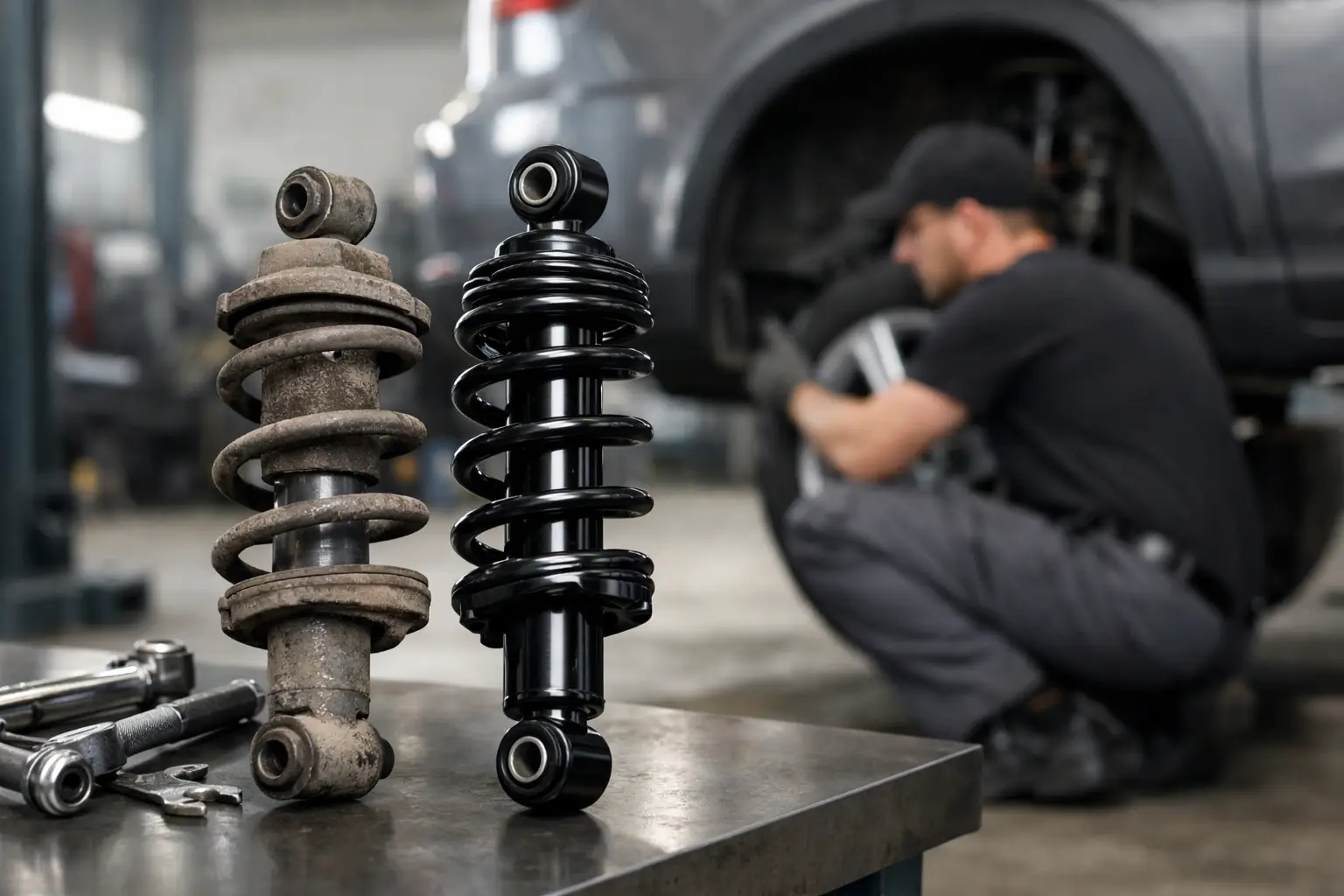
When to Replace Shock Absorbers
A car that starts bouncing over small road joints, dips hard under braking, or feels unsettled in corners is usually telling you something early. If you are wondering when to replace shock absorbers, the right answer is not based on mileage alone. It comes down to how the vehicle feels, how it wears its tires, and whether the suspension is still controlling the vehicle the way it should.
Shock absorbers are easy to overlook because they usually wear gradually, not all at once. That slow decline is exactly why many drivers keep adapting to poor ride control without realizing how much performance has been lost. For workshops, this also means customers often come in asking about tire noise, steering feel, or uneven handling when the real issue is worn shocks.
Shock absorbers do not carry the vehicle's weight. Their job is to control spring movement and keep the tires in contact with the road. When they are working properly, the vehicle feels stable, braking stays more controlled, and the ride remains predictable over bumps, potholes, and uneven surfaces.
When shocks wear out, the change shows up across several systems. Tire wear can increase. Braking distances can grow, especially on rough roads. Steering may feel less precise. The vehicle can also pitch forward under braking and squat more under acceleration. None of these problems always point to shocks alone, but worn dampers often play a bigger role than drivers expect.
This is why replacement timing matters. Waiting too long does not only reduce comfort. It can affect safety, tire life, and the load placed on related suspension parts.
Mileage is a useful reference point, but not a fixed rule. Many shock absorbers begin to show noticeable wear somewhere between 50,000 and 100,000 miles. That is a broad range because road conditions, driving style, vehicle load, and part quality all make a difference.
A vehicle that spends its life on smooth highways may keep acceptable ride control much longer than one driven daily on broken city roads, speed bumps, gravel routes, or flood-damaged surfaces. Commercial use, frequent heavy loads, and poor road conditions can shorten shock life significantly.
For workshops and parts buyers, the practical approach is simple. Once a vehicle passes moderate mileage, shocks should be inspected regularly rather than judged by mileage alone. A car with 60,000 miles can have badly worn shocks if it has had a hard life. Another with higher mileage may still be serviceable, though performance may not be at its original standard.
The most reliable way to judge when to replace shock absorbers is to combine a road test, visual inspection, and tire condition check. In real-world service, the warning signs usually build gradually.
Excessive bouncing is one of the most familiar symptoms. If the vehicle continues to oscillate after a bump instead of settling quickly, damping control has likely weakened. Nose-diving during braking is another common sign, especially if the front end drops more than it used to.
Body roll in corners also tends to increase with worn shocks. Drivers may describe the vehicle as floaty, loose, or less planted at highway speed. That feeling often becomes more obvious during lane changes or on uneven curves.
Tire wear can also tell the story. Cupping or scalloped wear patterns may suggest the tires are not staying planted consistently. That does not automatically prove the shocks are at fault, since alignment, bushings, and balance issues can contribute too. Still, tire wear and poor ride control often appear together.
Fluid leakage from the shock body is another important sign. A light film can be normal in some cases, but clear oil leakage usually means the unit is no longer performing as intended. Damaged mounts, dented housings, and worn bushings also support the case for replacement.
Sometimes shocks are not the original complaint, but they should still be considered during other repairs. If a vehicle is already receiving new tires, suspension arms, strut mounts, stabilizer links, or other steering and suspension components, it is smart to assess the shocks at the same time.
This matters for both cost and performance. Installing fresh tires on a vehicle with weak shocks can shorten tire life and reduce the benefit of the new set. Replacing surrounding suspension parts while leaving worn dampers in place can also leave the customer with an incomplete result. The vehicle may still feel unstable even after money has been spent elsewhere.
For workshops, this is where a proper inspection adds value. Customers appreciate clear, practical advice when it is tied to safety, ride quality, and long-term maintenance cost rather than upselling.
Not every vehicle wears front and rear shock absorbers evenly. Front units often work harder because they deal with engine weight, steering input, and heavier braking load transfer. Rear shocks may last longer in some vehicles, but not always. SUVs, pickup-based vehicles, and cars that regularly carry passengers or cargo can wear rear dampers faster than expected.
That creates an important trade-off. It is possible for one end of the vehicle to need attention first, but replacing shocks in pairs on the same axle remains the standard practice. Doing one side only can create uneven damping and inconsistent handling. In many cases, if one shock has clearly worn out, the matching side is not far behind.
Replacing all four at the same time is not mandatory in every situation, but it often makes sense when wear is widespread or mileage is high. It gives the driver a more balanced result and reduces the chance of returning soon for the other axle.
Drivers often postpone shock replacement because the vehicle is still moving and the problem feels manageable. The issue is that worn shocks usually create secondary costs. Tires may wear faster. Other suspension parts can be stressed more heavily. The vehicle may require more steering correction and feel less secure in emergency maneuvers.
Braking performance is another concern. Shock absorbers do not create braking force, but they help keep the tires in contact with the road surface. If the tires are bouncing or unloading over rough pavement, braking effectiveness suffers. That can matter a lot in wet conditions or panic stops.
For retailers and dealers, this is one reason shock absorbers remain a strong maintenance category. They are not just comfort parts. They directly influence safety, control, and the service life of neighboring components.
The best explanation is usually the simplest one. Customers do not need a lecture on damping curves. They need to understand what has changed in the vehicle and what replacement will improve.
A good service discussion connects the symptoms to everyday driving. If the car bounces more, takes longer to settle, wears tires unevenly, or feels unstable over rough roads, those are concrete reasons to act. Showing visible leaks, damaged bushings, or abnormal tire wear helps make the recommendation clear and credible.
This is also where part quality matters. Shock absorbers should deliver reliable damping, accurate fitment, and consistent performance across different vehicle applications. For a broad market that includes Japanese, Korean, local, and international models, coverage and quality control are just as important as price. Brands such as Saiko are positioned around that balance - dependable aftermarket performance, wide vehicle coverage, and value that makes sense for both workshops and everyday drivers.
There is no single mileage that fits every vehicle, and that is the key point. The right time to replace shocks is when control, stability, and ride quality have started to fall off, or when inspection shows clear wear. Some vehicles reach that point earlier because of rough roads, heavy use, or poor maintenance history. Others take longer.
If the vehicle no longer feels settled, if the tires are wearing strangely, or if the shocks show leakage or damage, waiting rarely improves the outcome. Replacing them at the right time protects more than ride comfort. It helps restore predictable handling, safer braking, and the kind of everyday confidence drivers notice the moment the car gets back on the road.
When the suspension starts talking, it is worth listening early.
Recent Posts
Automotive Trade Is on the Table in the Malaysia-EU FTA. Here's Why It Matters at the Parts Counter
23 Oct 2026
The Road Transport Act Just Got Tougher. Here's What It Means for Your Car's Parts
21 Oct 2026
Drove Through Flood Water? The Parts Under Your Car That Need a Look Next
19 Oct 2026
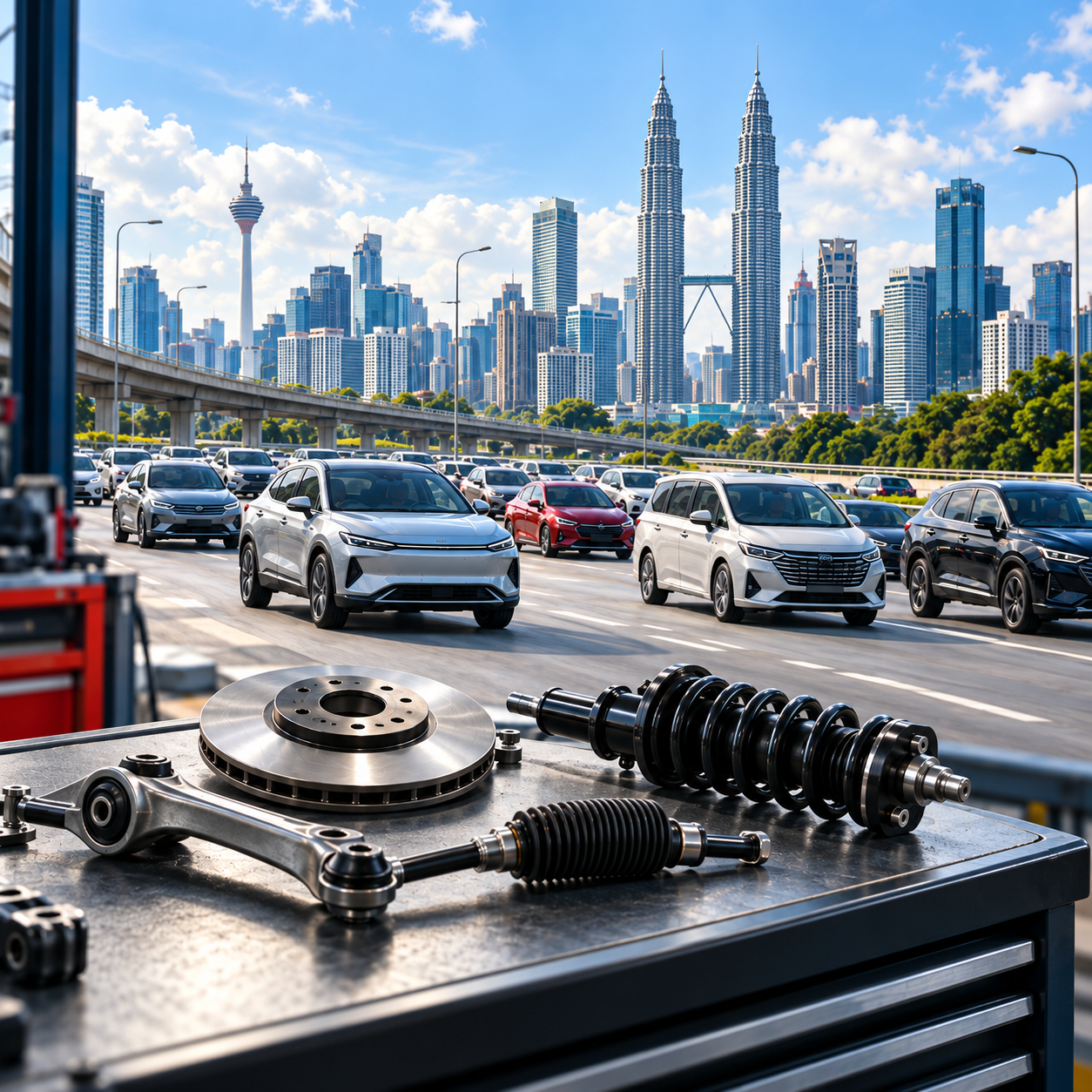
A Record Year on the Road Means a Record Year Ahead for Maintenance
12 Oct 2026
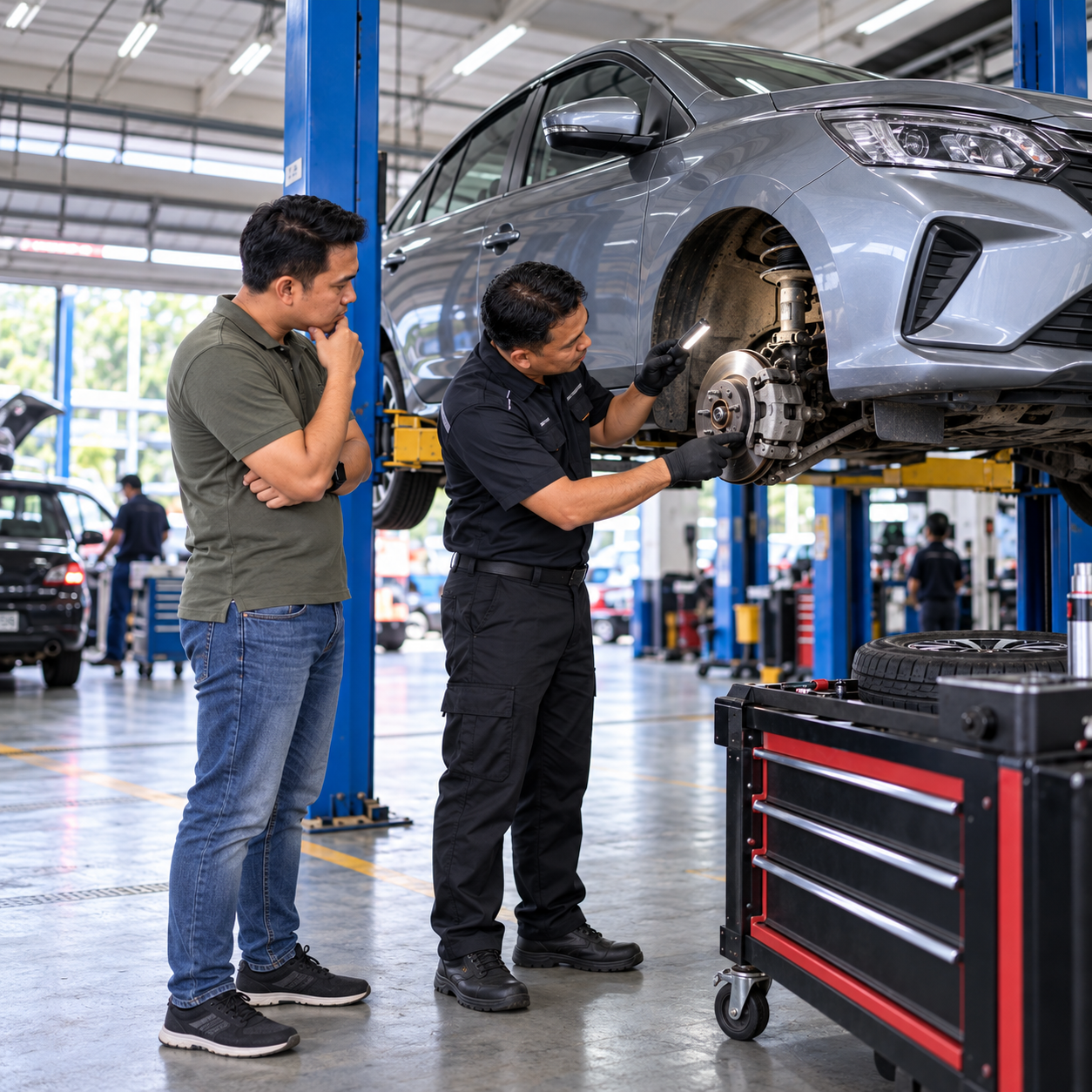
Budget 2027 Puts E-Hailing Car Maintenance on the National Agenda
12 Oct 2026
 Whatsapp Us NowSaiko Automotive

