


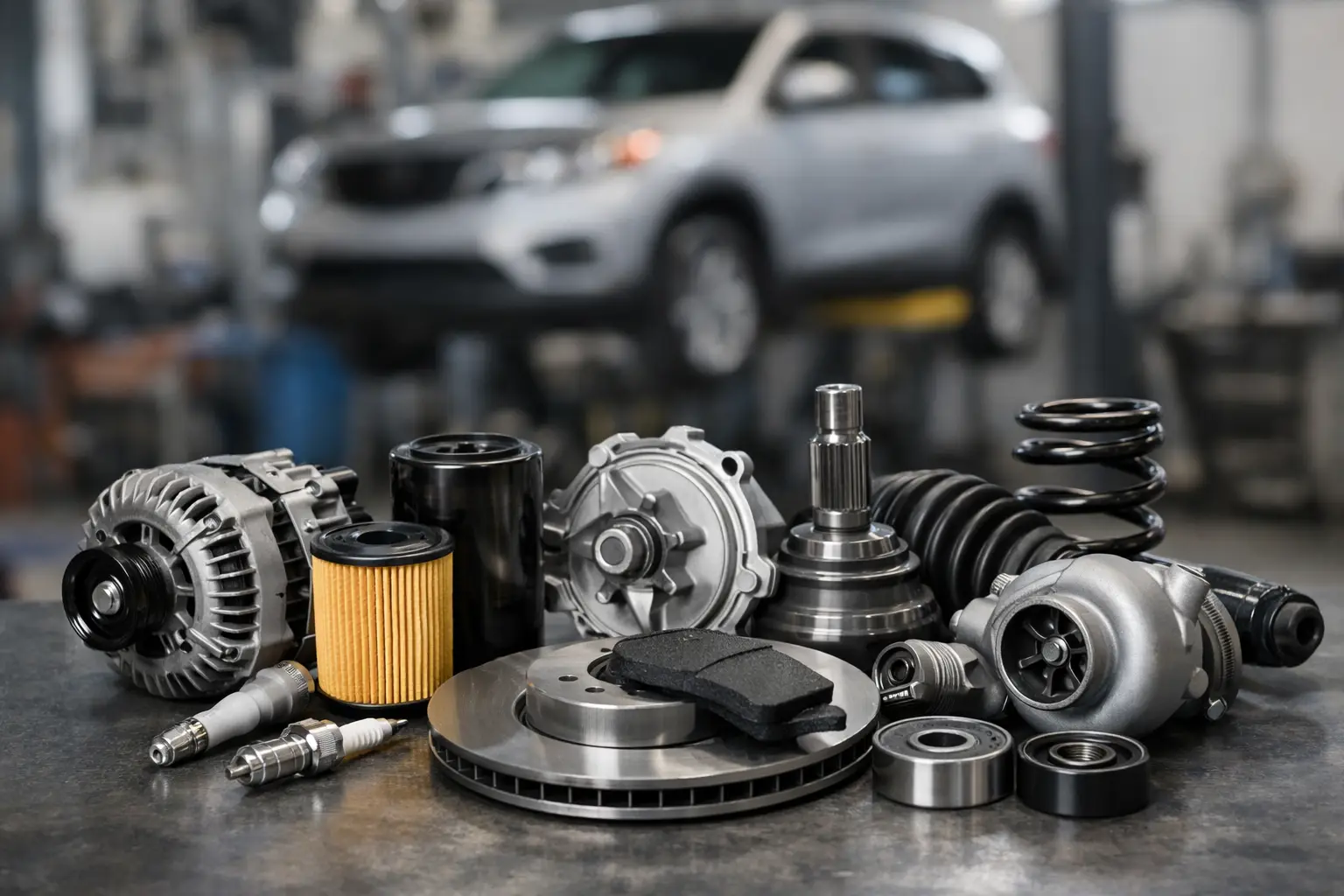
Best Selling Car Spare Parts Worth Stocking
A workshop loses time and trust when a common repair turns into a parts-matching problem. The best selling car spare parts are not simply the lowest-priced items or the parts with the biggest catalog listings. They are the components that fail often enough to create steady demand, affect safety or drivability, and must fit correctly the first time.
For retailers, stocking these categories supports repeat sales and healthier inventory movement. For workshops, reliable fast-moving parts reduce installation delays and comebacks. For drivers, choosing the right replacement part protects ride comfort, braking confidence, steering control, and the vehicle's long-term value.
A part becomes a consistent seller when it sits at the intersection of wear, road conditions, vehicle population, and repair urgency. Suspension and braking components move particularly well because they work under constant load. Potholes, speed bumps, heat, heavy traffic, rain, and carrying passengers or cargo all accelerate wear.
Demand also depends on the vehicles on the road. A product range covering popular Japanese, Korean, Malaysian, and international passenger vehicles gives dealers and workshops more opportunities to match the part a customer needs without holding excessive stock for uncommon applications.
Quality matters as much as demand. A cheap part that creates noise, premature wear, poor alignment, or difficult installation is not good value. The right fast-moving line combines dependable materials, consistent manufacturing, accurate dimensions, and clear vehicle fitment.
Shock absorbers are among the most frequently replaced suspension items. They control spring movement, helping tires stay in contact with the road during braking, turning, and uneven surfaces. Worn shocks can cause excessive bouncing, a floating feeling at speed, nose-diving under braking, uneven tire wear, or fluid leaks around the shock body.
Strut mounts often deserve attention at the same time. A failed mount may create knocking noises over bumps, steering noise, vibration, or a rougher ride. Replacing shocks without checking the mounts can leave a customer with part of the original problem still present.
When customers ask what is the best shock absorber in Malaysia, the practical answer is not one universal brand or one price point. The best choice is a quality-controlled shock with the correct valving, mounting points, and dimensions for the vehicle, used with related worn components addressed during inspection.
Wheel hubs and hub bearings are high-value safety parts. Their job is to let the wheel rotate smoothly while supporting vehicle weight and cornering load. A humming, growling, or rumbling sound that rises with road speed is a common warning sign. Excessive wheel play, vibration, and an illuminated ABS warning light can also point to a hub or bearing issue, depending on the vehicle design.
Poor-quality bearings may become noisy early or develop play that affects tire wear and handling. Accurate fitment is essential because sensor rings, spline counts, bolt patterns, and wheel-speed sensor configurations vary by application. The best wheel hub for a repair is therefore one built to the correct specification, not merely one that appears similar on the shelf.
Brake pads and discs remain essential stock because every vehicle will need them over its service life. Pads wear with mileage, driving style, traffic conditions, and load. Squealing, reduced braking response, vibration through the pedal, a brake warning light, or visible low pad material should trigger inspection.
Brake discs may need replacement when they are below minimum thickness, deeply scored, warped, cracked, or affected by uneven pad deposits. Installing new pads onto a damaged disc can reduce braking performance and create noise or vibration.
For customers comparing aftermarket brake pads, value comes from stable friction performance, dependable heat handling, proper backing plate construction, and fitment that allows smooth installation. The lowest-cost option may look attractive until it produces brake dust, noise, uneven wear, or inconsistent stopping feel.
These suspension parts are frequent sellers because their bushings and joints work through every turn, bump, and braking event. Control arms and lower arms position the wheel correctly. Ball joints allow controlled movement between steering and suspension components. Stabilizer links reduce body roll by connecting the stabilizer bar to the suspension.
Common symptoms include clunking over bumps, steering wander, uneven tire wear, vibration, poor alignment readings, or a vehicle that pulls to one side. A torn bushing or leaking ball-joint boot should not be ignored, since dirt and moisture can quickly damage the joint.
A complete lower arm can be a practical repair choice when its bushings and ball joint are worn together. It may reduce labor compared with pressing individual bushings, although the right approach depends on vehicle design, workshop equipment, and the condition of surrounding components. An alignment check after suspension work is a sensible final step.
Steering components should be stocked with safety in mind. Tie rod ends and rack ends transfer steering rack movement to the wheels. Wear can create looseness in the steering wheel, knocking sounds, wandering, uneven tire wear, or difficulty keeping the vehicle centered.
Steering racks have lower sales volume than tie rod ends, but they are important replacement items for applications with fluid leaks, internal wear, or inconsistent steering assistance. Because steering repairs affect alignment and vehicle control, workshops should confirm the fault before replacement and inspect boots, clamps, fluid condition, and related linkage parts.
Drive shafts sell when constant-velocity joints wear or boots tear. Clicking while turning, shuddering under acceleration, grease around the wheel area, and vibration can indicate a problem. A replacement drive shaft must match the correct length, spline count, transmission connection, and ABS configuration where relevant.
Timing kits are not daily walk-in items in the same way as brake pads, but they are critical scheduled-maintenance products. A timing belt system may include the belt, tensioner, idler pulleys, and sometimes a water pump. Ignoring the manufacturer's interval can lead to costly engine damage on interference engines. Selling a complete, properly matched kit helps workshops perform the job with fewer repeat disassembly risks.
A productive inventory plan starts with the local car parc, not a broad assumption about what should sell. Review recent invoices, workshop job cards, and common vehicle models in your service area. Fast-moving brake, suspension, steering, and wheel-bearing applications for popular vehicles should receive deeper stock than slow-moving specialty parts.
Use a balanced approach: keep regular-demand applications on hand, maintain supplier access for medium-demand parts, and avoid tying up capital in obscure variants. It is also wise to stock related service combinations. Brake pads naturally pair with discs; shocks often pair with strut mounts; control-arm repairs may lead to ball-joint, stabilizer-link, and alignment work.
| Product category | What customers notice | Buying priority | |---|---|---| | Brake pads and discs | Noise, vibration, reduced stopping confidence | High-volume safety stock | | Shock absorbers and mounts | Bouncing, leaks, harsh ride, knocking | High-volume suspension stock | | Wheel hubs and bearings | Humming, wheel play, ABS concerns | Application-specific core stock | | Lower arms and ball joints | Clunks, tire wear, poor alignment | Strong demand on common models | | Tie rod ends and rack ends | Loose steering, wandering | Essential steering stock | | Drive shafts and timing kits | Clicking, vibration, scheduled service | Selected high-coverage applications |
Start with fitment. Vehicle year alone is rarely enough. Confirm the model, engine, transmission, chassis or VIN details where available, and any brake, ABS, or suspension variant. A part with the wrong mounting position or sensor setup can delay a repair even if it is close in appearance.
Then assess consistency. Reliable aftermarket parts should have controlled specifications, secure packaging, identifiable part numbers, and dependable availability for repeat orders. For workshops, correct fitment reduces unnecessary modification and helps technicians complete jobs efficiently. For retailers, stable quality protects their reputation with trade customers.
Installation quality still matters. A good part can fail early if fasteners are over-tightened, torque settings are ignored, boots are damaged during installation, or the vehicle is returned without alignment after steering and suspension work. Replacing a failed component without diagnosing the cause can also lead to a repeat problem. For example, a damaged hub bearing may be linked to impact damage, while uneven brake wear may involve seized caliper hardware rather than pads alone.
SAIKO has supplied OE-standard tested aftermarket components since 2007, with coverage across more than 400 vehicle models and a nationwide network of over 500 dealers and distributors. Its range includes wheel hubs, shock absorbers, timing kits, steering and suspension parts, drive shafts, brake pads, brake discs, and related replacement components designed for practical fitment, availability, and value.
For a workshop or retailer, the best-selling line is the one customers return for because it performs as expected. Build stock around the vehicles you actually service, verify every application before installation, and treat safety-critical repairs as a quality decision rather than a price-only decision.
Recent Posts
A Record Year on the Road Means a Record Year Ahead for Maintenance
12 Oct 2026
A Rear Axle Recall Is a Reminder: The Back of the Car Matters Too
12 Oct 2026
Scrap or Maintain? What a Proposed Old-Car Rebate Means for Malaysia's Older Vehicles
09 Oct 2026
Price Transparency Is Coming to the Parts Counter. Here's What Else You Should Check
07 Oct 2026
Parts Availability Is the New Aftersales Battleground. Here's Why It Matters to Every Driver
05 Oct 2026
 Whatsapp Us NowSaiko Automotive

