


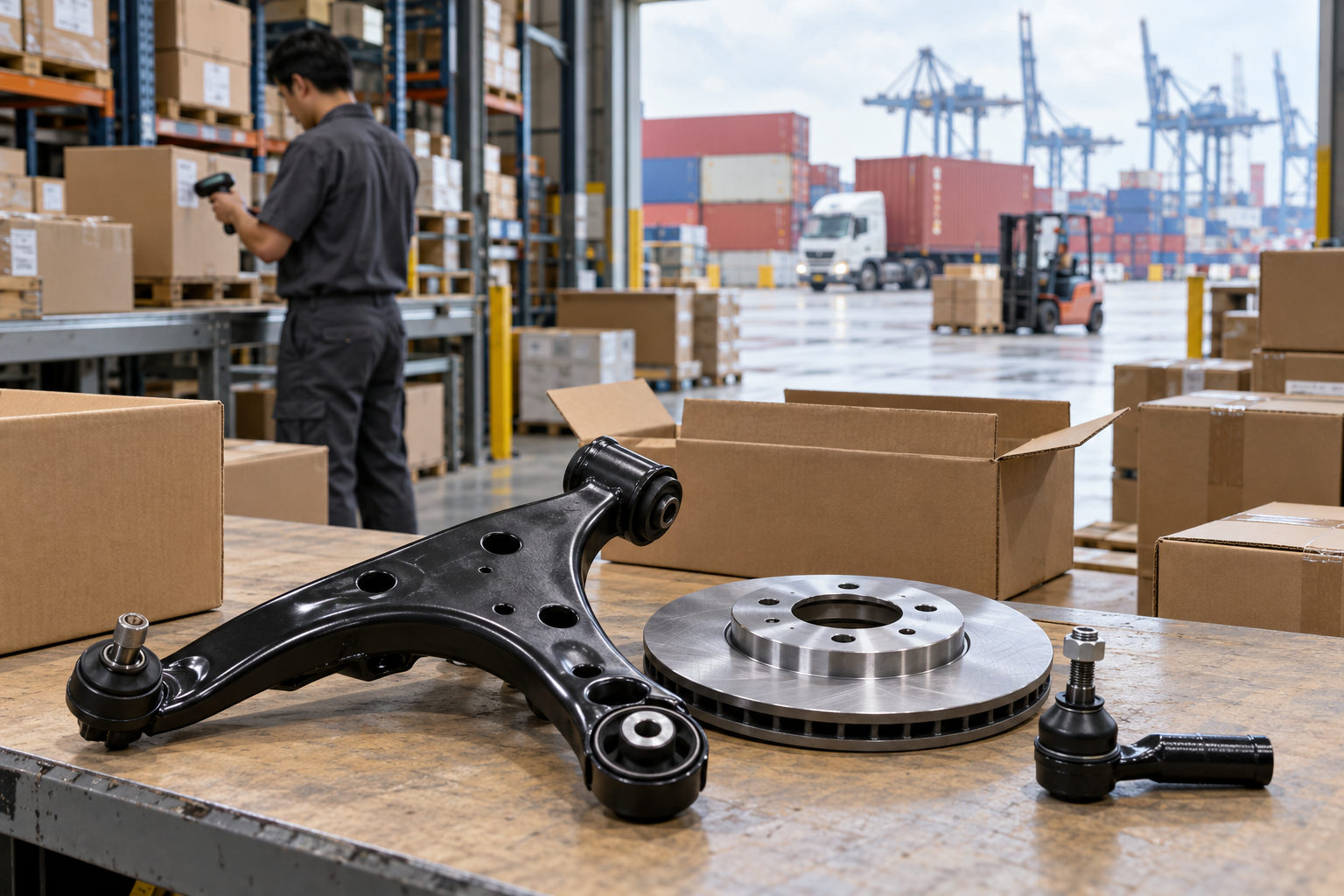
Automotive Trade Is on the Table in the Malaysia-EU FTA. Here's Why It Matters at the Parts Counter
Trade negotiations usually feel a long way from the workshop floor. But when Investment, Trade and Industry Minister Datuk Seri Johari Abdul Ghani named automotive trade as one of the outstanding issues in the Malaysia-EU FTA talks on 13 October, alongside steel and palm oil, he touched on something that eventually reaches every driver: where car parts come from, and what shapes their cost and availability.
Speaking at EU-Malaysia Business Day 2026 in Kuala Lumpur, as reported by Media Selangor, the minister said nearly 80 per cent of negotiations are complete and described the remaining work as "still work in progress." Malaysia is now targeting conclusion by the end of June 2027, ahead of the end-2027 goal both sides set when talks resumed in 2025. Any agreement still has to be approved by the EU's 27 member states.
The specific automotive sticking points haven't been made public, so it would be wrong to predict outcomes. What's worth understanding is how trade agreements like this one connect to the parts in your car, and what stays true however the talks end.
Malaysia's vehicle parc is one of the most varied in the region. National brands, Japanese and Korean marques, a fast-growing group of Chinese brands, and European models all share the same roads. Each brings its own parts supply chain, and those chains cross borders many times before a part reaches a dealer shelf.
Trade agreements can influence that chain in several ways:
Steel is also on the list of outstanding issues, and steel is the raw material behind control arms, tie rods, ball joint housings, springs and brake discs. Changes in steel trade conditions tend to ripple through the components built from it.
Trade policy isn't the only force at work. Local assembly continues to expand: in the same week, paultan.org reported (15 October) that SAIC Motor Malaysia will launch the second-generation MG ZS at the end of October as a locally assembled model built in Melaka. Locally assembled cars from a growing list of brands mean more models on Malaysian roads for longer, and more owners who will eventually need replacement steering, suspension and brake parts once warranties end.
For the aftermarket, this creates a simple reality. The more varied the car parc, the more important it is to have:
Tariff lines and origin rules will shift over time. The standards a replacement part needs to meet shouldn't. For drivers and workshops, a few principles hold steady:
These points apply equally to a Proton, a Honda, a Chery or a Volkswagen. Good parts don't depend on a trade deal; they depend on how they're engineered and checked.
For now, nothing changes at the parts counter. The Malaysia-EU FTA is still being negotiated, and any effect on automotive trade would take time to reach consumers after an agreement is signed and approved. But the conversation is a useful reminder that the price and availability of parts are shaped by forces far beyond the workshop.
The best response for car owners is a practical one:
Supply chains will keep evolving as Malaysia negotiates new trade relationships and local assembly grows. What drivers need from the aftermarket stays constant: correct fitment, dependable quality and support close to home.
SAIKO has supplied quality-controlled automotive replacement parts since 2007, with coverage for more than 400 vehicle models and a nationwide dealer network. As Malaysia's car parc becomes more diverse, that combination of range and consistency is what keeps every car on the road safely.
Find the right part for your vehicle at saiko.com.my
Recent Posts
The Road Transport Act Just Got Tougher. Here's What It Means for Your Car's Parts
21 Oct 2026
Drove Through Flood Water? The Parts Under Your Car That Need a Look Next
19 Oct 2026
A Record Year on the Road Means a Record Year Ahead for Maintenance
12 Oct 2026
Budget 2027 Puts E-Hailing Car Maintenance on the National Agenda
12 Oct 2026
A Rear Axle Recall Is a Reminder: The Back of the Car Matters Too
12 Oct 2026
 Whatsapp Us NowSaiko Automotive

