


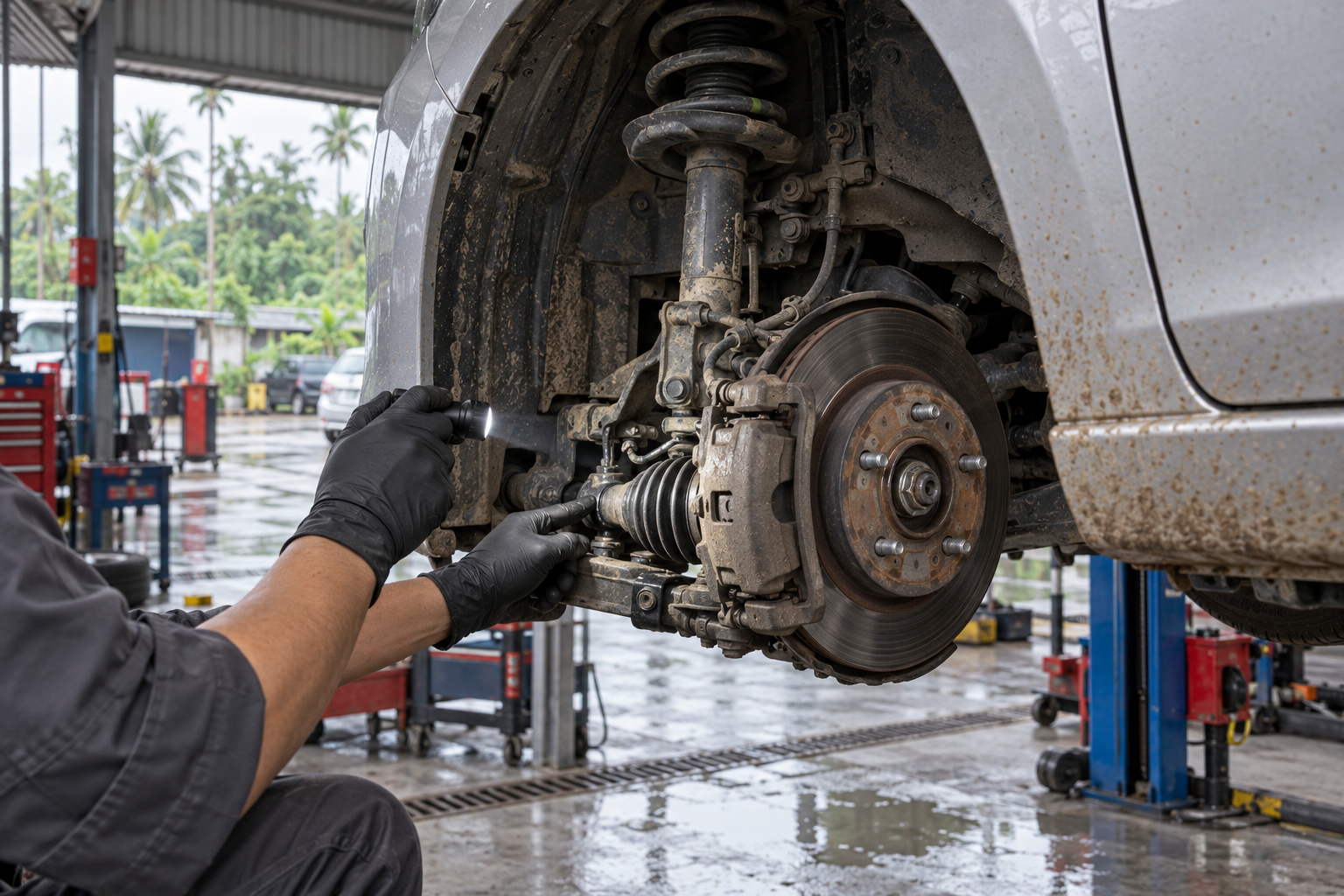
The Road Transport Act Just Got Tougher. Here's What It Means for Your Car's Parts
On 16 October 2026, the Road Transport (Amendment) Act 2026 came into force, updating the Road Transport Act 1987 with 42 amendment clauses. Passed by Parliament in June, the changes were announced in a transport ministry statement and reported by paultan.org. The headline item is that racing or speed-testing on public roads is now a specific offence under a new Section 42A. But tucked inside the package is something every car owner, workshop and parts buyer should notice: tighter motor vehicle safety regulation covering modified vehicles and vehicle components.
The ministry hasn't yet published detailed specifics on the component provisions, so it would be premature to speculate on exact rules. What the direction makes clear, though, is that how a car is built, modified and maintained is getting more attention, not less.
The amendments span four broad areas: digitalisation of services and enforcement, higher fines and compound rates, new provisions, and strengthened or harmonised existing provisions. The points reported so far include:
This is a summary of reported facts, not legal advice. Owners with specific questions about their vehicle should refer to JPJ guidance as detailed regulations are published.
Malaysia has a large, enthusiastic modification culture, from mild stance upgrades to full suspension builds. Most of it is done by responsible owners and skilled workshops. The risk has always been at the low end: components of unknown origin, poor fitment, or parts that were never tested for the loads they'll see on Malaysian roads.
When a regulator signals tighter oversight of vehicle components, the practical message for owners is simple. The parts on your car should be:
Steering and suspension parts are where this matters most. A tie rod end transmits every steering input to the wheel. A ball joint carries load through every bump and turn. A stabilizer link controls body roll in corners. These aren't cosmetic parts, and a failure at speed is a safety event, not an inconvenience.
None of this means car owners should stop personalising their vehicles. It means doing it with the right parts, the right workshop and a clear view of what each change does.
A sound approach to suspension upgrades looks like this:
Durability matters as much as feel. In SAIKO's own 7.0 kN stress test, a SAIKO ball-joint-style component survived 247,274 cycles without damage, compared with failure at 100,000 cycles for the OEM part and 50,000 cycles for an unnamed aftermarket competitor. SAIKO summarises this as up to 2× longer than OEM and up to 4× longer than competitors. Numbers like these are the reason component choice is a safety decision, not just a price decision.
For workshops and retailers, the amended Act is a good prompt to review how parts are sourced and documented:
For everyday drivers, the takeaway is reassuring rather than alarming. If your car is maintained with proper replacement parts and modified, if at all, through reputable workshops, you're already doing what the direction of policy encourages.
Stronger road laws work best when the vehicles on those roads are well built and well maintained. Quality steering and suspension components are a quiet but essential part of that.
SAIKO has supplied quality-controlled automotive replacement parts since 2007, with coverage for more than 400 vehicle models and a nationwide dealer network. Whether you're replacing a worn part or upgrading your setup, choose components engineered for performance, durability and precise control.
Explore SAIKO steering and suspension at saiko.com.my
Recent Posts
Automotive Trade Is on the Table in the Malaysia-EU FTA. Here's Why It Matters at the Parts Counter
23 Oct 2026
Drove Through Flood Water? The Parts Under Your Car That Need a Look Next
19 Oct 2026
A Record Year on the Road Means a Record Year Ahead for Maintenance
12 Oct 2026
Budget 2027 Puts E-Hailing Car Maintenance on the National Agenda
12 Oct 2026
A Rear Axle Recall Is a Reminder: The Back of the Car Matters Too
12 Oct 2026
 Whatsapp Us NowSaiko Automotive

