


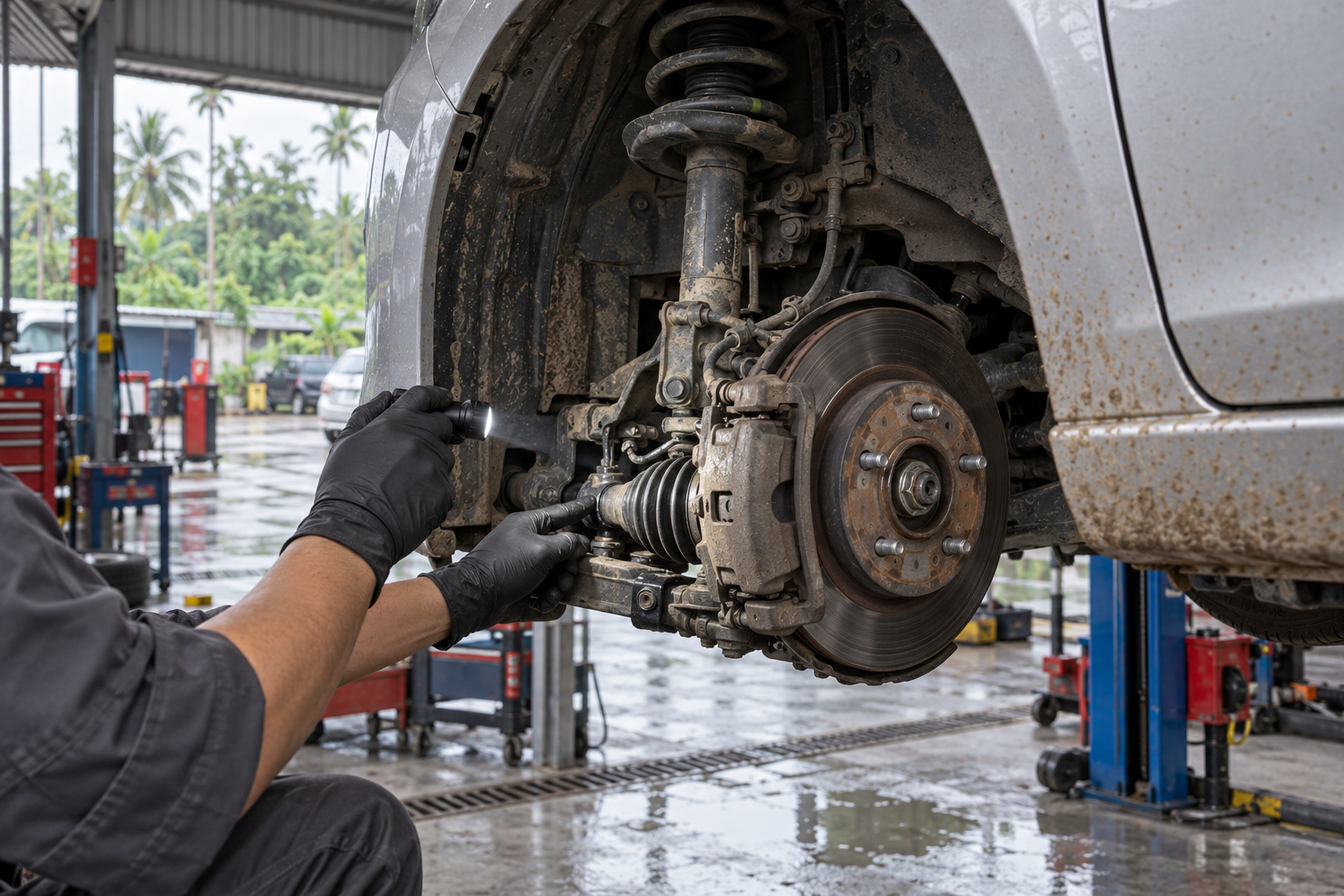
Drove Through Flood Water? The Parts Under Your Car That Need a Look Next
When afternoon thunderstorms turned roads in USJ, Sunway, Ara Damansara, Kota Damansara and Shah Alam into shallow rivers on 17 October, thousands of motorists did what Klang Valley drivers have learned to do: slow down, pick a line, and push through. Malay Mail reported water rising near the i-City traffic lights and Section 16 in Shah Alam, and the Malaysian Highway Authority flagged a flooded ramp at the Guthrie Corridor Expressway interchange that left only one lane passable. For anyone who made it home, the obvious worry is the engine. The less obvious one is a car after driving through flood water, and what that water did to the parts you never see: wheel bearings, brakes, CV joints and suspension joints.
With MetMalaysia having flagged the start of the monsoon transition in early October, this won't be the last downpour of the season. It's worth knowing what flood water does below the bumper line, and what to check before a small problem becomes an expensive one.
Rain splashes. Flood water submerges. That difference matters because most chassis components are designed to keep out spray and grit, not to sit in standing water carrying silt, sand and debris.
When a wheel hub, ball joint or CV joint is submerged, three things can happen:
None of this shows up immediately. A bearing contaminated today may not start humming for weeks, which is why owners often don't connect the noise to the flood.
If your car went through water that reached the wheel hubs or higher, a workshop inspection is the sensible next step. In the meantime, these are the signs to watch and listen for:
A simple habit helps too. After driving through water, apply the brakes gently a few times at low speed to dry the pads and discs, and avoid parking the car wet for days without moving it.
Not every car that drives through a flooded street needs new parts. Many will be fine after drying out and a careful inspection. The key is not to ignore early symptoms, because chassis components work as a system. A worn bearing loads the hub unevenly; a slack ball joint affects alignment, which in turn wears tyres and brakes faster. Compromise one part and you compromise the rest of the chain.
When replacement is needed, a few principles apply:
This is where the choice of replacement part matters. SAIKO's ball joints, tie rod ends and stabilizer links use sealed dust boots designed to keep out water and grit, and SAIKO's ball joint design uses POM (polyoxymethylene) bearing technology, which is self-lubricating and sealed, so it needs no greasing in service. For drivers who face waterlogged roads several times a year, sealing and wear resistance aren't marketing details. They're what keep the steering feeling tight next year.
The monsoon transition is a good reminder to get ahead of problems rather than react to them:
Malaysia's weather isn't going to change, but how prepared your car is can. A quick inspection after a flood, and quality replacement parts when they're needed, make the difference between a car that copes with the monsoon and one that slowly falls apart because of it.
SAIKO has supplied quality-controlled automotive replacement parts since 2007, with coverage for more than 400 vehicle models and a nationwide dealer network. If your car has been through the water this month, have it checked, and ask for parts built to keep the elements out.
Find a SAIKO dealer near you at saiko.com.my
Recent Posts
A Record Year on the Road Means a Record Year Ahead for Maintenance
12 Oct 2026
Budget 2027 Puts E-Hailing Car Maintenance on the National Agenda
12 Oct 2026
A Rear Axle Recall Is a Reminder: The Back of the Car Matters Too
12 Oct 2026
Scrap or Maintain? What a Proposed Old-Car Rebate Means for Malaysia's Older Vehicles
09 Oct 2026
Price Transparency Is Coming to the Parts Counter. Here's What Else You Should Check
07 Oct 2026
 Whatsapp Us NowSaiko Automotive

