


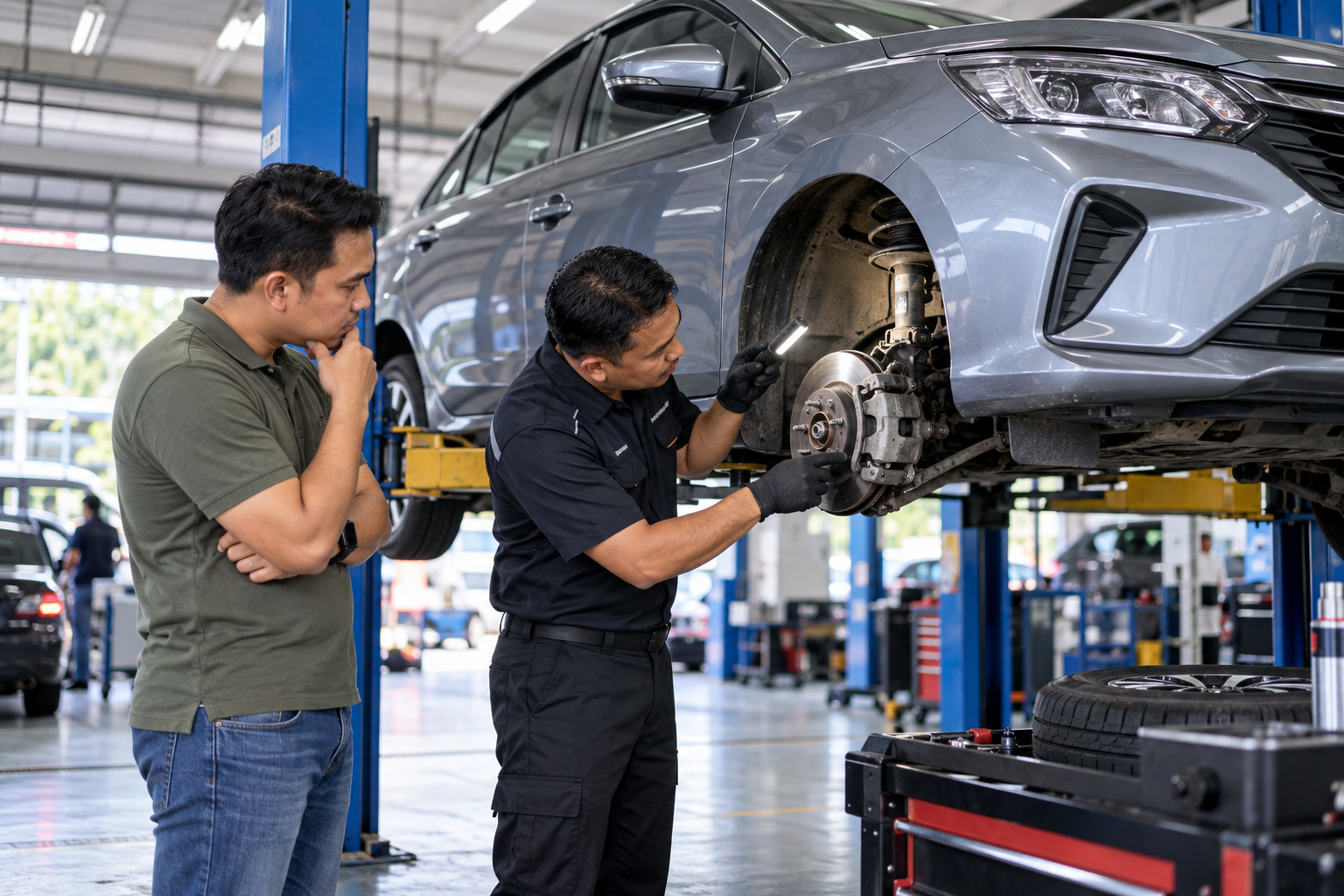
Budget 2027 Puts E-Hailing Car Maintenance on the National Agenda
For most motorists, the car is how they get to work. For e-hailing drivers, the car is the work. That is why e-hailing vehicle maintenance in Malaysia deserves more attention than it usually gets, and why one line in Budget 2027 stands out for anyone who drives for a living.
On 9 October 2026, Business Today reported that the government and Grab will jointly fund a RM160 million package for gig workers starting in 2027. Alongside higher minimum earnings rates and social security support, the package includes assistance with vehicle maintenance and insurance costs. The report estimated that median e-hailing drivers could see monthly net income rise by up to RM227, and p-hailing delivery riders by up to RM100.
Details on how the maintenance support will work, including amounts and eligibility, had not been published at the time of writing. But the inclusion itself is significant. It recognises that keeping a car roadworthy is a real cost of earning an income, not an optional extra.
Based on reporting by Business Today and paultan.org's live coverage on 9 October, the transport-related measures most relevant to working drivers include:
Together, these measures treat people who drive for a living more formally, with more support and more accountability. Vehicle condition sits in the middle of both.
An e-hailing car lives a very different life from a family car that does the school run and a weekend trip. The pattern of use matters as much as the distance:
Parts a private owner might replace once can wear out several times for a working driver, so distance and conditions, not time alone, should set the schedule.
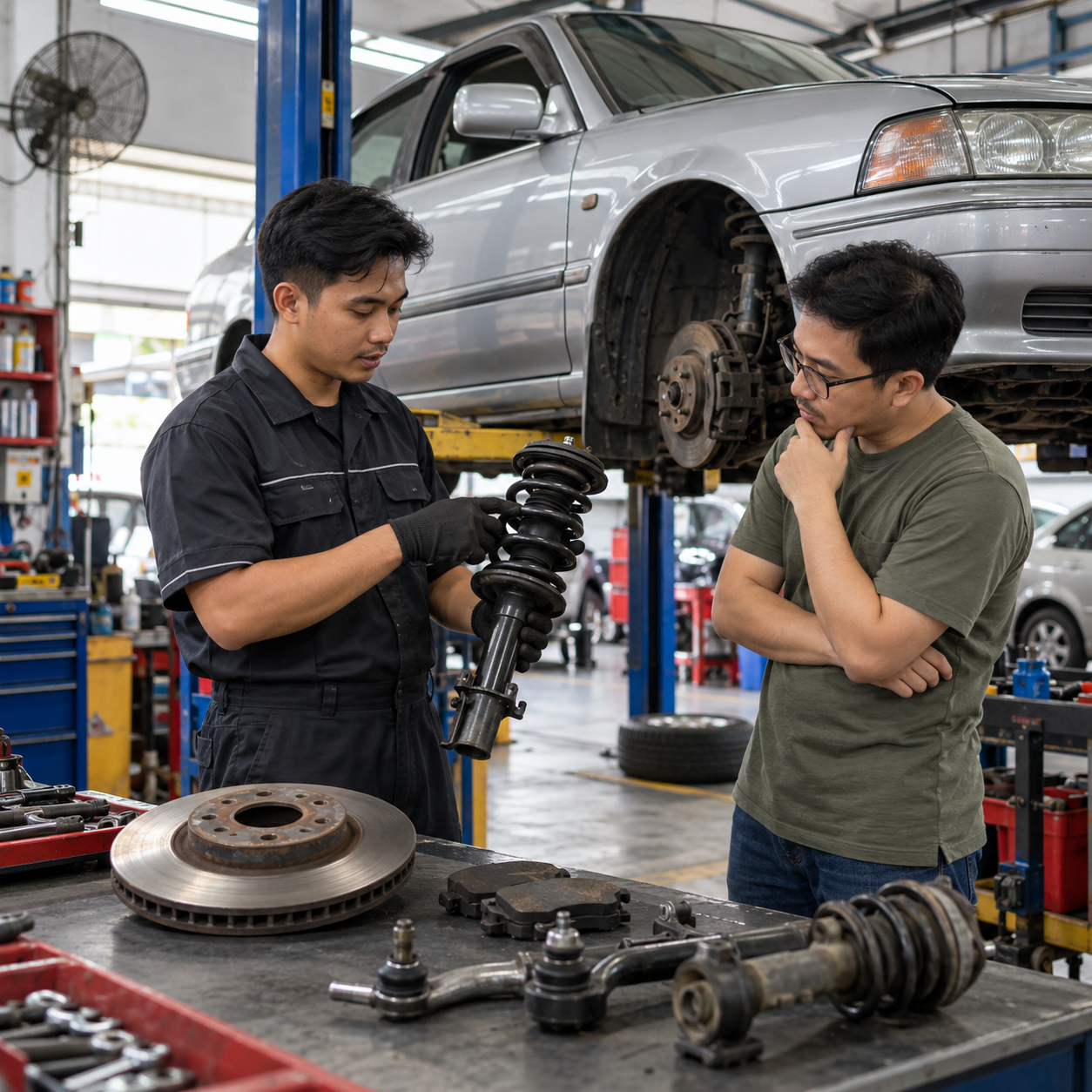
For a working driver, the goal is simple: avoid surprise breakdowns, keep passengers comfortable and protect ratings. The chassis is where much of that is won or lost. Priorities include:
SAIKO's general workshop guidance is to consider replacing a suspension kit every 50,000 km or two years, and coil springs at around 100,000 km. For an e-hailing car, the distance threshold will usually arrive long before the time limit, so drivers should plan around kilometres.
Quality matters most when mileage is high. A cheaper part that wears out quickly costs a working driver twice: once for the replacement, and again in lost hours off the road. In SAIKO's own 7.0 kN stress survival test of ball-joint-style parts, an unnamed aftermarket competitor's part failed at 50,000 cycles and an OEM part at 100,000 cycles, while the SAIKO part completed 247,274 cycles with no damage. SAIKO describes this as up to 2× longer than OEM and up to 4× longer than competitors, supported by sealed, maintenance-free POM bearing technology.
Whatever form the Budget 2027 maintenance support takes, drivers can start now:
Safety and income go together for e-hailing drivers. A well-maintained car is more reliable, more comfortable for passengers and less likely to be off the road when demand is highest. With telematics and formal regulation on the way, a car in good condition is also a professional asset.
SAIKO has supplied quality-controlled automotive replacement parts since 2007, with coverage for more than 400 vehicle models and a nationwide dealer network. Find SAIKO steering, suspension and brake parts through a dealer near you at saiko.com.my
Recent Posts
Drove Through Flood Water? The Parts Under Your Car That Need a Look Next
19 Oct 2026
A Record Year on the Road Means a Record Year Ahead for Maintenance
12 Oct 2026
A Rear Axle Recall Is a Reminder: The Back of the Car Matters Too
12 Oct 2026
Scrap or Maintain? What a Proposed Old-Car Rebate Means for Malaysia's Older Vehicles
09 Oct 2026
Price Transparency Is Coming to the Parts Counter. Here's What Else You Should Check
07 Oct 2026
 Whatsapp Us NowSaiko Automotive

