


Scrap or Maintain? What a Proposed Old-Car Rebate Means for Malaysia's Older Vehicles
Malaysia's roads carry a remarkable mix of cars, from brand-new EVs to well-loved sedans that have been in the family for two decades. That is why maintaining older cars in Malaysia is not a niche topic. It is a daily reality for a great many households, and it has just entered the national policy conversation.
On 28 September 2026, paultan.org reported on the Malaysian Automotive Association's (MAA) proposals for Budget 2027, which is scheduled to be tabled in Parliament on 9 October 2026. Alongside a proposed RM7,000–RM10,000 personal income tax rebate for buyers of electrified vehicles, the MAA proposed a RM5,000 personal income tax rebate for owners who voluntarily retire a vehicle aged 20 years or older through a government-approved scrapping facility. Other suggestions included extending the green investment tax allowance to charging point operators and setting up a fund to help automotive suppliers develop capability for xEV components.
These are industry proposals, not confirmed policy. Whether any of them appear in Budget 2027 is for the government to decide. But the conversation itself is a useful prompt for every owner of an older car to ask a practical question: is my car still in safe, roadworthy condition?
Vehicle renewal programmes are designed to encourage owners of very old vehicles to retire them in favour of newer, cleaner and safer models. The MAA framed its overall package around affordability and the transition to electrified vehicles, with MAA President Mohd Shamsor Mohd Zain quoted as saying the xEV measure "can reduce the upfront cost of xEV ownership and improve affordability for xEVs."
For many Malaysians, though, replacing a car is a major financial decision that cannot be rushed, incentive or not. Plenty of older vehicles will remain on the road for years to come, carrying children to school, workers to their jobs and goods to market. For those cars, the most important safety measure is not a rebate. It is proper maintenance.
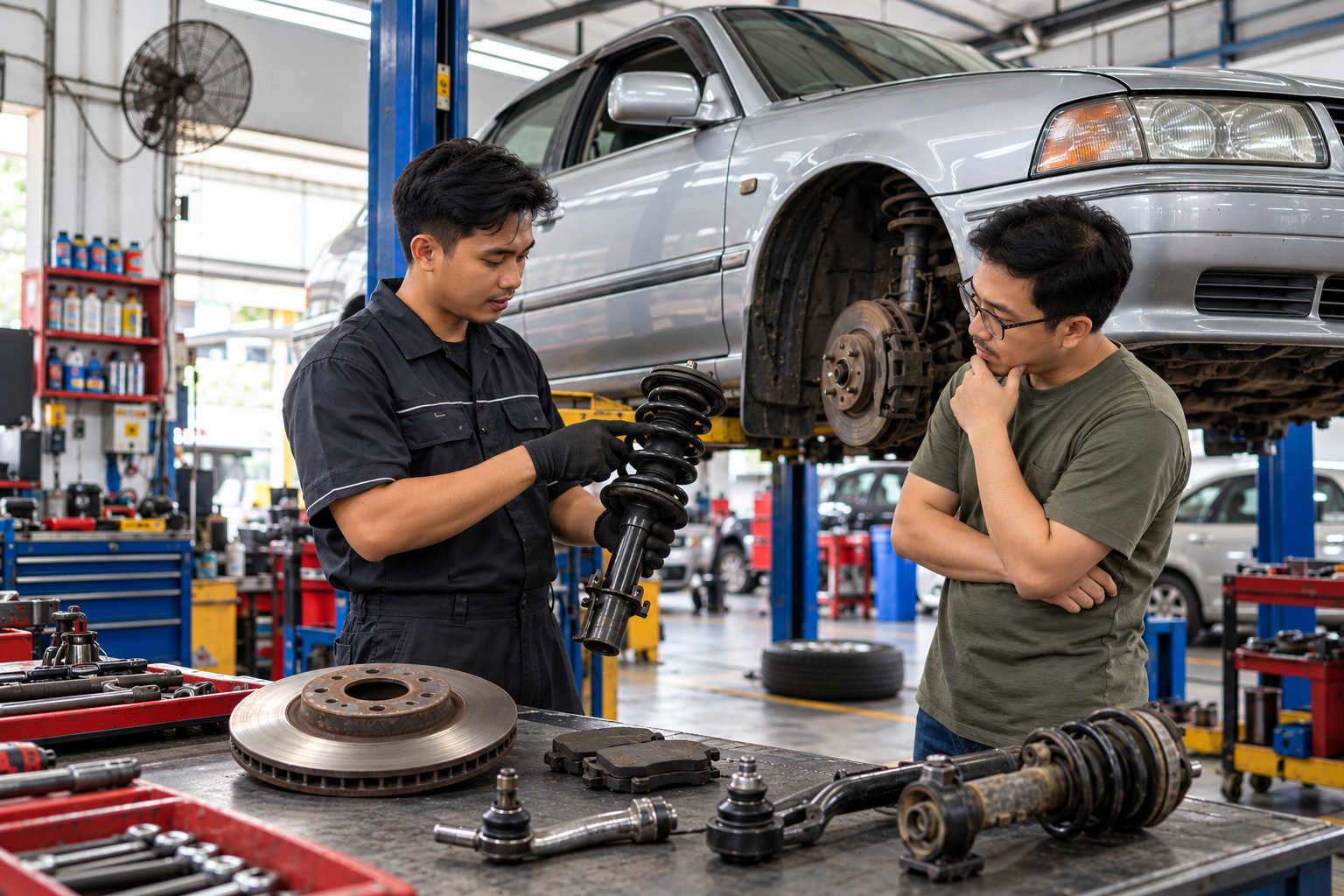
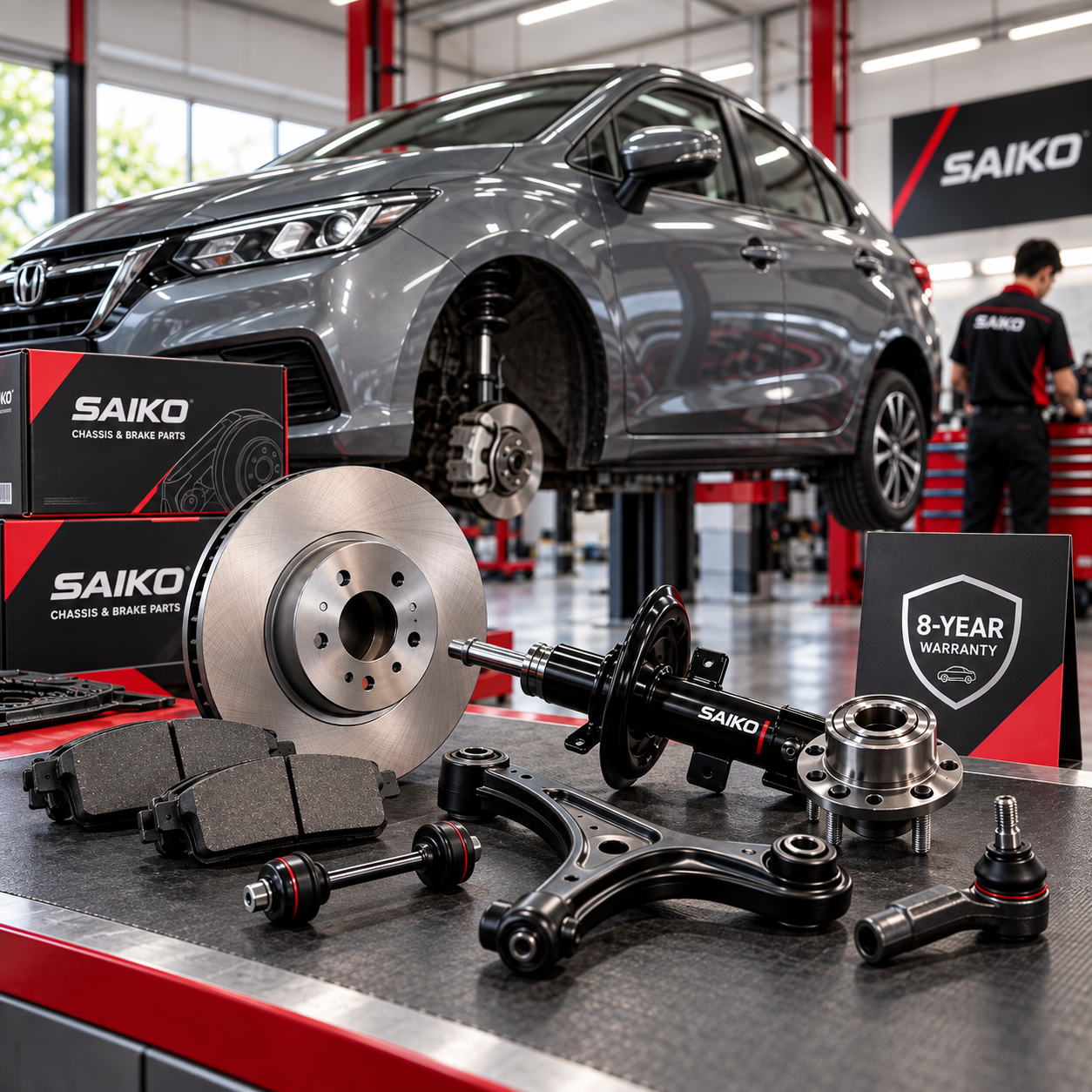
Engines often get the attention, but on older vehicles it is frequently the steering, suspension and braking systems that degrade quietly. Rubber hardens, seals crack, joints develop play and springs lose height. Each change is small, but together they affect how a car steers, brakes and handles in an emergency.
Key areas to inspect on an older car include:
SAIKO's workshop guidance highlights several clear signs that a suspension kit is due for attention:
For a 15- or 20-year-old car, it is likely that several of these signs are present at once. Because every component is part of one system, replacing one worn part while leaving its neighbours untouched rarely restores the car's original feel. A thorough inspection of the whole chassis is the smarter approach.
If you are weighing whether to keep or replace an older car, a few sensible steps help either way:
An older car that has been maintained with good parts can remain a safe, dependable vehicle. One that has been neglected becomes a risk to its occupants and other road users, regardless of its age.
Whether your next step is a newer car or another few years with the one you have, safety on the road comes down to the condition of the parts that steer, stop and support it. SAIKO has supplied quality-controlled automotive replacement parts since 2007, with coverage for more than 400 vehicle models and a nationwide dealer network, helping Malaysian drivers keep cars of every age dependable.
Book an inspection with your workshop and find SAIKO steering, suspension and brake parts at saiko.com.my
Recent Posts
Price Transparency Is Coming to the Parts Counter. Here's What Else You Should Check
07 Oct 2026

Parts Availability Is the New Aftersales Battleground. Here's Why It Matters to Every Driver
05 Oct 2026
Road Tax Is Only the Start: Budgeting for the True Cost of Owning a Car
02 Oct 2026
Budget 2027 and the Push for Local Components: What It Means for Every Car on the Road
30 Sep 2026
An Eight-Year Warranty Is Great News. Here's What It Won't Replace
28 Sep 2026
 Whatsapp Us NowSaiko Automotive

