


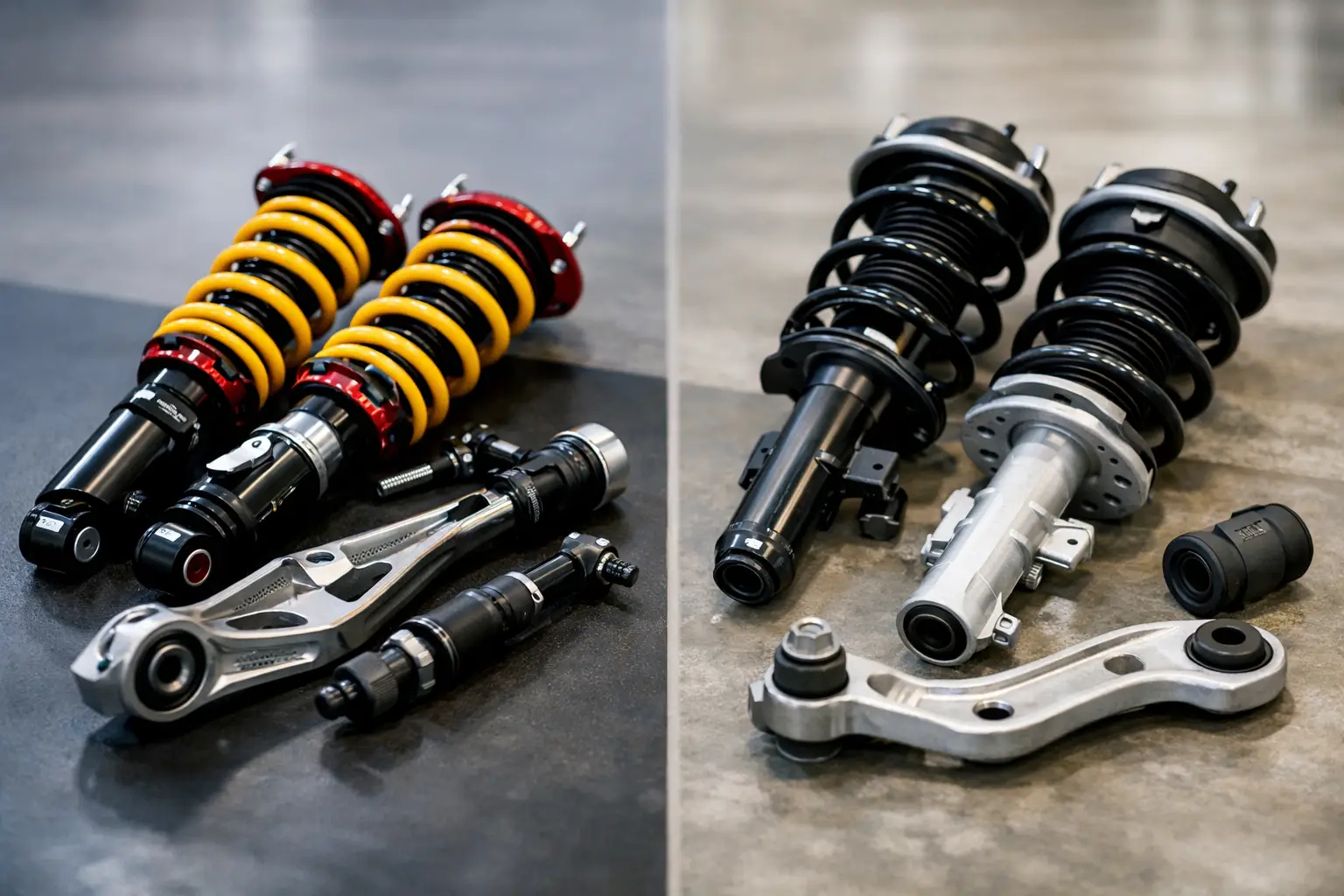
Aftermarket vs OEM Suspension Parts
A worn suspension usually announces itself before it fails. The ride gets harsher, steering feels less precise, tire wear becomes uneven, and every pothole seems louder than it used to be. When that happens, the next question is usually the one that matters most: aftermarket vs OEM suspension parts - which is the better choice for your vehicle, your budget, and your expectations?
The short answer is that neither option is automatically better in every case. The right choice depends on the age of the vehicle, how it is used, the standard of the replacement part, and how important cost, availability, and long-term reliability are to you. For workshops, retailers, and car owners, the real value comes from understanding where each option makes sense and where it does not.
OEM suspension parts are made to the original vehicle manufacturer's specification. They are intended to match the factory part in fit, design, and expected performance. If a car came with a certain control arm, strut mount, stabilizer link, or ball joint from the factory, the OEM replacement is designed to restore that same baseline.
Aftermarket suspension parts are produced by companies outside the vehicle manufacturer network. That does not automatically mean lower quality. In practice, the aftermarket covers a very wide range. Some products are budget-focused and built to meet a price point. Others are engineered to OE standards, tested carefully, and made to deliver reliable daily performance across a broad vehicle range.
This is where buyers need to be careful. The real comparison is not simply aftermarket vs OEM suspension parts as a label. It is low-grade parts versus quality-controlled parts, poor fitment versus accurate fitment, and short service life versus dependable durability.
Suspension parts do more than improve comfort. They directly affect handling, braking stability, tire wear, and steering response. A worn rack end, weak shock absorber, or damaged control arm bushing can change how a vehicle behaves in emergency braking or cornering. That is why replacement quality matters.
Unlike cosmetic parts, suspension components work under repeated load, vibration, heat, road shock, and contamination from water and dirt. A part that looks acceptable out of the box can still fail early if material quality, rubber formulation, machining tolerance, or grease sealing is inconsistent. For workshops, that leads to comebacks. For retailers, it can affect reputation. For vehicle owners, it can mean paying twice for the same repair.
OEM parts are often the safe and familiar choice. For newer vehicles under warranty, they may be the preferred route because they align closely with manufacturer expectations. Buyers who want to keep the car as close as possible to original factory condition also tend to prefer OEM.
There is also peace of mind in knowing the part was specified for that exact model from the start. In some cases, especially for niche or low-volume applications, OEM may be the easiest way to avoid fitment uncertainty.
That said, OEM is not always the most practical option. Price can be significantly higher, and availability may be limited depending on the vehicle brand, age, or local supply chain. For workshops managing turnaround time, delays in sourcing OEM parts can disrupt scheduling and customer satisfaction.
A strong aftermarket option gives buyers something OEM often cannot: a better balance of quality, availability, and cost. This is especially relevant for vehicles that are out of warranty, high-mileage daily drivers, fleet vehicles, and common market models where owners want reliable repairs without overpaying.
For workshops, quality aftermarket suspension parts can support faster service because stock is more accessible across popular applications. For retailers and distributors, they also make commercial sense because broad model coverage and stable supply help meet everyday market demand. For end users, the benefit is straightforward - safe and durable replacement parts at a more economical price.
A dependable aftermarket supplier should also cover the range customers actually need, not just a few fast-moving items. Suspension repairs often involve related components. A customer replacing a shock absorber may also need a strut mount, stabilizer link, control arm, or ball joint depending on inspection results. Consistent quality across these categories matters.
The biggest mistake in the aftermarket vs OEM suspension parts debate is assuming all aftermarket parts are the same. They are not.
A quality aftermarket suspension part should be designed for accurate fitment, tested to OE-standard expectations, and built with material consistency in mind. That includes proper rubber hardness in bushings, correct joint tolerances, dependable sealing, strong welds where applicable, and corrosion resistance that suits real road conditions.
If those standards are missing, low purchase cost quickly becomes expensive. Early wear, noise, poor alignment retention, or installation difficulty can erase any savings. That is why experienced workshops do not buy on price alone. They look for suppliers with stable quality control, established market presence, and product coverage they can trust repeatedly.
For the everyday driver, this matters just as much. The cheapest suspension part is rarely the best value if ride quality drops quickly or replacement is needed again sooner than expected.
Fitment is one of the most important factors in suspension replacement. Even small differences in dimensions, bushing position, or mounting tolerances can create noise, alignment issues, or extra installation time.
OEM parts naturally carry a strong reputation here because they follow the original design. But quality aftermarket brands can also provide precise fitment when product development and validation are done properly. In a workshop environment, that difference is easy to see. Good parts install cleanly, align correctly, and do not require unnecessary modification or force.
This is also why buyers should avoid unknown or inconsistent sources. Saving a small amount on part cost is rarely worth it if the mechanic loses time during installation or if the vehicle returns with a complaint.
For many buyers, budget is the main reason the aftermarket enters the conversation. That is completely reasonable. A ten-year-old daily driver does not always justify premium OEM pricing, especially when several suspension components need replacement at once.
In those cases, quality aftermarket parts are often the most sensible choice. They help restore ride control and steering stability without pushing repair cost beyond what the vehicle owner can accept. This keeps the car safe and serviceable while maintaining good value.
On the other hand, if the vehicle is nearly new, still under manufacturer warranty, or being maintained for strict factory originality, OEM may still be the preferred route. The decision is not only technical. It is financial and practical.
Warranty support matters too. Buyers should look beyond the printed warranty period and ask a more useful question: will the supplier actually support the product if there is a legitimate issue? Strong distribution, responsive support, and consistent stock matter more than paperwork alone.
For workshops, the best choice is usually the one that reduces risk. That means dependable fitment, repeatable quality, and parts availability across common models. Labor time is expensive. Comebacks are more expensive. If a trusted aftermarket brand can deliver stable quality at competitive pricing, it becomes a practical business decision.
For retailers and dealers, suspension parts need to move consistently and maintain customer confidence. A broad range covering Japanese, Korean, local, and other popular passenger vehicles creates stronger sales potential. Just as important, the brand behind the product must have enough market presence and quality discipline to support long-term business, not just one-time transactions.
This is why established aftermarket suppliers continue to earn trust in the market. When quality control, OE-standard testing, and wide model coverage come together, the aftermarket stops being the alternative choice and becomes the smart one.
If you are deciding between aftermarket and OEM suspension parts, start with the vehicle itself. Consider its age, mileage, usage, and repair budget. Then look at the supplier, not just the label on the box. Ask whether the part is tested properly, whether fitment is proven, and whether the brand has a track record of reliable supply and support.
For many everyday repairs, a quality aftermarket part is more than enough. In fact, for workshops and value-conscious car owners, it is often the best balance of performance, safety, and cost. Saiko has built its position in this space by focusing on premium-grade aftermarket parts, OE-standard testing, and wide vehicle coverage that helps businesses and drivers repair with confidence.
The best suspension part is the one that restores control, holds up in real use, and makes the repair worth doing once, not twice. Choose with that standard in mind, and the label matters a lot less than the quality behind it.
Recent Posts
Automotive Trade Is on the Table in the Malaysia-EU FTA. Here's Why It Matters at the Parts Counter
23 Oct 2026
The Road Transport Act Just Got Tougher. Here's What It Means for Your Car's Parts
21 Oct 2026
Drove Through Flood Water? The Parts Under Your Car That Need a Look Next
19 Oct 2026
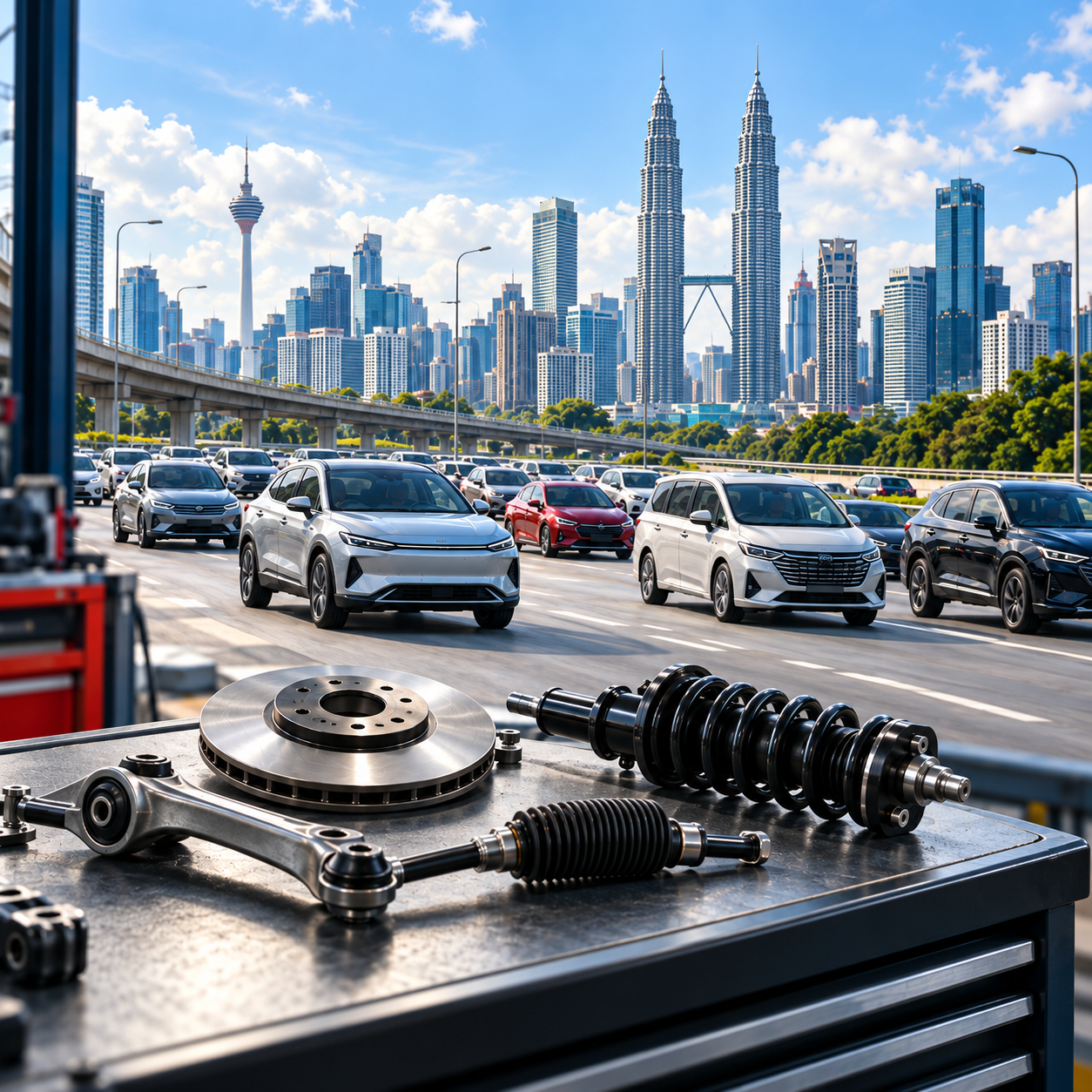
A Record Year on the Road Means a Record Year Ahead for Maintenance
12 Oct 2026
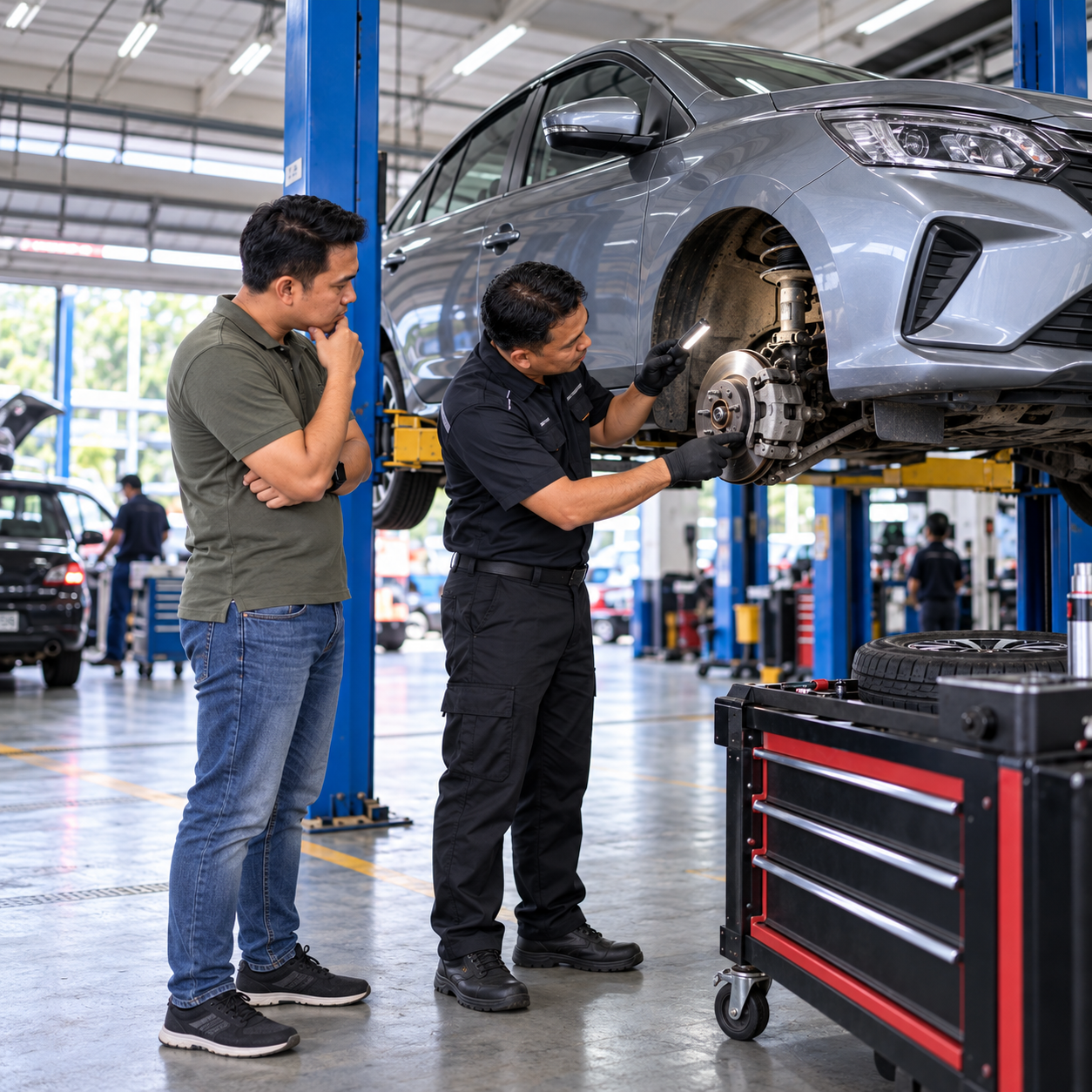
Budget 2027 Puts E-Hailing Car Maintenance on the National Agenda
12 Oct 2026
 Whatsapp Us NowSaiko Automotive

