


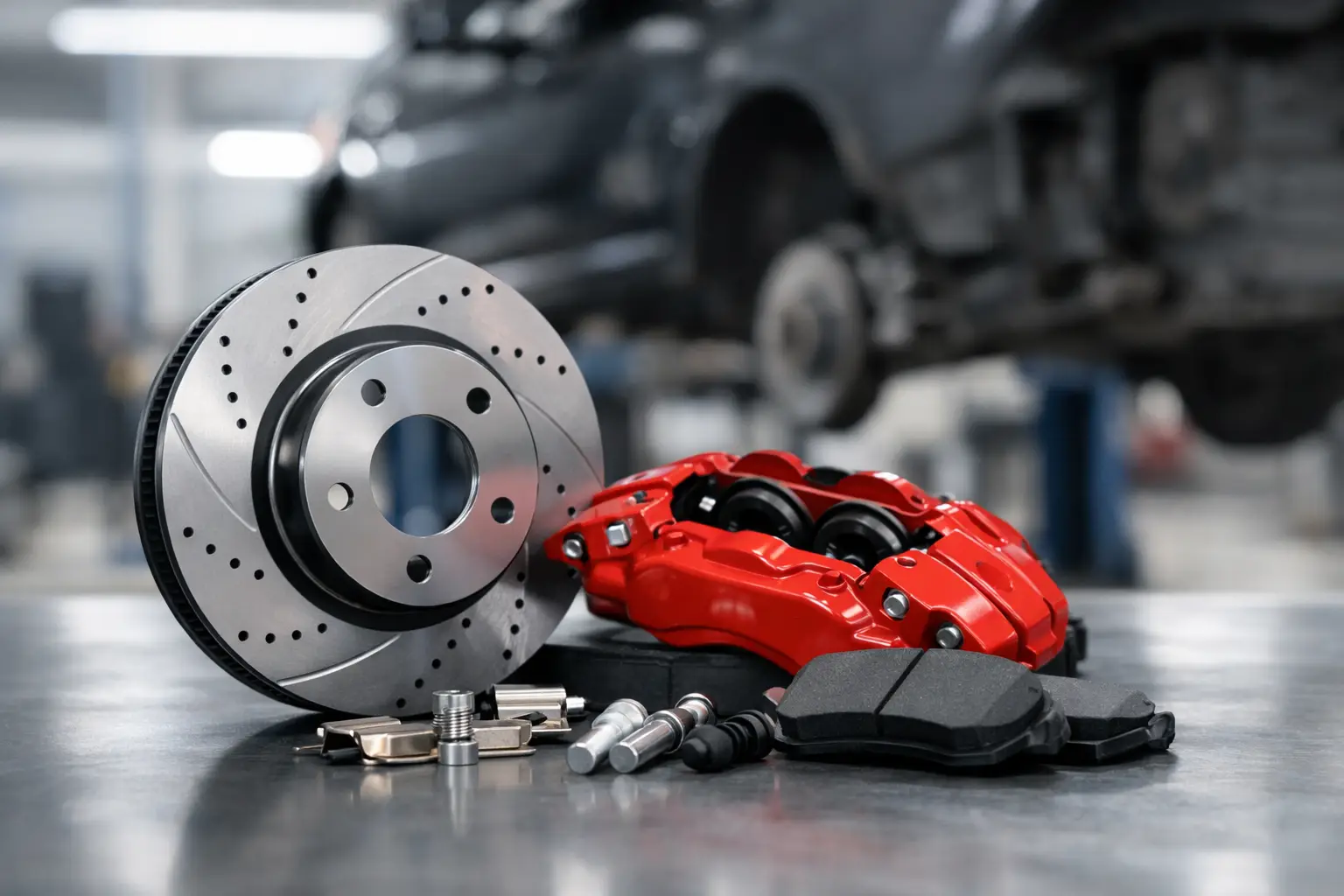
Are Aftermarket Brake Parts Reliable?
A brake job that comes back with noise, uneven wear, or poor pedal feel costs more than money. It costs workshop time, customer trust, and driver confidence. So when people ask, are aftermarket brake parts reliable, the honest answer is yes - if the parts are made to proper standards, matched to the vehicle correctly, and sourced from a supplier that takes quality control seriously.
That distinction matters because aftermarket is a very broad category. It includes everything from low-cost, inconsistent parts to premium replacement components built and tested to OE-level expectations. Treating all aftermarket brake parts as the same is where many buying mistakes begin.
For most daily-driven passenger vehicles, quality aftermarket brake parts are a practical and dependable choice. Drivers are not usually looking for race-level braking or brand prestige. They want stable stopping power, predictable pedal response, low noise, reasonable service life, and fair cost. A well-made aftermarket brake pad, rotor, caliper, or brake hose can deliver exactly that.
Workshops already know this from experience. Many vehicles on the road today are maintained with aftermarket brake components for routine servicing because they offer solid performance without pushing repair costs too high. That matters for older cars especially, where owners need to balance safety with budget.
The key point is simple. Reliability does not come from the label aftermarket alone. It comes from material quality, manufacturing consistency, fitment accuracy, and testing discipline.
Brake parts work under heat, pressure, vibration, and repeated load. Small weaknesses show up quickly. A pad with poor friction stability may fade or squeal. A rotor with inconsistent machining may cause vibration. A low-quality caliper component may stick and create uneven braking.
Reliable aftermarket brake parts usually share a few traits. The materials are selected for stable performance under normal operating temperatures. Dimensions are controlled carefully so installation is straightforward and fitment is correct. Testing is done against relevant performance and durability benchmarks. Quality checks are repeated, not assumed.
This is why supplier selection matters as much as product selection. A dependable aftermarket brand does not only sell parts. It manages consistency across batches, model coverage, and technical standards. That is what gives workshops fewer comebacks and gives drivers a better ownership experience.
The first factor is friction material. Brake pads are not all built the same, and the compound affects noise, dust, heat tolerance, rotor wear, and stopping feel. A cheap compound may look acceptable in the box but behave poorly once temperatures rise in traffic or during repeated braking.
The second factor is fitment accuracy. A brake part that is almost right is not right. Slight dimensional differences can cause noise, uneven contact, poor wear patterns, or installation delays. For workshops, precise fitment saves labor time. For drivers, it supports proper braking performance from day one.
The third factor is manufacturing control. Reliable parts come from systems that monitor tolerances, material consistency, and final inspection. Without that discipline, performance can vary from batch to batch. One set may feel fine, while the next causes immediate complaints.
The fourth factor is realistic application matching. Not every brake product suits every driving pattern. A city commuter, a heavily loaded family SUV, and a vehicle used for frequent highway driving place different demands on the braking system. Good aftermarket choices match the part to the vehicle and use case, not just the catalog listing.
When people say aftermarket parts are unreliable, they are often thinking about the worst examples in the market. Very low-grade products do exist, and brakes are the wrong place to take chances. If a part is bought only on the lowest price, with no confidence in testing or quality control, disappointing results should not be surprising.
Another reason is incorrect diagnosis. Sometimes a new pad is blamed for noise when the real issue is rotor condition, hardware wear, improper bedding-in, or a sticking caliper. In those cases, the problem is not aftermarket versus OE. It is installation practice and system condition.
There is also the issue of mixed expectations. Some drivers expect every replacement brake part to feel identical to the factory setup. That is not always realistic. Different pad compounds can change initial bite, dust levels, and pedal feel. A part can still be reliable, safe, and durable without feeling exactly the same as the original.
A reliable brake part should make business sense as well as technical sense. For workshops, that means fewer fitment issues, consistent installation results, and lower comeback risk. For retailers, it means stable quality that customers trust enough to buy again.
The most useful evaluation starts with supplier credibility. Look at whether the brand has broad vehicle coverage, established market presence, and a reputation for quality-controlled parts. A supplier serving many vehicle models and supporting a large dealer network usually cannot afford inconsistency for long. Scale alone does not guarantee quality, but quality systems become more visible when a brand has been supporting the market over time.
It also helps to consider how the product performs in real service conditions. Does it hold up under regular urban traffic? Does it maintain predictable stopping without excessive noise or vibration? Does it install cleanly on common passenger vehicle applications? Those practical questions often matter more than sales claims.
In many everyday repair situations, yes. Quality aftermarket brake parts can be highly reliable compared with OE replacements, especially when the goal is safe daily driving, durable service life, and good value. The comparison becomes less about aftermarket versus OE and more about premium-grade replacement versus unknown-grade replacement.
OE parts may offer reassurance because they follow the original vehicle specification. That has value, especially for newer cars, specific warranty concerns, or owners who want factory-matched feel. But for out-of-warranty vehicles, a trusted aftermarket option often gives a strong balance of cost and performance.
This is where brand discipline matters. A supplier focused on OE-standard testing, broad coverage, and strict quality control is operating very differently from a seller competing only on price. That difference is what separates dependable aftermarket braking from the kind that creates doubts.
Drivers do not need to become brake engineers, but they should ask the right questions. Is the part designed for the exact vehicle application? Is it from a known supplier with stable quality? Is the workshop installing related hardware and checking the overall brake system, not just swapping one component?
A good brake repair should address the full condition of the braking setup. Pads and rotors work together. Calipers, shims, clips, fluid condition, and proper installation all influence the final result. Even the best replacement part can underperform if fitted into a neglected system.
For budget-conscious owners, the smart move is not buying the cheapest option. It is buying the best value from a supplier known for dependable quality. That usually leads to better wear life, fewer noise issues, and less chance of doing the job twice.
Reliable aftermarket braking comes from a disciplined supply chain, not luck. That means tested materials, controlled production, proper fitment, and a supplier that understands the needs of workshops, retailers, and everyday drivers. In a market filled with choices, confidence comes from consistency.
For businesses and vehicle owners who need broad model coverage without sacrificing standards, that is where established aftermarket brands stand out. Saiko has built its position by focusing on quality-controlled replacement parts, practical performance, and dependable availability across a wide range of passenger vehicles.
Brake parts are safety parts, but they are also value decisions. The best choice is rarely the cheapest or the most expensive. It is the one that stops well, fits right, lasts reasonably, and gives you no trouble after the vehicle leaves the bay.
Recent Posts
Automotive Trade Is on the Table in the Malaysia-EU FTA. Here's Why It Matters at the Parts Counter
23 Oct 2026
The Road Transport Act Just Got Tougher. Here's What It Means for Your Car's Parts
21 Oct 2026
Drove Through Flood Water? The Parts Under Your Car That Need a Look Next
19 Oct 2026
A Record Year on the Road Means a Record Year Ahead for Maintenance
12 Oct 2026
Budget 2027 Puts E-Hailing Car Maintenance on the National Agenda
12 Oct 2026
 Whatsapp Us NowSaiko Automotive

