


Timing Chain Kit vs Belt: Which Fits Best?
A timing failure is rarely a small repair. When owners or workshops compare a timing chain kit vs belt, the real question is not which part sounds better on paper - it is which system suits the engine, service interval, repair budget, and long-term expectations.
That distinction matters because timing components do the same core job in different ways. Both synchronize the crankshaft and camshaft so the valves and pistons move in the correct sequence. If that timing slips, engine performance drops fast, and in many interference engines, internal damage can follow. For workshops, that means accuracy matters. For retailers, it means stocking parts with dependable fitment. For vehicle owners, it means choosing durability and value before a small noise becomes a major bill.
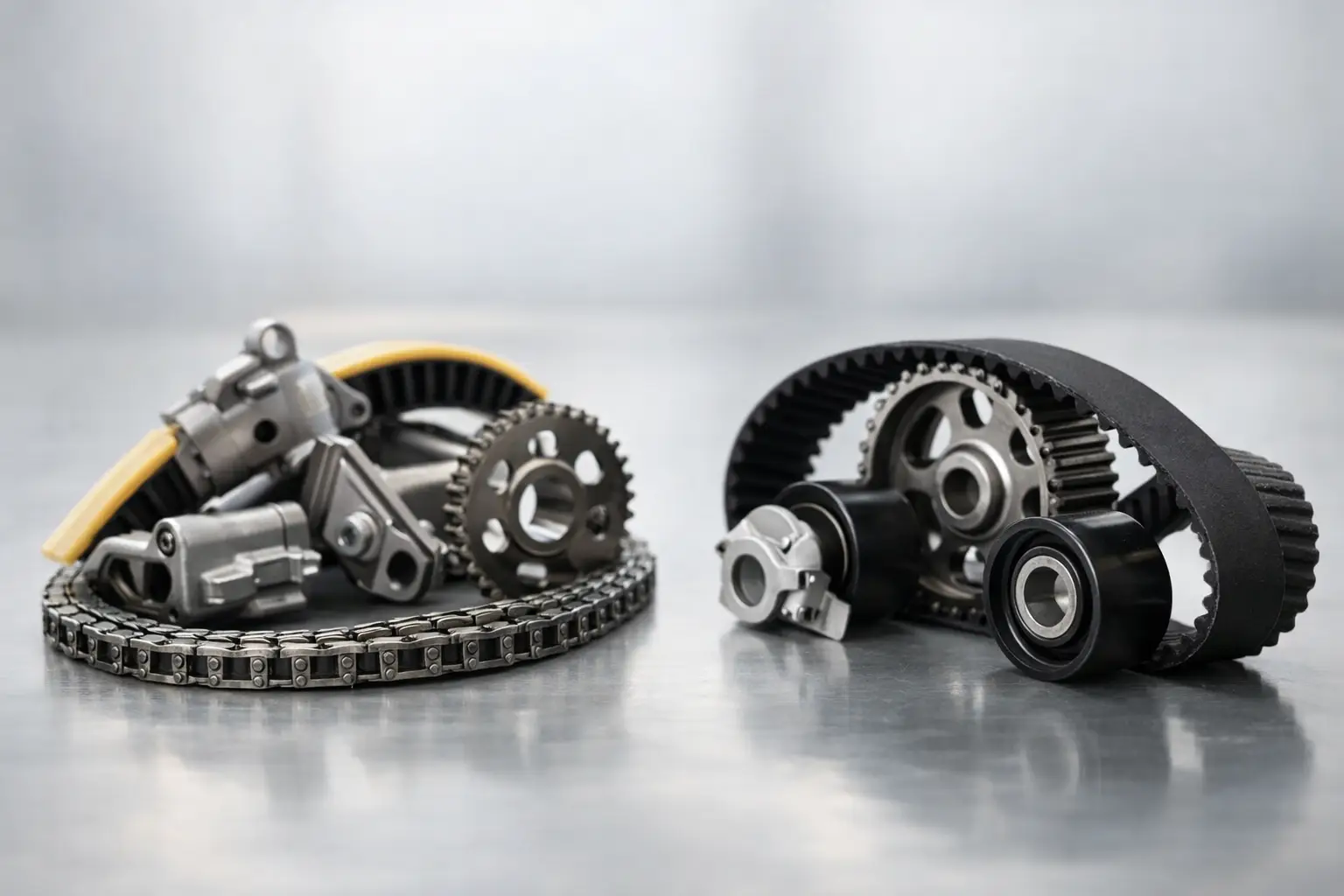
A timing belt is usually made from reinforced rubber with high-strength fibers. It runs dry, outside the engine's lubricated internals, and is designed for quiet operation and lower weight. A timing chain is metal, runs inside the engine, and relies on engine oil for lubrication.
On the surface, a belt often looks simpler and cheaper. A chain usually looks more heavy-duty. That leads many people to assume chain is always better. In practice, it depends on the engine design and how the vehicle is used and maintained.
A timing chain kit is more than the chain alone. It typically includes the chain, guides, tensioners, and in many cases sprockets or related components that wear together. That matters because replacing only one worn part in a timing chain system can create repeat failures. A timing belt service may also involve more than the belt itself, often including tensioners, idlers, and sometimes the water pump depending on the engine layout.
Timing belts became common because they are quiet, cost-effective, and efficient. For passenger vehicles focused on low noise and affordable maintenance, a belt system makes sense. It is lighter than a chain and can reduce mechanical noise from the engine.
For the vehicle owner, the main trade-off is scheduled replacement. Belts are wear items. Even if they look fine from the outside, heat cycles, age, contamination, and mileage gradually reduce their reliability. Most manufacturers specify a replacement interval based on miles, time, or both.
That scheduled maintenance is not necessarily a disadvantage if it is done on time. In fact, some workshops prefer belt jobs because service intervals are clearer and parts replacement is more straightforward. The risk starts when owners delay replacement to save money. A skipped belt service can quickly become a cylinder head repair.
Timing chains are often chosen for durability and long service life. Many are designed to last much longer than a belt, sometimes for the life of the engine under good maintenance conditions. That is the biggest reason chain-driven engines appeal to both owners and workshops.
But longer life does not mean no maintenance risk. Chains depend heavily on oil quality, oil level, and oil change discipline. Dirty oil, low oil pressure, or neglected service intervals can accelerate wear on the chain, guides, and tensioners. When that happens, the system can stretch, rattle, or lose timing accuracy.
A chain system is also typically more complex and more expensive to repair. Access can be harder, labor times can be longer, and replacing a full timing chain kit is usually more costly than replacing a timing belt kit. So while a chain often lasts longer, it may not be cheaper when failure finally happens.
If you compare initial replacement cost, timing belts usually win. Parts cost is often lower, and labor can be lower depending on the engine. That makes belt-driven engines more predictable for routine service planning.
A timing chain kit usually costs more because it includes multiple wear components and the repair is often more labor-intensive. For fleets, workshops, and budget-conscious owners, that difference matters.
Still, cost should be judged over the full service life of the vehicle. A belt may need one or more scheduled replacements over many years. A chain may go longer without service, but if oil neglect causes failure, the repair can be significant. The cheaper option upfront is not always the cheaper option over time.
Belts are generally quieter. For drivers who prioritize refinement, that is one reason belt-driven engines remain attractive. Chains tend to produce more mechanical noise, especially as mileage increases or if tensioners begin to wear.
That said, modern chain systems can still run quietly when well maintained. A slight startup rattle, however, should never be ignored. For workshops, those early sounds are valuable clues. For owners, they are often the first warning that the timing system needs inspection.
From a drivability standpoint, both systems can perform very well when in proper condition. The difference is less about power output and more about long-term wear, service schedule, and repair behavior.
If there is one point that settles most timing chain kit vs belt discussions, it is this: the best system is the one maintained correctly.
A belt needs replacement at the correct interval. A chain needs clean oil and stable lubrication. Neither system should be treated as maintenance-free. Problems usually begin when service is delayed, incorrect parts are used, or installation quality is poor.
This is where part quality becomes critical. In engine timing work, precise fitment, material strength, and component consistency are not optional. A poor-quality tensioner, guide, or belt can shorten service life and create comebacks that hurt workshop efficiency and customer trust.
A timing belt is often the practical choice when the engine was designed around it and the owner is willing to follow the service interval. It can offer lower replacement cost, quieter operation, and predictable maintenance planning.
For workshops, belt jobs can be an efficient service category when the right kit is used and related items are inspected at the same time. For retailers, belt kits remain fast-moving products because many common passenger vehicles still rely on scheduled belt replacement.
For the end user, the value is simple: replace it on time, use dependable parts, and avoid a much larger repair later.
A timing chain kit makes sense when the engine uses a chain system and the repair needs to address the full wear set, not just one symptom. If a chain has stretched or the guides and tensioners show wear, replacing the complete kit is usually the smarter route.
That approach reduces the chance of uneven wear between old and new components. It also gives workshops a more reliable repair outcome and helps owners avoid repeat labor costs. In the aftermarket, this is one reason complete kits are preferred over piecemeal replacement for many applications.
For businesses serving a broad vehicle mix, wide model coverage also matters. A supplier with dependable timing product range across Japanese, Korean, local Malaysian, and other passenger vehicles can help retailers and workshops source with more confidence and fewer delays.
The first question is not chain or belt. It is whether the part matches the exact engine and vehicle application. Timing components are not universal, and even similar models may use different setups across production years.
The second question is whether the repair is complete. If the engine needs a belt service, inspect the tensioners, idlers, and related components. If it needs a chain repair, look at the full timing chain kit, not just the chain. Partial repairs may look cheaper at the counter but cost more when the vehicle returns.
The third question is quality control. Workshops need parts that install correctly and perform consistently. Retailers need stable quality that protects customer confidence. Everyday drivers need durable value, not the lowest price followed by early failure. That is why many buyers look for aftermarket timing parts tested to OE-standard expectations, with fitment coverage they can trust.
There is no universal winner in the timing chain kit vs belt debate. A well-maintained belt system can be reliable and economical. A well-maintained chain system can deliver long service life and strong durability. Problems usually come from neglect, poor oil service, delayed replacement, or low-quality components rather than from the basic design alone.
For workshops and parts buyers, the better approach is to match the repair strategy to the vehicle, the mileage, and the owner's budget. Use the correct kit, replace the related wear items, and choose parts built for accurate fitment and dependable service life. That is how timing repairs stop being a gamble and start becoming a solid value decision.
When engine timing is involved, the smartest choice is rarely the cheapest part on the shelf - it is the one that keeps the vehicle running safely, the workshop efficient, and the customer confident every time the engine starts.
Recent Posts
Automotive Trade Is on the Table in the Malaysia-EU FTA. Here's Why It Matters at the Parts Counter
23 Oct 2026
The Road Transport Act Just Got Tougher. Here's What It Means for Your Car's Parts
21 Oct 2026
Drove Through Flood Water? The Parts Under Your Car That Need a Look Next
19 Oct 2026
A Record Year on the Road Means a Record Year Ahead for Maintenance
12 Oct 2026
Budget 2027 Puts E-Hailing Car Maintenance on the National Agenda
12 Oct 2026
 Whatsapp Us NowSaiko Automotive

