


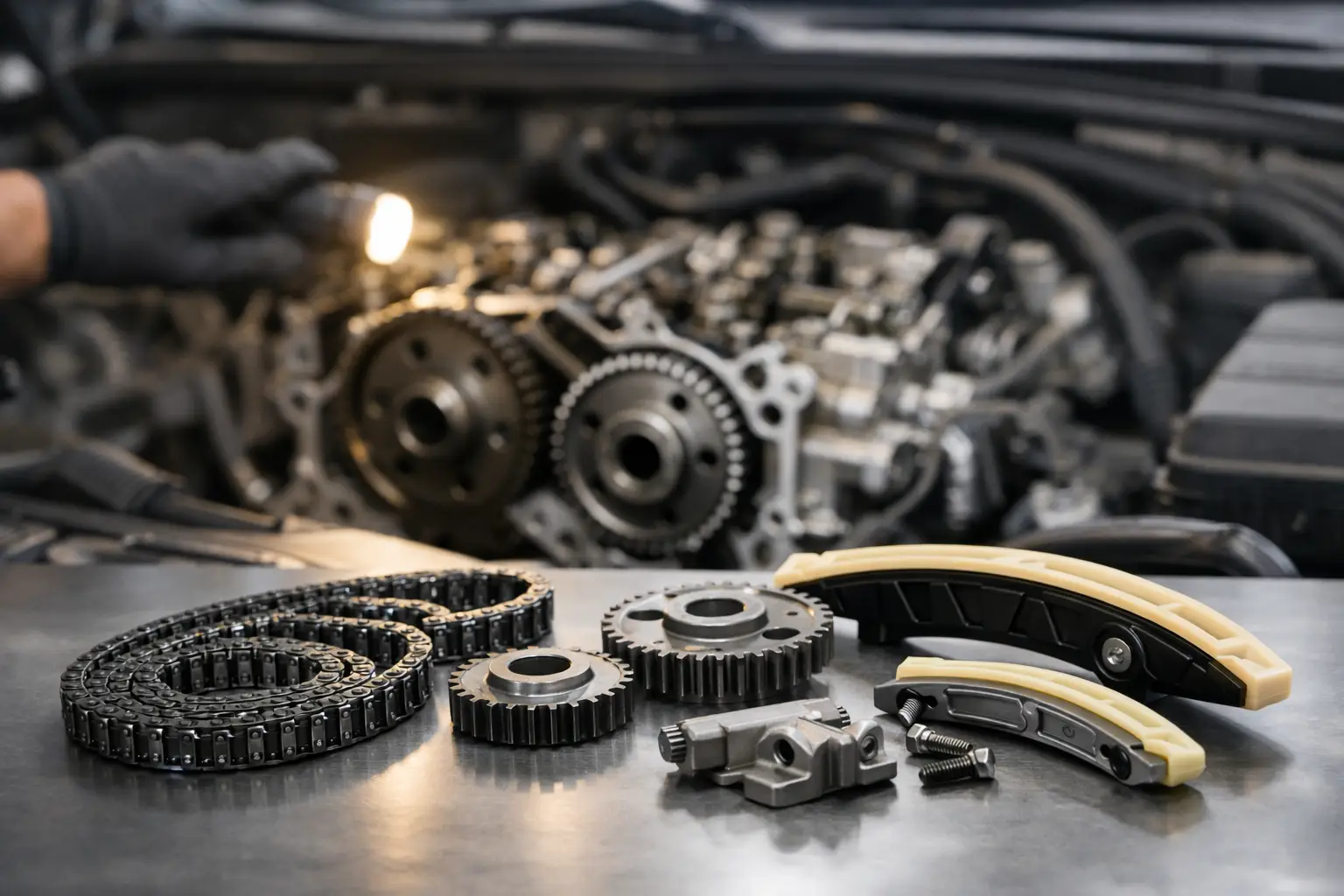
Timing Chain Kit Replacement Signs to Watch
A cold-start rattle that disappears after a few seconds is easy to ignore - until it turns into a much bigger engine problem. That is why understanding timing chain kit replacement signs matters for workshops, parts buyers, and drivers who want to avoid breakdowns, poor performance, and expensive internal damage.
Unlike a timing belt, a timing chain is designed for long service life, but that does not mean it lasts forever. The chain, guides, tensioner, and sprockets all work together under constant stress, heat, and oil exposure. When one part wears, the rest of the system is usually not far behind. In practice, the warning signs often show up before complete failure, but only if someone knows what to look for.
The first thing to understand is that timing chain problems rarely announce themselves with one clear symptom. More often, they build gradually. A vehicle may start with a brief rattling noise on startup, then develop rough idling, weaker acceleration, or a check engine light. By the time drivability is clearly affected, the wear inside the timing system may already be advanced.
One of the most common timing chain kit replacement signs is a metallic rattling noise from the front of the engine, especially during cold starts. This can happen when the tensioner is no longer maintaining proper chain tension or when the guides have worn down. Oil pressure may temporarily quiet the noise, which is why some owners delay action. That delay can be costly.
Another common sign is unstable engine timing. When the chain stretches or the tensioner weakens, valve timing can drift out of specification. The engine may idle roughly, hesitate under load, lose fuel efficiency, or feel less responsive. In some vehicles, the engine control module will detect camshaft and crankshaft correlation issues and trigger a fault code.
A check engine light by itself does not confirm the timing chain kit is the problem, but it should not be dismissed. If scan results point to timing-related correlation faults, workshops should inspect the full system rather than replacing a single component and hoping for the best.
A timing chain system is not just a chain. It is a set of matched components that wear together. That includes the chain, tensioner, guides, and in many applications, sprockets and related hardware. Replacing only the chain may look cheaper at first, but it often leaves worn supporting parts in service.
This is where many repeat failures begin. A new chain running against worn guides or a weak tensioner will not deliver stable, long-term performance. For workshops, that means more comeback risk. For parts retailers and end users, it means paying twice for the same repair.
When timing chain kit replacement signs are present, the practical approach is to assess the entire timing drive system. A complete kit helps restore proper tension, alignment, and wear balance across the assembly. It also supports cleaner installation and more predictable results, especially on higher-mileage engines.
Mileage is only part of the story. Poor oil quality, extended oil change intervals, sludge buildup, and low oil pressure all accelerate timing chain system wear. Since the chain and tensioner depend heavily on proper lubrication, neglected maintenance can shorten service life significantly.
Driving conditions also matter. Frequent short trips, stop-and-go traffic, and repeated cold starts can increase wear over time. Commercial or high-usage vehicles may show symptoms earlier than expected even if they have not reached extremely high mileage.
Engine design plays a role too. Some engines are known to be harder on timing components than others. That is why workshops should pay attention to model-specific patterns, while distributors and retailers benefit from stocking coverage that matches actual market demand across multiple vehicle brands.
Most vehicle owners do not describe the problem in technical terms. They usually notice that the engine sounds different, starts less smoothly, or feels weaker than before. Some hear a ticking or rattling noise. Others complain that the vehicle feels lazy during acceleration or that fuel consumption has worsened.
In more advanced cases, the engine may crank longer before starting. Misfires can appear. Idle quality can become uneven. If the timing shifts far enough, there may even be stalling or a no-start condition. At that point, the repair may involve more than the timing kit alone.
For everyday drivers, the main message is simple: unusual noise from the timing area should be checked early. For workshops, the key is to separate harmless top-end noise from timing system wear before it develops into valve train or piston-related damage.
Accurate diagnosis matters because engine noises can be misleading. A quick scan for fault codes is helpful, but it should not be the only step. Cold-start behavior, oil condition, service history, and engine sound all provide useful clues.
If a vehicle shows timing correlation codes together with startup rattle and rough performance, the probability of timing system wear is much higher. Visual inspection may confirm guide wear, slack, tensioner issues, or chain elongation, depending on engine design and access. In some cases, mechanical timing alignment checks are necessary to verify whether the chain has moved beyond acceptable limits.
This is also where parts quality becomes critical. When a workshop commits to a timing chain repair, it needs components that fit correctly, install smoothly, and maintain stable performance after the job is done. Poor-quality timing parts can create noise, fitment trouble, and early wear even when the installation is done properly.
There is a difference between monitoring a minor issue and taking an unnecessary gamble. If a vehicle has repeated startup rattle, timing-related fault codes, rough running, or visible wear in the timing assembly, replacement should not be postponed.
This is especially important on interference engines, where timing failure can allow valves and pistons to make contact. The cost difference between replacing a worn timing chain kit and rebuilding a damaged engine is substantial. For workshops advising customers, that is an easy value case to explain.
It also makes business sense for retailers and distributors to support preventive replacement when the signs are clear. Customers are more likely to trust a supplier that helps them solve the full problem before it becomes a major repair.
Not all timing chain kits offer the same level of reliability. Buyers should look for consistent quality control, dependable material standards, and fitment coverage that matches the vehicle application correctly. A kit should be designed to support proper tension, wear resistance, and installation confidence.
For workshops, accurate fitment reduces downtime and installation issues. For retailers, stable product quality helps build repeat business. For drivers, the result is quieter operation, better timing stability, and stronger long-term value.
This is why established aftermarket brands matter. A supplier with broad vehicle coverage, practical availability, and OE-standard testing gives the market more confidence than an unknown option with inconsistent quality. For example, Saiko supports a wide range of passenger vehicle applications with quality-controlled aftermarket parts built for reliable daily use and workshop-ready performance.
The real cost of ignoring timing chain kit replacement signs is not just the eventual repair bill. It is lost time, unpredictable breakdowns, customer inconvenience, and avoidable engine damage. A small rattle today can turn into poor drivability next month and major mechanical failure after that.
For workshops, early intervention protects reputation. For parts sellers, it creates more responsible recommendations. For drivers, it avoids the stress of getting stranded or facing a repair that could have been prevented.
There is always some judgment involved. Not every noise means immediate failure, and not every engine with high mileage needs a timing chain kit right away. But when multiple symptoms start to line up - startup rattle, rough idle, timing codes, power loss, or visible wear - the safest and smartest move is to treat the timing system as a complete assembly and replace it before the engine forces the decision.
A timing chain kit is one of those parts categories where acting early usually costs less than waiting, and that is a decision most customers never regret.
Recent Posts
Automotive Trade Is on the Table in the Malaysia-EU FTA. Here's Why It Matters at the Parts Counter
23 Oct 2026
The Road Transport Act Just Got Tougher. Here's What It Means for Your Car's Parts
21 Oct 2026
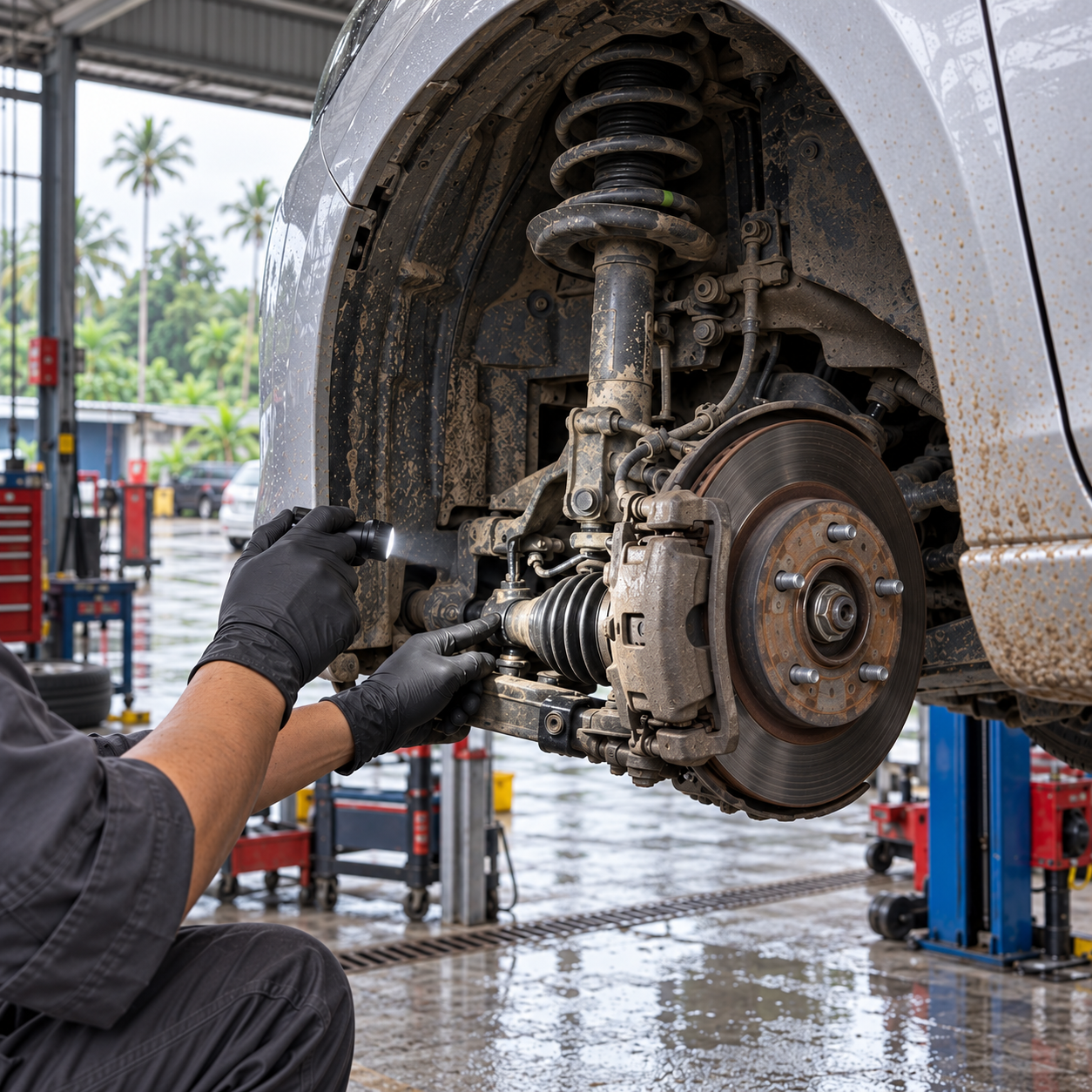
Drove Through Flood Water? The Parts Under Your Car That Need a Look Next
19 Oct 2026
A Record Year on the Road Means a Record Year Ahead for Maintenance
12 Oct 2026
Budget 2027 Puts E-Hailing Car Maintenance on the National Agenda
12 Oct 2026
 Whatsapp Us NowSaiko Automotive

