


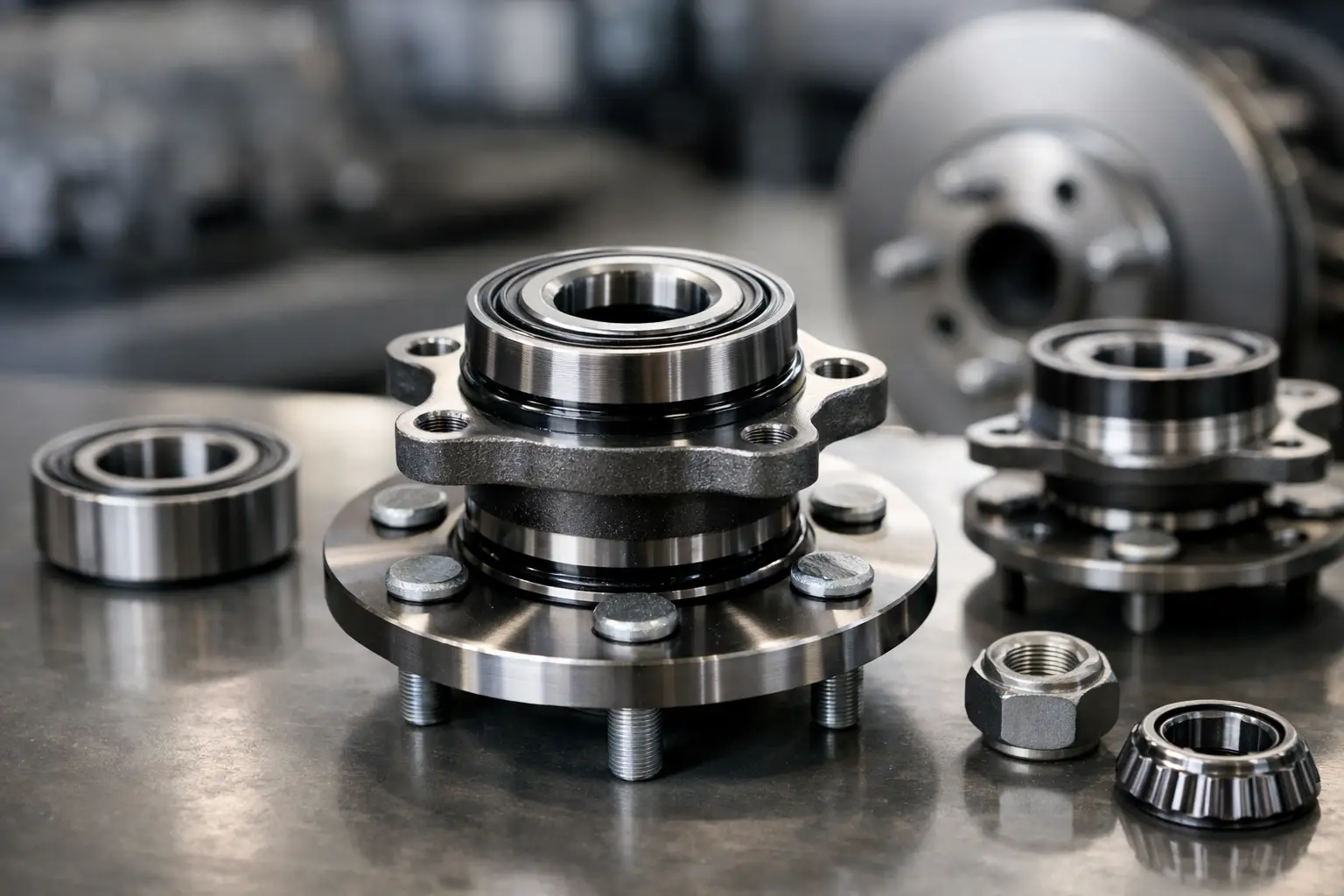
How to Select Reliable Wheel Hubs
A wheel hub that looks fine on the shelf can still cause noise, poor fitment, or repeat repairs once it is on the vehicle. That is why knowing how to select reliable wheel hubs matters for workshops, parts retailers, and car owners alike. The right choice protects safety, reduces comebacks, and saves time at the counter and in the service bay.
Wheel hubs do more than hold the wheel in place. They support vehicle weight, work with the bearing assembly, and help keep wheel rotation stable under braking, cornering, and daily road impact. When hub quality is inconsistent, the result is rarely minor. You may see premature bearing wear, vibration, ABS sensor issues, uneven tire wear, or installation trouble that slows the job down.
For workshops, a weak hub means lost labor time and unhappy customers. For retailers and distributors, it means claims, returns, and lower confidence in the product line. For drivers, it means avoidable risk. A reliable hub should deliver stable performance under real road conditions, not just pass a visual check in the box.
The first step is fitment accuracy. Even a well-made hub is the wrong part if the dimensions, bolt pattern, offset, or sensor compatibility do not match the vehicle. Reliable selection starts with the exact vehicle application, including model, engine variant, production year, and any market-specific differences. This is especially important in mixed car parks where local, Japanese, Korean, and continental models may have similar-looking parts with different specifications.
A dependable supplier should offer clear catalog data and broad application coverage. This reduces guesswork and helps workshops install with confidence. If the product information is incomplete or vague, that is already a warning sign.
The next point is material quality. A wheel hub is exposed to heat, load, moisture, dirt, and repeated impact from rough roads and potholes. Poor-grade metal can deform faster, wear unevenly, or lose dimensional stability over time. Reliable hubs are built from quality-controlled materials that can maintain strength and accuracy under daily driving conditions.
This is where low pricing alone can become expensive. An unusually cheap hub may look like a good margin opportunity, but if machining quality or raw material quality is inconsistent, the total cost rises through repeat replacements and customer dissatisfaction. Value matters, but value is not the same as the lowest upfront price.
Precision machining has a direct effect on installation and long-term performance. The mounting surfaces must be properly finished, the flange dimensions must be accurate, and the bearing seating areas must meet the required tolerances. If these areas are slightly off, the hub may install with difficulty or cause runout that leads to noise and vibration.
Good fitment quality also helps protect neighboring parts. When the hub sits correctly, it supports proper wheel alignment and reduces stress on the bearing, brake components, and suspension system. A small error in part accuracy can create a much bigger problem after installation.
Road use is harsh on wheel-end components. Water, dust, and road debris are constant threats, especially in wet climates and urban stop-and-go traffic. Reliable wheel hubs need effective sealing to help prevent contamination from reaching sensitive internal areas.
Sealing quality often gets overlooked because it is less visible than the metal body or studs. But poor sealing can shorten service life very quickly. If a hub assembly includes a bearing or sensor-related component, contamination control becomes even more important. A well-protected assembly is not a luxury feature. It is part of basic reliability.
If you want to know how to select reliable wheel hubs with fewer surprises, pay attention to testing and quality control. A reputable aftermarket part should be produced under consistent inspection standards, not just occasional spot checks. Dimensional checks, material verification, and OE-standard performance testing all help confirm that the part can handle normal operating loads.
This matters even more for businesses managing repeat orders across many models. Stable quality from batch to batch is what builds trust. One good shipment is not enough. Workshops and dealers need confidence that the next order will install and perform like the last one.
A supplier with established quality processes is usually a safer long-term choice than a source that competes only on short-term pricing. In the aftermarket, consistency is a commercial advantage.
Not every risk appears in a product photo. Some warning signs show up in the buying process itself. If there is no clear fitment support, limited technical information, inconsistent packaging, or poor traceability, caution is justified. Reliable parts programs usually make identification, application matching, and stock planning easier, not harder.
Visible finish can also tell you something, although it should never be the only test. Rough machining, weak corrosion protection, or poor stud quality may point to broader manufacturing shortcuts. The same applies to products with uneven weight, loose tolerances, or unclear country and factory information.
That said, appearance alone can be misleading. A polished finish does not guarantee internal quality. This is why supplier credibility and testing discipline matter so much.
The best hub choice can vary slightly depending on who is buying it. Workshops usually prioritize fitment accuracy, stable installation time, and low comeback rates. A hub that installs cleanly and performs consistently is more valuable than one that saves a small amount on purchase price but increases labor risk.
Retailers and distributors often focus on coverage, repeat demand, and dependable supply. They need products that fit a wide range of popular vehicles and maintain consistent quality over time. Fast-moving lines only stay fast-moving when customers trust them enough to buy again.
For everyday drivers, the key concerns are safety, durability, and value. Most end users are not comparing machining tolerances, but they do notice wheel noise, steering feel, braking stability, and how long the repair lasts. A reliable wheel hub should support daily driving confidence without pushing the owner into another repair too soon.
A reliable product backed by weak support can still create problems. Good supplier support means clear catalogs, responsive service, broad vehicle coverage, and dependable availability. These points are not separate from quality. They are part of the buying decision.
When workshops can identify the right part quickly, jobs move faster. When retailers can stock with confidence, they reduce dead inventory and improve customer satisfaction. When end users buy from a trusted channel, they are more likely to get the right part the first time.
For this reason, established aftermarket brands with strong distribution, consistent quality control, and wide model coverage often provide better long-term value than unknown alternatives. In a practical market, reliability is not just about the hub itself. It is also about the system behind it.
If you are comparing two or three wheel hub options, ask simple questions. Is the fitment data complete and accurate? Does the supplier have a track record of quality-controlled production? Is the part built for the vehicle application you need, including sensor compatibility where required? Is there confidence in repeat supply and after-sales support?
Then weigh the trade-off honestly. A lower-cost option may work for some low-demand situations, but for high-mileage vehicles, workshop jobs where labor time matters, or customers who expect longer service life, stronger quality control usually pays off. The better choice is often the one that reduces risk across the full repair, not just at the invoice line.
Brands that combine wide application coverage with OE-standard testing and stable quality processes can make that decision easier. In a market where fitment accuracy, durability, and value all matter, that balance is what separates a part that simply sells from one that earns trust.
When you are choosing wheel hubs, think beyond the box label. Choose the part that fits right, performs under load, and comes from a supplier prepared to stand behind it. That is the kind of reliability customers remember after the repair is done.
Recent Posts
Automotive Trade Is on the Table in the Malaysia-EU FTA. Here's Why It Matters at the Parts Counter
23 Oct 2026
The Road Transport Act Just Got Tougher. Here's What It Means for Your Car's Parts
21 Oct 2026
Drove Through Flood Water? The Parts Under Your Car That Need a Look Next
19 Oct 2026
A Record Year on the Road Means a Record Year Ahead for Maintenance
12 Oct 2026
Budget 2027 Puts E-Hailing Car Maintenance on the National Agenda
12 Oct 2026
 Whatsapp Us NowSaiko Automotive

