


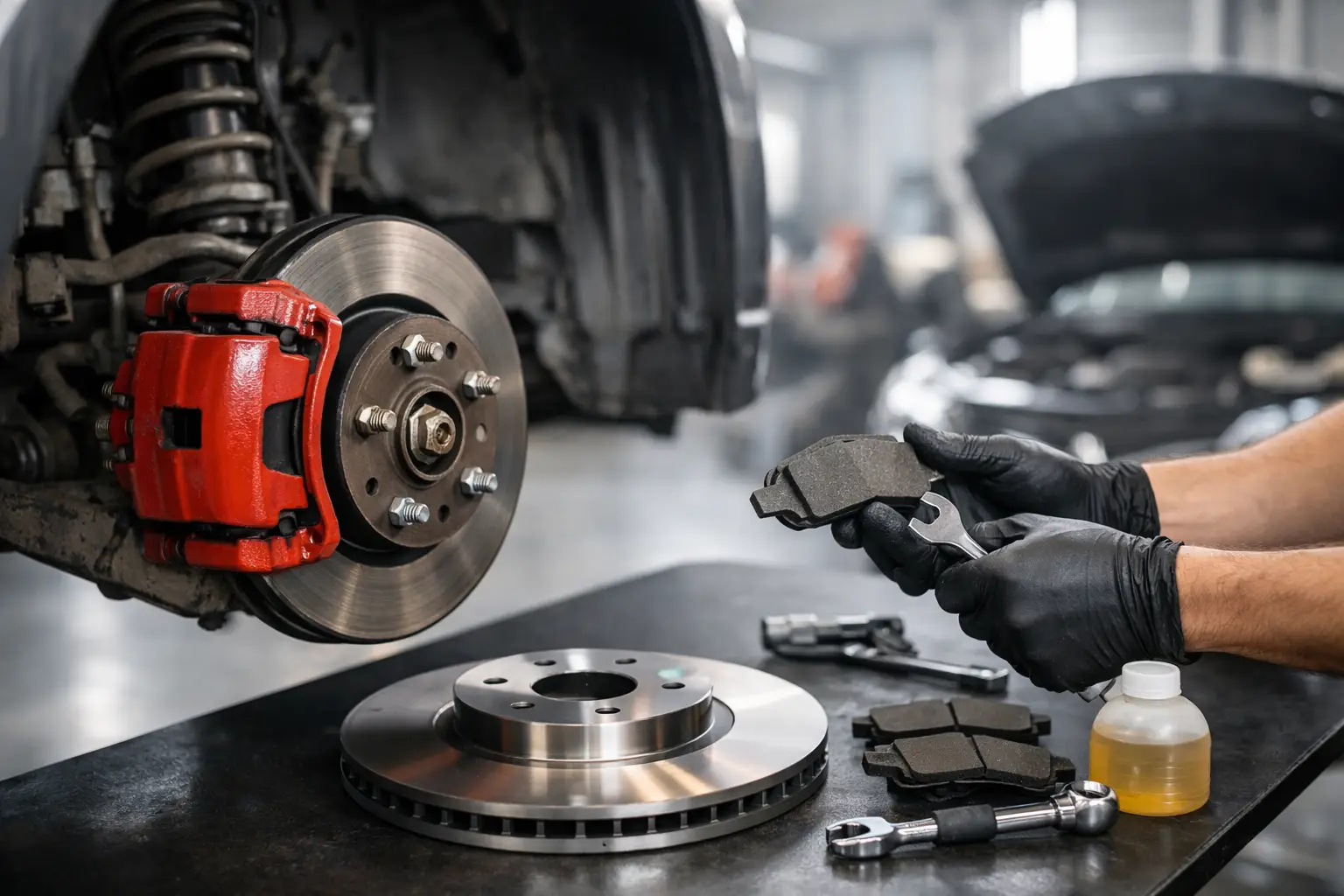
Brake System Maintenance Guide for Safer Driving
A brake pedal that feels slightly softer than usual is easy to ignore - until stopping distance starts to grow in traffic, on wet roads, or during emergency braking. That is why a proper brake system maintenance guide matters for both vehicle owners and the workshops that support them. Good brake maintenance is not just about replacing worn parts. It is about protecting safety, reducing repeat repairs, and keeping performance consistent over time.
For workshops, brake service quality affects customer trust. For parts retailers, it affects whether buyers come back with confidence. For everyday drivers, it affects control, comfort, and peace of mind. A well-maintained brake system should respond predictably, stay quiet under normal use, and deliver stable stopping power across daily driving conditions.
A useful brake system maintenance guide starts with the full system, not just the brake pads. Pads and rotors usually get the most attention because they wear regularly, but braking performance also depends on calipers, brake fluid, hoses, hardware, and correct installation. If one component is overlooked, the whole system can suffer.
This is where many avoidable problems begin. A driver may replace pads but keep scored rotors. A workshop may install new friction parts but miss sticking caliper slide pins. Brake fluid may be old and moisture-contaminated even though the pedal still feels acceptable. The result is uneven wear, noise, poor pedal feel, or reduced braking efficiency.
Proper maintenance means checking wear patterns, measuring critical components, and matching replacement parts to the vehicle correctly. It also means understanding that not every symptom points to the same failure. Brake squeal, vibration, pulling to one side, and a spongy pedal all have different causes and should be diagnosed carefully.
Brake systems usually give warning signs before they reach a critical condition. The problem is that many drivers wait too long, while some workshops are only asked to inspect brakes after performance has already dropped noticeably.
High-pitched squealing often points to pad wear or vibration between contact surfaces, but it can also come from poor-quality friction material or contaminated hardware. Grinding is more serious and may indicate the pad material is fully worn, allowing metal-to-metal contact. At that stage, rotor damage is often already happening.
Vibration during braking can suggest rotor thickness variation, uneven pad deposits, or suspension issues that feel like brake trouble. A low or spongy pedal may indicate air in the system, fluid deterioration, or a leak. If the vehicle pulls left or right under braking, the cause could be an uneven caliper action, contaminated pads, or tire and suspension factors. This is why a quick visual check is rarely enough.
For Malaysian workshops handling mixed brands and a wide age range of vehicles, pattern recognition matters. Japanese, Korean, local, and continental passenger cars may all have different brake wear behavior, hardware designs, and service intervals. Accurate fitment and consistent part quality help reduce installation issues and callbacks.
Pads and rotors are the most frequently serviced brake components, and they directly influence stopping feel, noise, and heat management. Replacing only one side of the equation can save money short term, but it may create uneven contact, reduced lifespan, or unwanted vibration.
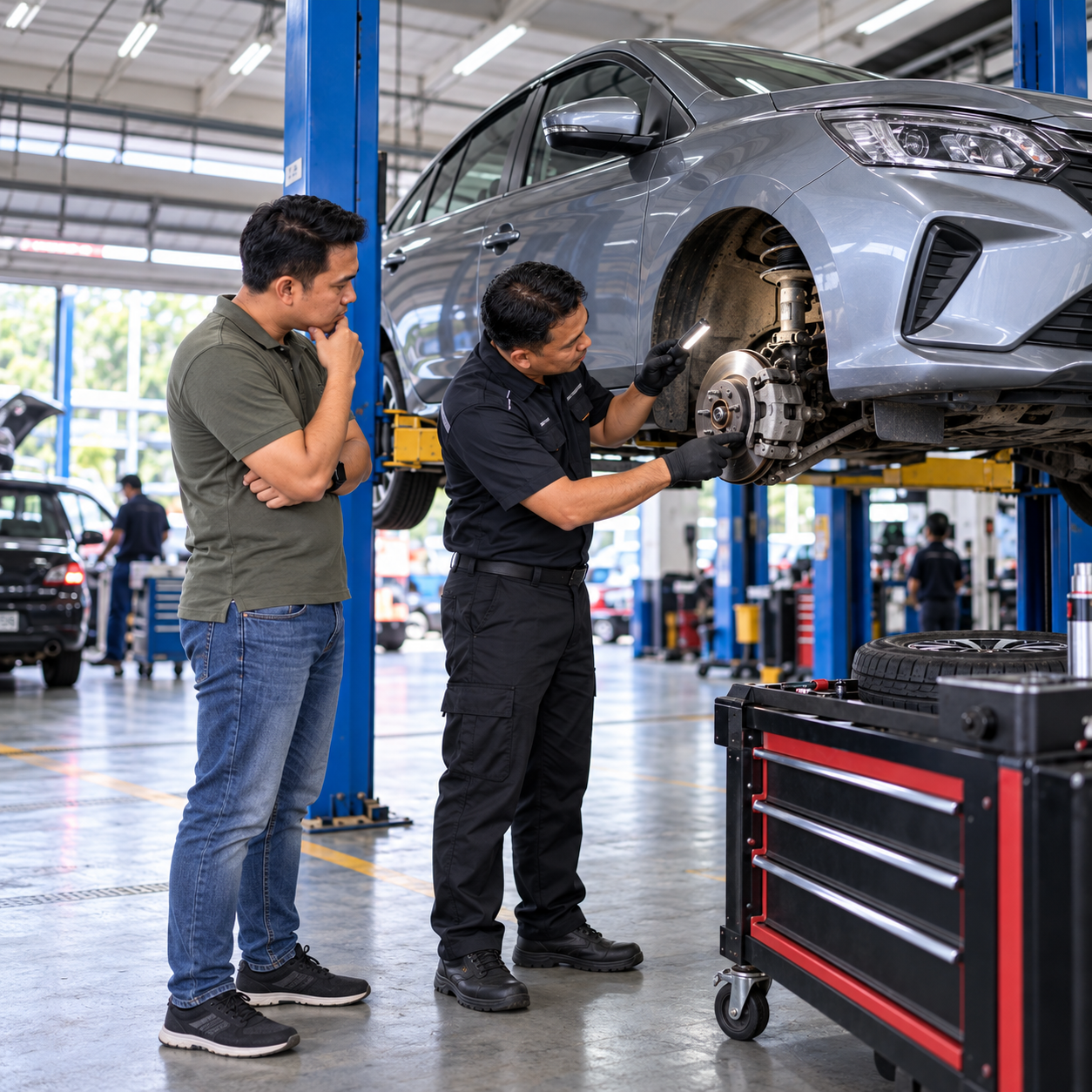
Brake pads should be checked for remaining friction thickness, taper wear, glazing, cracking, and contamination. Rotor inspection should include surface condition, thickness, heat spots, scoring, and runout where relevant. Even if a rotor still appears usable, it may be below minimum thickness or unable to dissipate heat effectively.
There is always a trade-off between resurfacing and replacement. Resurfacing can be cost-effective if the rotor has enough material and the damage is minor. Replacement is usually the better choice when wear is advanced, heat damage is visible, or long-term reliability is the priority. For workshops, the right decision depends on vehicle usage, part availability, customer budget, and safety margin.
Quality also matters more than many buyers realize. Brake pads with unstable friction characteristics can create excessive dust, noise, or inconsistent stopping. Rotors with poor material quality may wear faster or become prone to distortion under heat. Reliable aftermarket parts should deliver stable performance, proper fitment, and predictable service life.
Brake fluid does not wear out in the same way pads do, so it is commonly delayed. That is a mistake. Brake fluid absorbs moisture over time, and that changes how the system performs under heat. As water content increases, boiling resistance drops, corrosion risk rises, and pedal feel may become less consistent.
This issue becomes more noticeable in stop-and-go driving, long downhill use, or high-temperature conditions. A car may still stop, but the system may no longer perform at its intended standard. That difference becomes critical during emergency braking.
Fluid service intervals vary by manufacturer and usage pattern, so there is no single rule that fits every vehicle. A workshop should assess age, condition, and service history rather than relying on assumptions. During brake work, checking for fluid leaks, damaged hoses, and bleeder condition is just as important as topping up the reservoir. Topping up old fluid without solving the underlying issue is not maintenance.
A brake system can have new pads and rotors yet still perform poorly if calipers or supporting hardware are compromised. Caliper pistons must move freely, slide pins must be clean and lubricated correctly, and rubber boots must remain intact to keep out contamination. If not, pad wear becomes uneven and braking force may not be distributed properly.
Brake hoses also deserve attention, especially on older vehicles. External cracks are an obvious warning sign, but internal hose deterioration can be harder to detect. In some cases, fluid flow becomes restricted, causing delayed brake release or uneven braking response.
Small hardware components are often underestimated. Shims, clips, springs, and anti-rattle pieces help control pad movement, reduce noise, and support correct operation. Reusing worn or corroded hardware may save a little time, but it can lead to noise complaints and premature wear. For busy workshops, that usually costs more in rework than it saves during installation.
A professional brake job is not only about replacing parts quickly. It is about delivering consistent results. That starts with proper inspection and continues through preparation, installation, and testing.
Brake contact surfaces should be cleaned properly, mounting points checked, and torque specifications followed. Pads should move freely in the bracket without excessive play. Rotors should seat correctly on the hub face. If the hub surface has corrosion or debris, rotor alignment can be affected and vibration may appear after installation.
A road test also matters. It helps confirm pedal feel, braking balance, abnormal noise, and real-world response. In many cases, this final check is what separates a routine parts change from a complete brake service.
For workshops and retailers, part selection plays a direct role in customer satisfaction. Reliable aftermarket supply helps reduce fitment problems, short service life, and repeated complaints. A brand with broad vehicle coverage, stable quality control, and dependable availability gives businesses more confidence when servicing a wide range of models. That is one reason many in the market look for established suppliers such as Saiko when consistent quality and practical value matter.
Drivers do not need to be technicians to protect their braking system, but they should pay attention to changes in feel and sound. If stopping distance increases, if the pedal feels different, or if noise appears suddenly, the safest move is to schedule an inspection early. Waiting rarely makes brake repairs cheaper.
It also helps to match maintenance habits to usage. A vehicle used mainly in city traffic may wear its brakes faster than one driven mostly on highways. Cars carrying heavier loads, running through wet conditions often, or sitting unused for long periods can develop different brake issues. Maintenance timing should reflect real use, not just mileage alone.
Choosing parts based only on the lowest price can also create problems later. Brake components affect safety directly, so buyers should look for proven fitment, quality-controlled manufacturing, and dependable performance. The cheapest option can become expensive if it creates noise, poor feel, or early replacement.
A strong brake system does not ask for attention every day, but it does reward attention at the right time. When the right parts are fitted correctly and inspected before wear becomes severe, drivers get more stable stopping, workshops get fewer returns, and retailers build stronger trust with every sale. That is the kind of maintenance that pays back every time the pedal is pressed.
Recent Posts
Automotive Trade Is on the Table in the Malaysia-EU FTA. Here's Why It Matters at the Parts Counter
23 Oct 2026
The Road Transport Act Just Got Tougher. Here's What It Means for Your Car's Parts
21 Oct 2026
Drove Through Flood Water? The Parts Under Your Car That Need a Look Next
19 Oct 2026
A Record Year on the Road Means a Record Year Ahead for Maintenance
12 Oct 2026
Budget 2027 Puts E-Hailing Car Maintenance on the National Agenda
12 Oct 2026
 Whatsapp Us NowSaiko Automotive

