


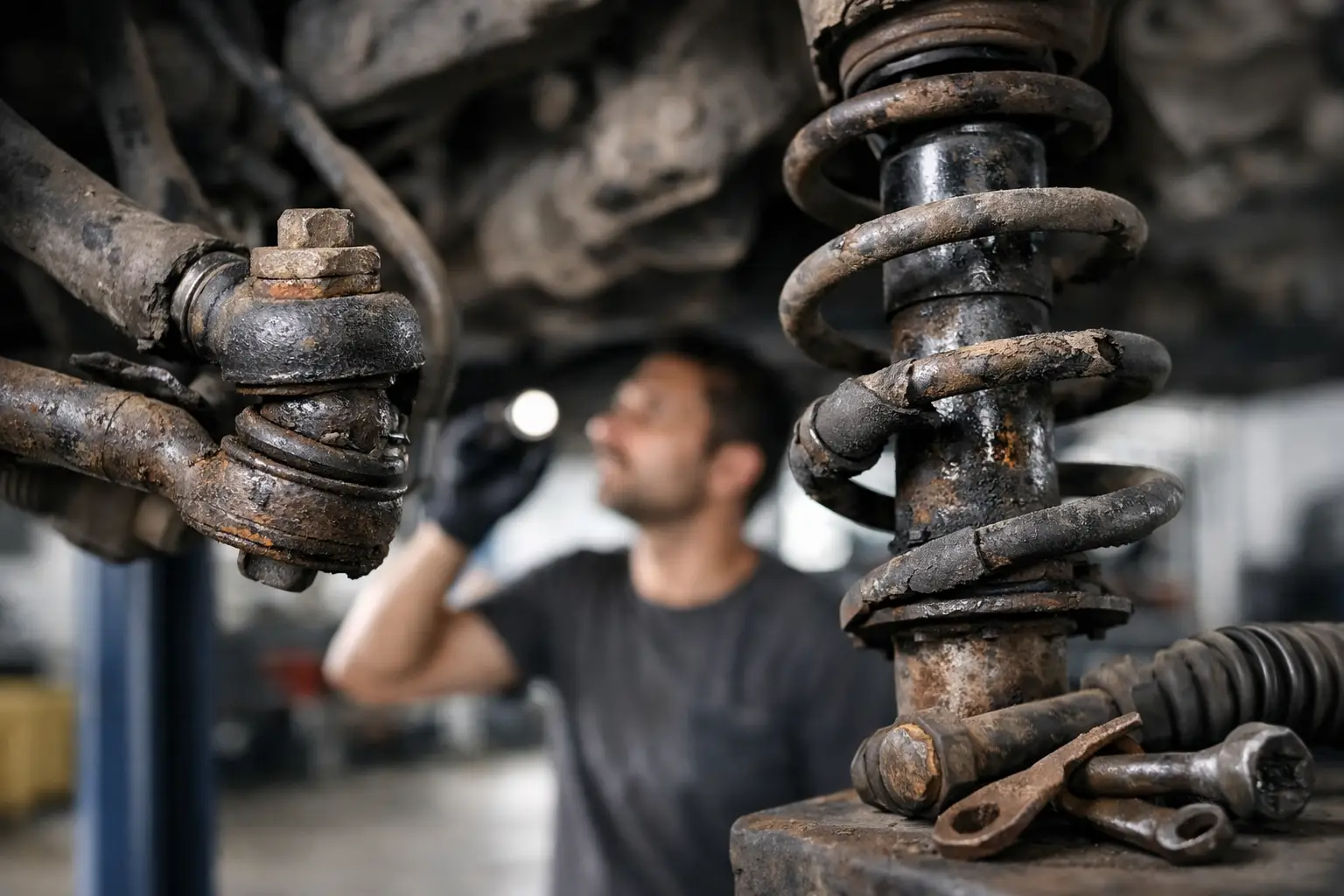
Worn Steering and Suspension Components Signs
That slight pull on the highway, the clunk over a speed bump, the steering wheel that no longer feels settled at center - these are often early signs of worn steering and suspension components. They rarely fail all at once. More often, they degrade gradually, changing how a vehicle tracks, corners, brakes, and absorbs road impact long before the driver realizes how much performance has been lost.
For workshops and parts buyers, that gradual decline matters. A customer may only describe a noise or uneven tire wear, but the root cause can involve several related parts working below standard. For everyday drivers, the issue is even simpler: if the steering and suspension system is not doing its job, the vehicle feels less stable, less comfortable, and less safe.
Steering and suspension parts do more than improve ride comfort. They keep the tires in proper contact with the road, help maintain wheel alignment, and support predictable vehicle control during braking and cornering. When these parts wear out, the result is not only noise or vibration. It can also mean reduced stopping confidence, irregular tire wear, and steering response that feels delayed or unsettled.
This is why replacement timing matters. Waiting too long can turn one worn part into several. A loose tie rod end may affect alignment. A weak shock absorber can increase tire bounce and place more stress on other suspension parts. A damaged strut mount may create noise at first, then develop into steering instability. In practice, the cost of delay is often higher than the cost of early correction.
The most obvious sign is noise, but not all noise points to the same part. A knocking sound over uneven roads may suggest stabilizer links, strut mounts, or ball joints. A humming or growling sound that changes with speed may indicate hub bearing wear. A steering wheel that feels loose or vague can point to rack ends, tie rod ends, or a worn steering rack.
Vehicle behavior also tells an important story. If the car pulls to one side, wanders at highway speeds, dips heavily under braking, or feels unusually harsh over normal road surfaces, the steering and suspension system deserves attention. Uneven tire wear is another common warning sign. Feathering, cupping, or rapid edge wear often appears when component wear and alignment issues start to overlap.
Some symptoms are easy to dismiss because they build slowly. Drivers adapt. They turn the radio up over the rattle, accept the rougher ride, or assume the steering always felt that way. That is exactly why regular inspection is valuable, especially on higher-mileage vehicles and cars used daily on mixed road conditions.
Wear patterns depend on vehicle design, mileage, driving style, road quality, and maintenance history. Still, some categories come up repeatedly in real workshop conditions.
These parts are central to steering accuracy. As they wear, steering can feel loose, and alignment may become harder to maintain. In advanced cases, tire wear increases and the car may feel less precise during lane changes or turns.
Ball joints allow controlled suspension movement while supporting vehicle load. Once wear develops, they can create clunking sounds, unstable handling, and abnormal tire wear. Because they are safety-critical, they should never be ignored.
These parts control spring movement and help keep the tire planted on the road. Worn shocks or struts often cause bouncing, poor body control, longer braking distances, and reduced cornering confidence. They may not always leak visibly, so performance-based inspection is important.
These smaller components often cause noticeable knocking sounds on uneven roads. They may seem minor compared with larger suspension parts, but they affect ride refinement and stability, especially during cornering.
Control arms locate the wheel correctly while bushings absorb movement and vibration. When bushings crack or soften, drivers may notice vague steering, braking instability, or a shift in wheel position under load.
These support smooth wheel rotation and contribute to stable driving. Once worn, they can create humming noise, vibration, and in some cases affect ABS operation or overall wheel control.
Replacing the wrong part wastes time, labor, and customer trust. Steering and suspension complaints often overlap, and one symptom can have multiple causes. A clunk is not always a stabilizer link. Uneven tire wear is not always just an alignment issue. Vibration is not always caused by the tires.
That is why experienced workshops inspect the full system rather than chasing a single symptom. They check for free play, damaged boots, bushing condition, leakage, mounting wear, and bearing noise. They also consider how parts interact. If one component has worn badly, nearby components may be close behind.
For retailers and distributors, this creates a practical sales point. Customers do not only need a part that matches the vehicle. They need a part that fits accurately, installs without avoidable issues, and performs consistently once on the road.
Drivers sometimes postpone steering and suspension repair because the vehicle is still moving and the problem feels manageable. That decision can look economical in the short term, but it often increases total cost.
A worn tie rod end can accelerate tire wear. Weak shocks can reduce braking stability and place added stress on mounts, springs, and tires. A failing hub bearing can move from mild noise to serious roughness. In some cases, delayed replacement also leads to repeat workshop visits because one failed part exposed the weakness of another.
There is also the issue of driver confidence. A vehicle that feels unstable, noisy, or unpredictable creates fatigue. On long drives, in wet conditions, or during sudden braking, that matters more than many drivers expect.
Price matters, but it should not be the only filter. In this category, fitment accuracy, material quality, and production consistency have a direct effect on performance, service life, and installation efficiency.
Workshops usually want parts that fit correctly the first time and reduce comeback risk. Retailers want stable quality that supports repeat business. Drivers want dependable performance without paying more than necessary. Those priorities meet at the same point: reliable aftermarket parts built to consistent standards.
A strong product range also matters. Vehicles on the road today include local, Japanese, Korean, and international models with different designs and wear patterns. A supplier with broad coverage helps businesses source faster and helps workshops complete repairs without unnecessary delay. This is one reason brands like Saiko have remained relevant in the aftermarket - wide model coverage, practical value, and quality-controlled replacement parts solve real day-to-day problems for the trade.
There is no universal mileage rule because wear depends heavily on road conditions and usage. City driving with potholes, speed bumps, and frequent stops can wear components differently from long highway use. Heavy loads, neglected alignment, and poor tire condition can speed up wear too.
The better approach is inspection based on symptoms, service intervals, and vehicle age. If a car shows noise, looseness, bouncing, uneven tire wear, or steering instability, inspection should happen early. If one side has failed, technicians should also assess the matching side and connected components. Sometimes replacing parts in pairs gives better balance, especially with shocks, struts, and certain suspension items.
It also depends on the customer’s goal. If the vehicle is being restored to stable, quiet daily use, a broader repair may make sense. If the issue is isolated and the rest of the system remains sound, targeted replacement may be the better value. Good advice should match actual vehicle condition, not guesswork.
Steering and suspension repairs are not cosmetic. They shape how a vehicle responds every day - in traffic, during braking, over rough roads, and at highway speed. When parts wear, the vehicle often gives warnings early. The real question is whether those warnings are recognized and acted on in time.
For workshops, retailers, and drivers alike, the right response is straightforward: inspect carefully, replace worn parts before they create bigger problems, and choose components that deliver dependable fit, durability, and value. A vehicle should feel controlled, settled, and predictable every time it leaves the shop. That is not a premium extra. It is the standard every driver should expect.
Recent Posts
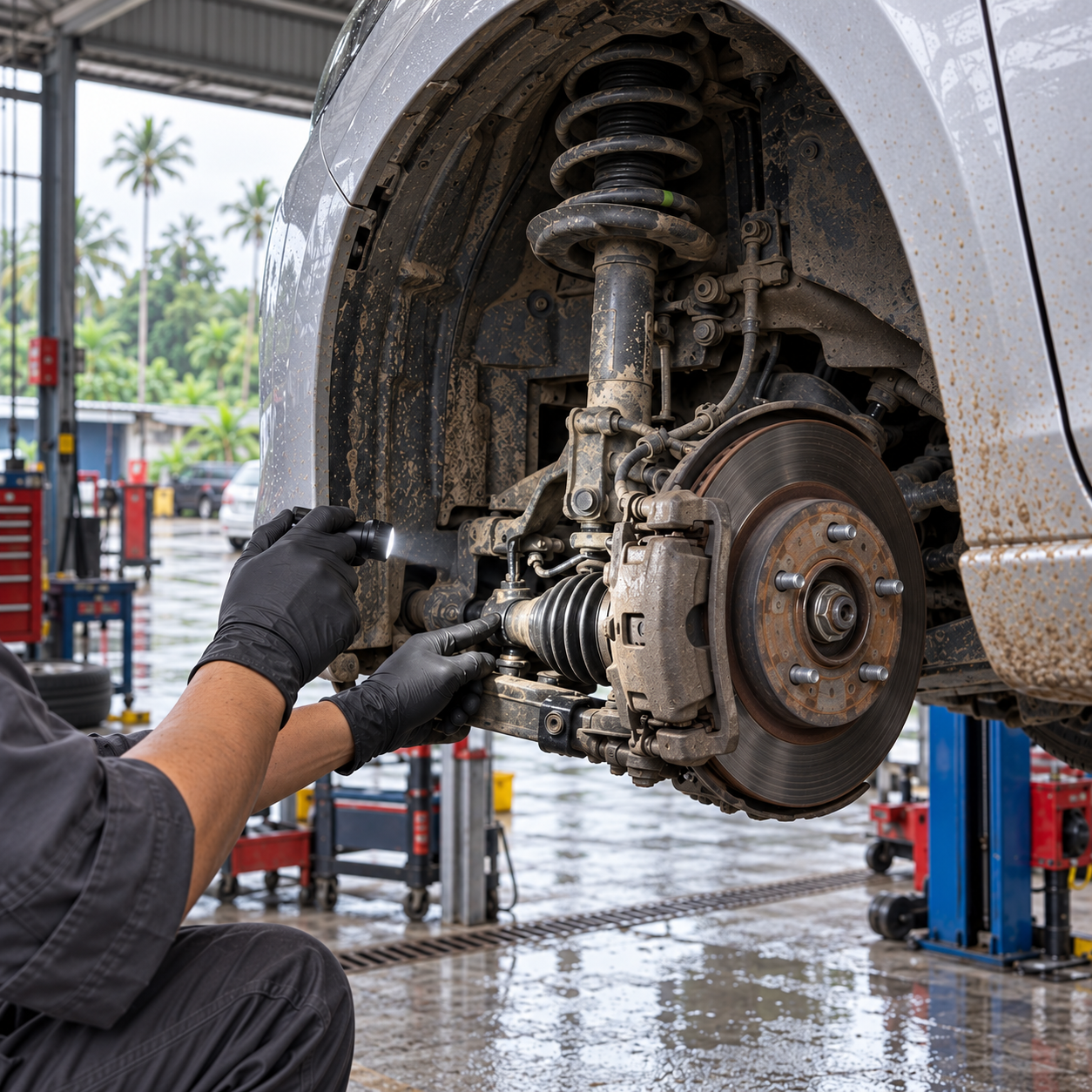
Drove Through Flood Water? The Parts Under Your Car That Need a Look Next
19 Oct 2026
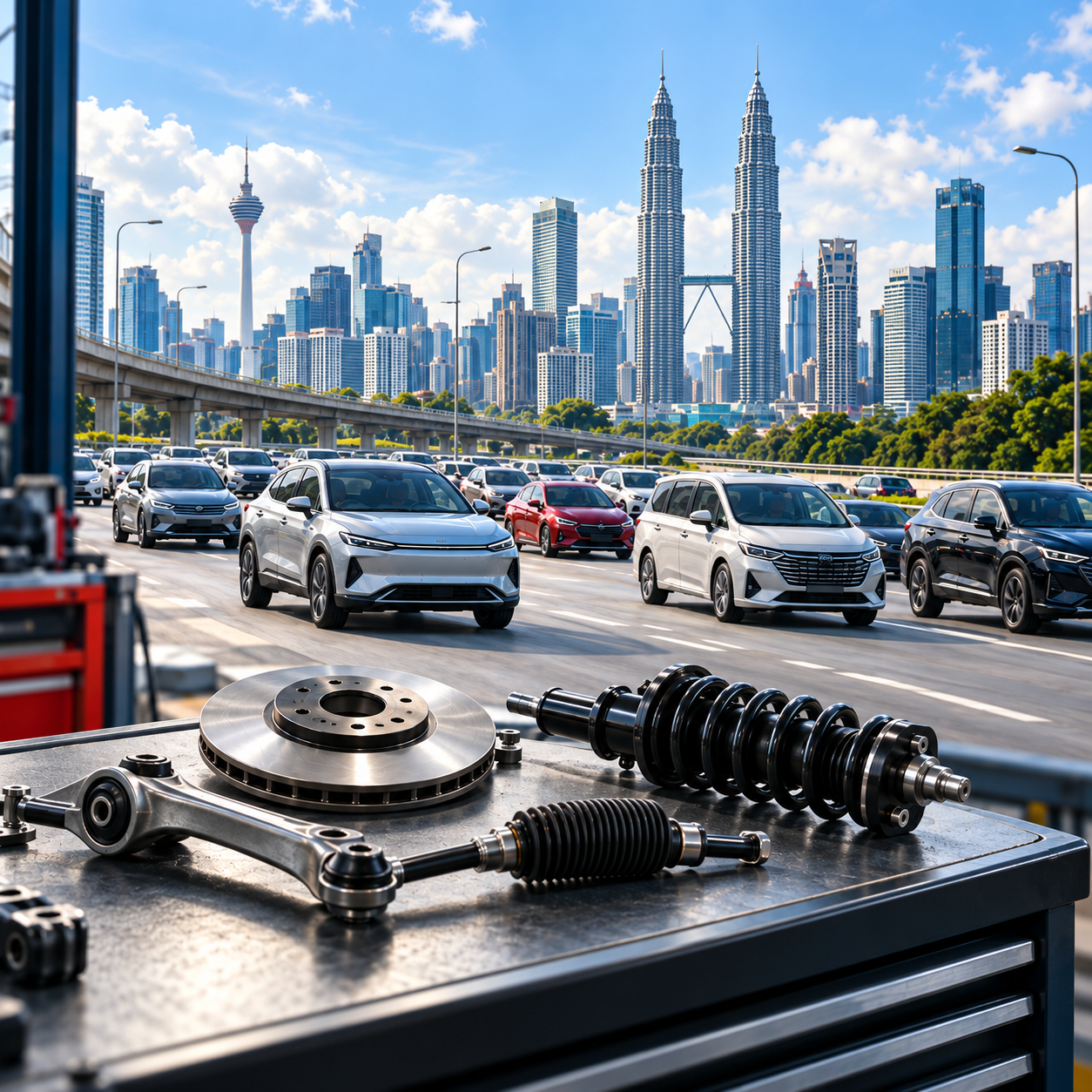
A Record Year on the Road Means a Record Year Ahead for Maintenance
12 Oct 2026
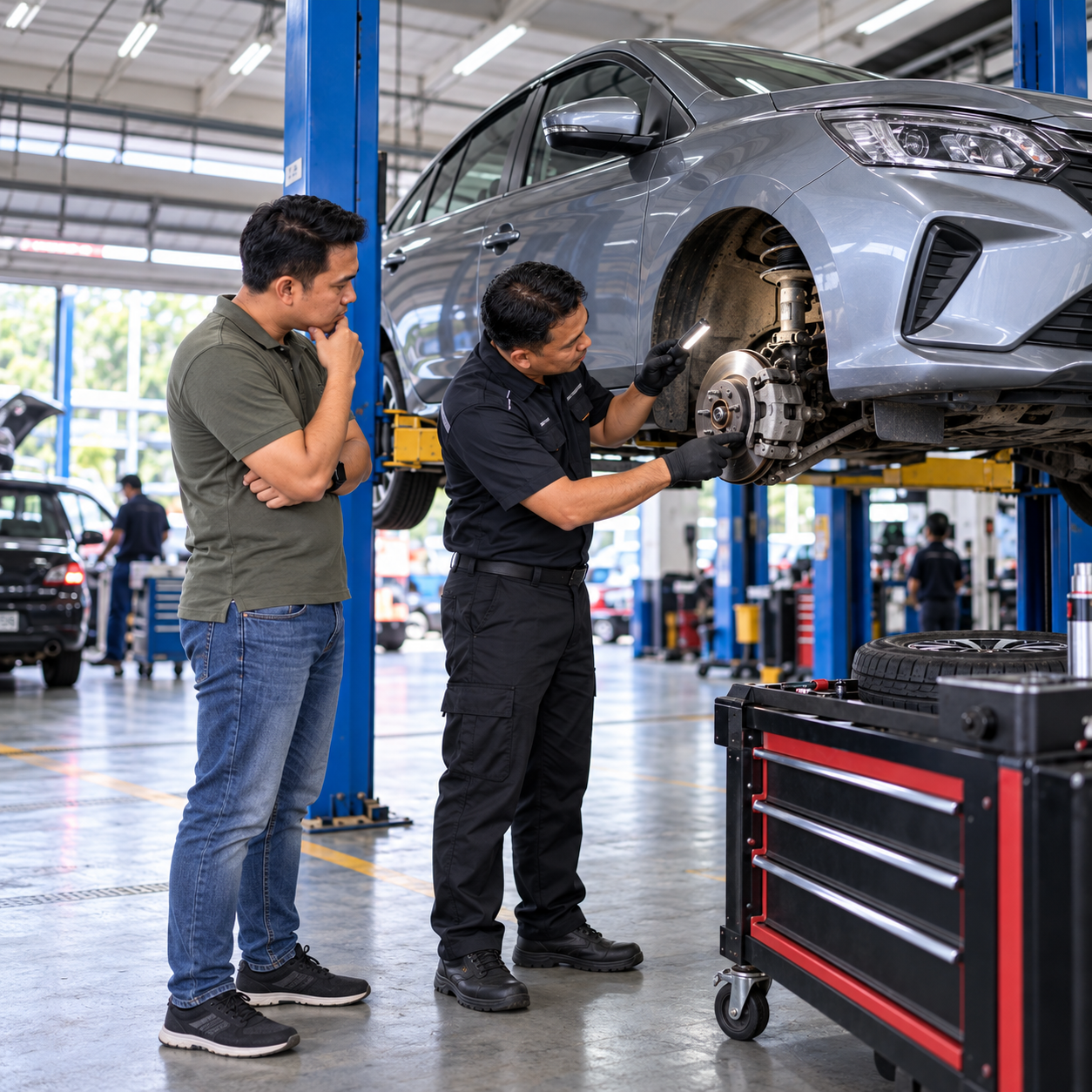
Budget 2027 Puts E-Hailing Car Maintenance on the National Agenda
12 Oct 2026
A Rear Axle Recall Is a Reminder: The Back of the Car Matters Too
12 Oct 2026
Scrap or Maintain? What a Proposed Old-Car Rebate Means for Malaysia's Older Vehicles
09 Oct 2026
 Whatsapp Us NowSaiko Automotive

