


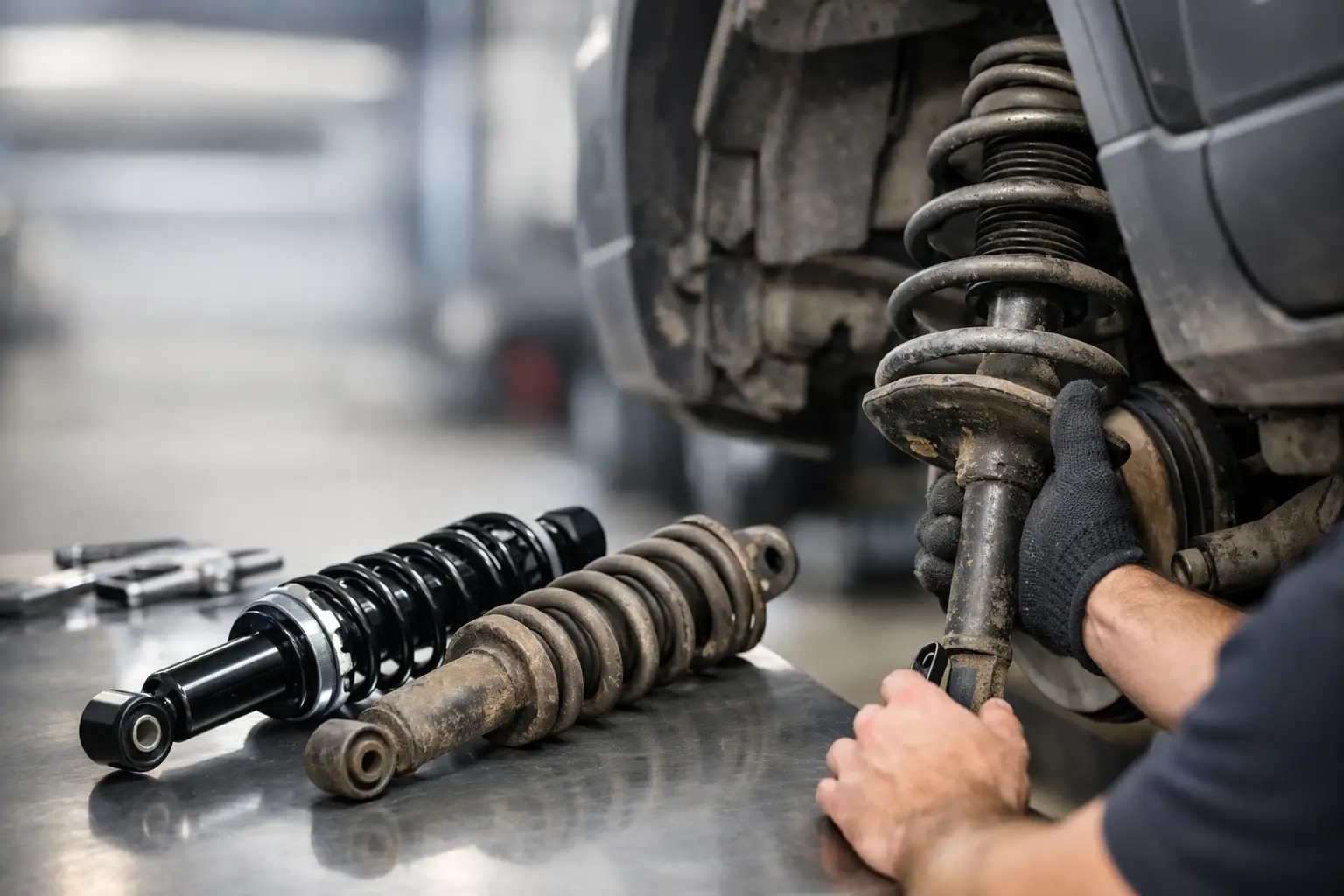
When Should Shock Absorbers Be Replaced?
A car that used to feel planted can start floating over bumps, dipping hard under braking, or leaning more than usual in corners. That is usually when drivers start asking, when should shock absorbers be replaced? The short answer is that there is no single mileage rule for every vehicle, but there are clear signs, driving conditions, and wear patterns that tell you when replacement should not be delayed.
Shock absorbers are wear-and-tear parts. They do not usually fail all at once like a broken belt or a dead battery. More often, their performance fades gradually, and that makes them easy to overlook. For workshops, retailers, and vehicle owners, that matters because weak shocks affect not only ride comfort but also braking stability, tire wear, steering control, and overall road holding.
In practical terms, shock absorbers should be replaced when they no longer control suspension movement properly. That can happen because of internal wear, oil leakage, damaged seals, bent rods, or worn mounting hardware. Many vehicles begin to show noticeable shock absorber wear somewhere around 50,000 to 100,000 miles, but actual service life depends heavily on road quality, vehicle load, driving style, and climate.
A car used mostly on smooth highways may keep its shocks longer than one that regularly travels on rough urban roads, broken pavement, speed bumps, or rural routes. Vehicles that frequently carry heavy loads, operate as fleet cars, or drive long distances in hot and wet conditions also tend to wear suspension parts faster. That is why mileage is only a guide, not a decision by itself.
The better approach is to combine mileage with inspection results and real driving symptoms. If a vehicle has high mileage and is already showing poor ride control, replacement is usually the right call.
One of the most common signs is excessive bouncing after driving over a bump. The suspension should settle quickly. If the vehicle continues to bob up and down, the shocks may no longer be damping movement effectively.
Another strong warning sign is nose-diving during braking or squatting during acceleration. When shocks weaken, weight transfer becomes harder to control. That can make the vehicle feel less stable, especially during emergency braking or sudden lane changes.
Drivers also often notice increased body roll in corners. If the car leans more than it used to, feels vague in turns, or seems unsettled on uneven roads, worn shocks may be part of the problem. Steering can also feel less precise because the tires are not staying in contact with the road as consistently as they should.
Uneven or cupped tire wear is another clue that should not be ignored. When shocks are weak, tires can bounce instead of tracking the road surface properly. That creates irregular contact patches and shortens tire life. For workshops, this is an important inspection point because customers may come in thinking they only need tires when the root cause is suspension wear.
Visible oil leakage from the shock body is also a direct sign of failure. A light film may not always mean immediate replacement, but obvious fluid leakage usually indicates the unit can no longer perform as designed. Clunking noises, damaged bushings, or loose mounts should also be checked, since related hardware can affect ride quality and safety even if the shock itself is not completely worn out.
Some drivers delay replacement because the car still feels drivable. That is the risk. Weak shocks do not just make the ride softer or noisier. They can increase stopping distance, reduce tire grip on rough roads, and make the vehicle less predictable during evasive maneuvers. In wet conditions, those effects can become more noticeable.
There is a reason two similar vehicles can need shock absorber replacement at very different times. Usage matters. A lightly driven family sedan on smooth roads may not show serious issues until much later. A ride-hailing car, delivery vehicle, or workhorse used daily on mixed road surfaces may wear through shocks much sooner.
In markets where potholes, uneven road joints, speed humps, and stop-and-go traffic are common, suspension components work harder. Heat, dust, and water exposure also accelerate wear. For this reason, regular inspection during tire service, brake work, or alignment checks is a smart maintenance practice.
A good rule for workshops and owners is to pay closer attention once the vehicle reaches mid to high mileage, especially if ride quality has changed. Even if there is no dramatic failure, aging shocks can quietly reduce performance over time.
Yes, in most cases they should. Replacing shock absorbers in pairs on the same axle helps maintain balanced handling, braking response, and ride height behavior from side to side. If one side is new and the other side is heavily worn, the difference in damping can create instability and uneven performance.
There are exceptions. If a nearly new shock is damaged by impact and the matching side is still in excellent condition, a workshop may assess whether single-side replacement is reasonable. But for worn components, pair replacement is the better standard.
When replacing shocks, it is wise to inspect related suspension parts such as strut mounts, bushings, stabilizer links, control arm components, and spring seats where applicable. If these parts are worn, replacing only the shock may not fully restore ride quality. It can also lead to repeat labor later.
This matters for both customer satisfaction and workshop efficiency. Proper fitment, dependable quality, and checking the full suspension system reduce comebacks and help the vehicle leave the shop with a more complete repair.
Not every case is equally urgent. Mild wear with no leakage, no major handling symptoms, and no abnormal tire wear may allow some planning time. But if the vehicle has clear fluid leaks, severe bouncing, poor braking stability, or obvious tire cupping, replacement should move up in priority.
Urgency also depends on how the vehicle is used. A car that does mostly short local trips may present less immediate risk than one that regularly travels at highway speed with family passengers or carries commercial loads. The safer standard is simple: once shock performance is clearly compromised, delaying replacement usually costs more in tires, comfort, and control.
Shock absorbers are not a category where buyers benefit from guessing. Fitment accuracy, damping consistency, material quality, and production control all affect performance. A low-quality part may install easily but fail to deliver the stability, durability, or service life expected.
For workshops and retailers, this is where a dependable aftermarket supplier adds value. Quality-controlled replacement parts built to OE-standard testing expectations help reduce fitment issues and support consistent results across a wide range of vehicle models. That matters not only for safety and ride quality but also for business reputation.
For vehicle owners, the practical benefit is straightforward. A properly matched replacement shock helps restore control, comfort, and confidence without overpaying for a part that does not suit the vehicle’s real-world use.
Saiko supports this need with broad vehicle coverage and quality-focused replacement parts built for everyday market demand, which is especially important for workshops and parts buyers who need dependable availability across multiple applications.
If you are wondering when should shock absorbers be replaced, think beyond mileage alone. Look at how the vehicle behaves, how the tires are wearing, whether there is any leakage, and what kind of roads the car sees every day. Shock absorbers usually give warnings before they become a bigger problem.
Replacing them at the right time helps protect more than ride comfort. It helps preserve braking control, tire life, suspension balance, and driver confidence. For a daily driver, a workshop fleet customer, or a parts retailer advising buyers, that is not an extra repair. It is part of keeping the vehicle stable, safe, and worth driving.
Recent Posts
Automotive Trade Is on the Table in the Malaysia-EU FTA. Here's Why It Matters at the Parts Counter
23 Oct 2026
The Road Transport Act Just Got Tougher. Here's What It Means for Your Car's Parts
21 Oct 2026
Drove Through Flood Water? The Parts Under Your Car That Need a Look Next
19 Oct 2026
A Record Year on the Road Means a Record Year Ahead for Maintenance
12 Oct 2026
Budget 2027 Puts E-Hailing Car Maintenance on the National Agenda
12 Oct 2026
 Whatsapp Us NowSaiko Automotive

