


Steering Components Explained Simply
A vehicle that feels loose in corners, pulls off line, or responds late to the steering wheel is not just unpleasant to drive. It is often a sign that one or more steering parts are wearing out. This guide on steering components explained is built for the people who deal with that reality every day - workshops diagnosing faults, retailers advising customers, and drivers trying to understand what needs replacing and why.
The steering system does one simple job on paper: it turns the vehicle when the driver turns the wheel. In practice, it has to do that accurately, consistently, and safely across potholes, speed bumps, wet roads, parking maneuvers, and highway speeds.
When steering components are in good condition, the vehicle tracks straight, cornering feels predictable, and tire wear stays more even. When parts begin to loosen or wear, the first symptoms can seem minor. A small knock, slight vibration, or a steering wheel that no longer feels centered can quickly become bigger issues. Poor steering response also puts extra stress on suspension and tire components, which raises repair costs over time.
For workshops and parts buyers, that is why fitment accuracy and part quality are not small details. They directly affect safety, installation time, and customer confidence.
Most passenger vehicles use a steering system made up of several linked parts. Each one has a specific job, and failure in one area can affect the whole system.
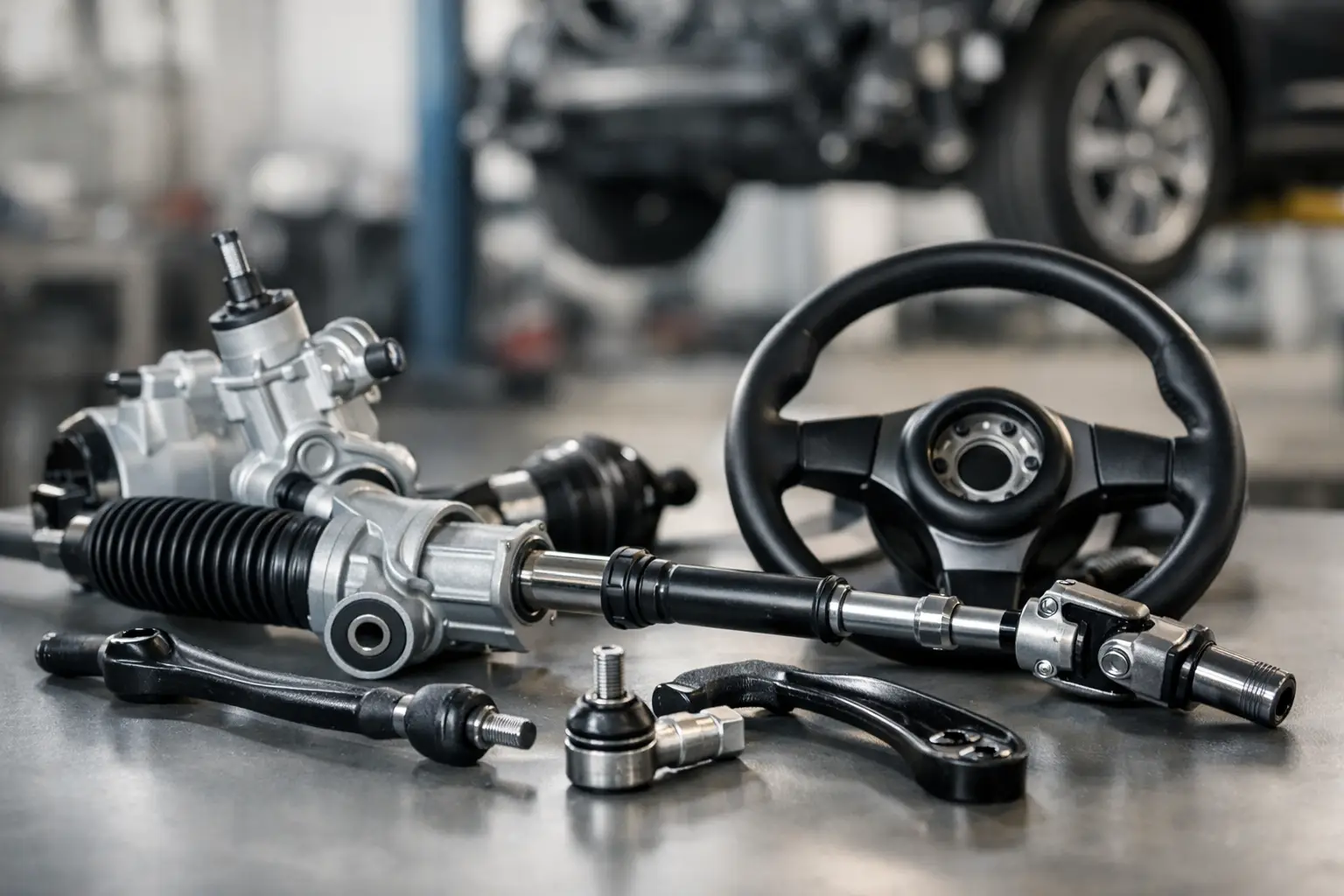
The steering rack is the core unit that converts the rotation of the steering wheel into side-to-side movement that turns the wheels. In a rack-and-pinion setup, the pinion gear engages the rack and pushes it left or right.
If the steering rack wears internally, the driver may notice free play, uneven steering feel, fluid leaks in hydraulic systems, or a knocking sensation over rough roads. Rack condition matters because even if the outer joints are replaced, a worn rack can still cause poor steering accuracy.
Tie rod ends connect the steering rack to the steering knuckle at the wheel side. They transfer steering movement to the wheels while allowing the suspension to move up and down.
These are common wear items. Once the ball joint inside a tie rod end develops play, the result may be loose steering, abnormal tire wear, vibration, or clunking noises. In severe cases, excessive wear can create a serious safety risk. For workshops, tie rod ends are a category where consistent quality and proper thread and taper dimensions make a real difference during installation.
Rack ends, sometimes called inner tie rods, sit between the steering rack and the outer tie rod ends. They handle the inner portion of the steering linkage and work together with the outer ends to maintain controlled wheel movement.
When rack ends wear, the symptoms can feel similar to bad tie rod ends: looseness, knocking, and steering instability. Because the symptoms overlap, proper inspection is essential. Replacing only the visibly worn outer part while leaving a loose inner joint can lead to repeat complaints.
The steering knuckle is the structural component that connects the wheel hub, suspension parts, and steering linkage. It acts as the pivot point that allows the wheel assembly to turn.
This part is usually durable, but damage from impact, corrosion, or previous accident repairs can affect alignment and steering geometry. It is not the first part most people suspect, but when fitment or alignment issues do not resolve as expected, the knuckle should not be overlooked.
Ball joints are often discussed as suspension parts, but they play a major role in steering accuracy too. They allow controlled movement between the control arm and steering knuckle while supporting the changing angles of suspension travel.
A worn ball joint can create wandering steering, uneven tire wear, and front-end noise. Because it affects wheel control, it can make a steering problem feel worse even if the steering rack and tie rods are still functioning.
Many vehicles use hydraulic or electric power assistance to reduce steering effort. In hydraulic systems, the pump, hoses, seals, and fluid all contribute to steering performance. In electric systems, sensors and motors assist the rack directly.
When assistance is compromised, the steering may feel heavy, inconsistent, or noisy. Not every steering complaint means the linkage is worn. Sometimes the problem is loss of assist rather than loss of mechanical control. That distinction matters when diagnosing parts correctly.
Looking at steering components one by one is useful, but the real picture is how they interact. The steering wheel input moves the rack. The rack moves the rack ends and tie rod ends. Those parts move the steering knuckles, which change wheel direction. Ball joints and suspension components support that movement while keeping the wheels stable.
That means a weakness in any one point can affect feel, precision, and tire contact. This is why experienced workshops inspect the full system instead of guessing based on one symptom. A driver may complain about loose steering, but the cause could be a tie rod end, a rack end, a ball joint, or wear in more than one area at the same time.
Most steering problems announce themselves early, even if drivers do not recognize the warning signs right away. The most common symptoms include steering play, knocking noises from the front end, vibration through the steering wheel, uneven tire wear, poor return-to-center after turning, and a vehicle that drifts or feels unstable at speed.
Some symptoms overlap with suspension, wheel bearing, or tire issues, so diagnosis should stay practical rather than rushed. For example, uneven tire wear does not automatically point to tie rod failure. It may involve alignment settings, worn ball joints, damaged bushings, or a combination of all three.
This is where quality parts selection matters. Replacing a failed part with an inconsistent or poorly finished component can create the same complaint again, even if the original diagnosis was correct.
For drivers, the priority is simple: safe and predictable control. For workshops, it is a little broader. The right steering part should install correctly, perform consistently, and reduce comeback risk. For retailers and distributors, stable quality and broad vehicle coverage are just as important because customers expect the part to be available when needed.
That makes steering parts a category where price alone is not a smart buying standard. A cheaper part that wears early, fits poorly, or creates noise after installation often costs more in labor, alignment rework, and customer dissatisfaction.
A dependable aftermarket part should offer accurate dimensions, durable materials, proper sealing where required, and quality control that supports repeatable performance. This matters even more in markets where one product range has to cover local models, Japanese brands, Korean brands, and other imported vehicles.
Steering repairs are not just about replacing hardware. They also affect wheel alignment, road testing, and customer safety. If a part has poor tolerances or inconsistent machining, the workshop loses time solving avoidable problems.
Good fitment supports faster installation and more predictable alignment results. Good material quality helps the part hold up under daily driving conditions instead of developing play too early. That is why many workshops prefer brands with broad catalog coverage, OE-standard testing, and consistent supply. It helps them do the job once and do it right.
For a supplier serving mixed vehicle populations, this is especially valuable. A wide range of steering racks, tie rod ends, rack ends, and ball joints across many applications gives workshops and retailers a practical advantage. It reduces delays and keeps common repairs moving.
There is no single rule that fits every repair. Sometimes one failed tie rod end is the clear issue. In other cases, replacing only one part solves the noise but not the loose steering feel, because the rack end or ball joint is also worn.
Mileage matters, but usage matters too. A car driven mostly on smooth highways may age differently from one that spends years on rough urban roads with frequent low-speed turning and pothole impacts. Steering wear is also influenced by driving habits, load, and previous repair quality.
That is why the better approach is not just replacement, but complete inspection. If one steering joint has developed excessive play, the surrounding parts deserve a close look. This protects the customer, improves repair accuracy, and helps avoid repeat visits for related faults.
A trusted aftermarket brand like Saiko fits this need well because buyers are not only looking for a part number. They are looking for dependable quality, wide application coverage, and confidence that the installed part will perform as expected.
Steering systems are precise by design, but the buying decision does not need to be complicated. Know what each component does, pay attention to early symptoms, and treat fitment and quality as part of the repair, not an afterthought.
For workshops, retailers, and vehicle owners alike, the best steering repair is one that restores control, avoids repeat work, and stands up to real-world driving. When the front end feels right again, the difference is immediate - and so is the value of choosing the right part the first time.
Recent Posts
A Record Year on the Road Means a Record Year Ahead for Maintenance
12 Oct 2026
A Rear Axle Recall Is a Reminder: The Back of the Car Matters Too
12 Oct 2026
Scrap or Maintain? What a Proposed Old-Car Rebate Means for Malaysia's Older Vehicles
09 Oct 2026
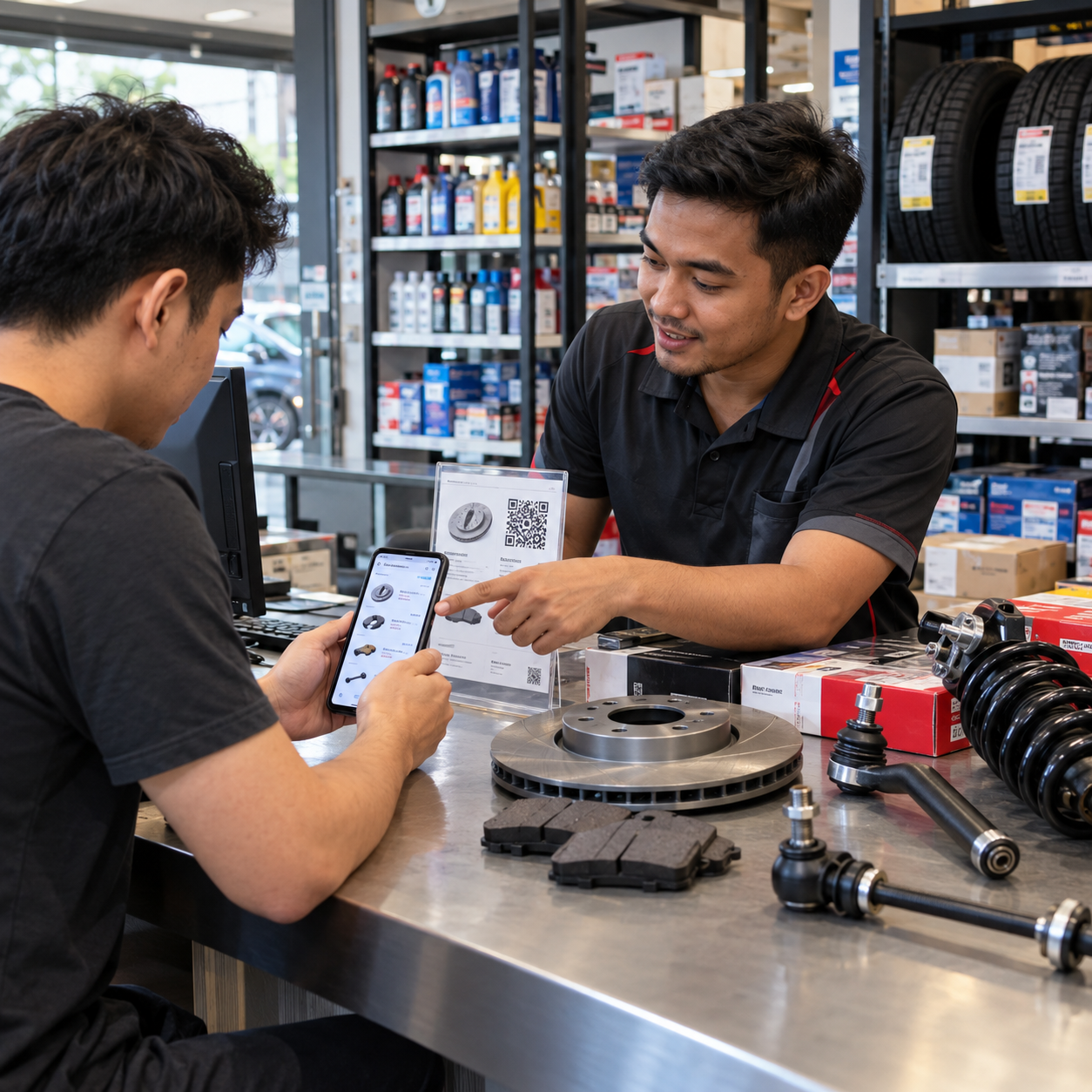
Price Transparency Is Coming to the Parts Counter. Here's What Else You Should Check
07 Oct 2026
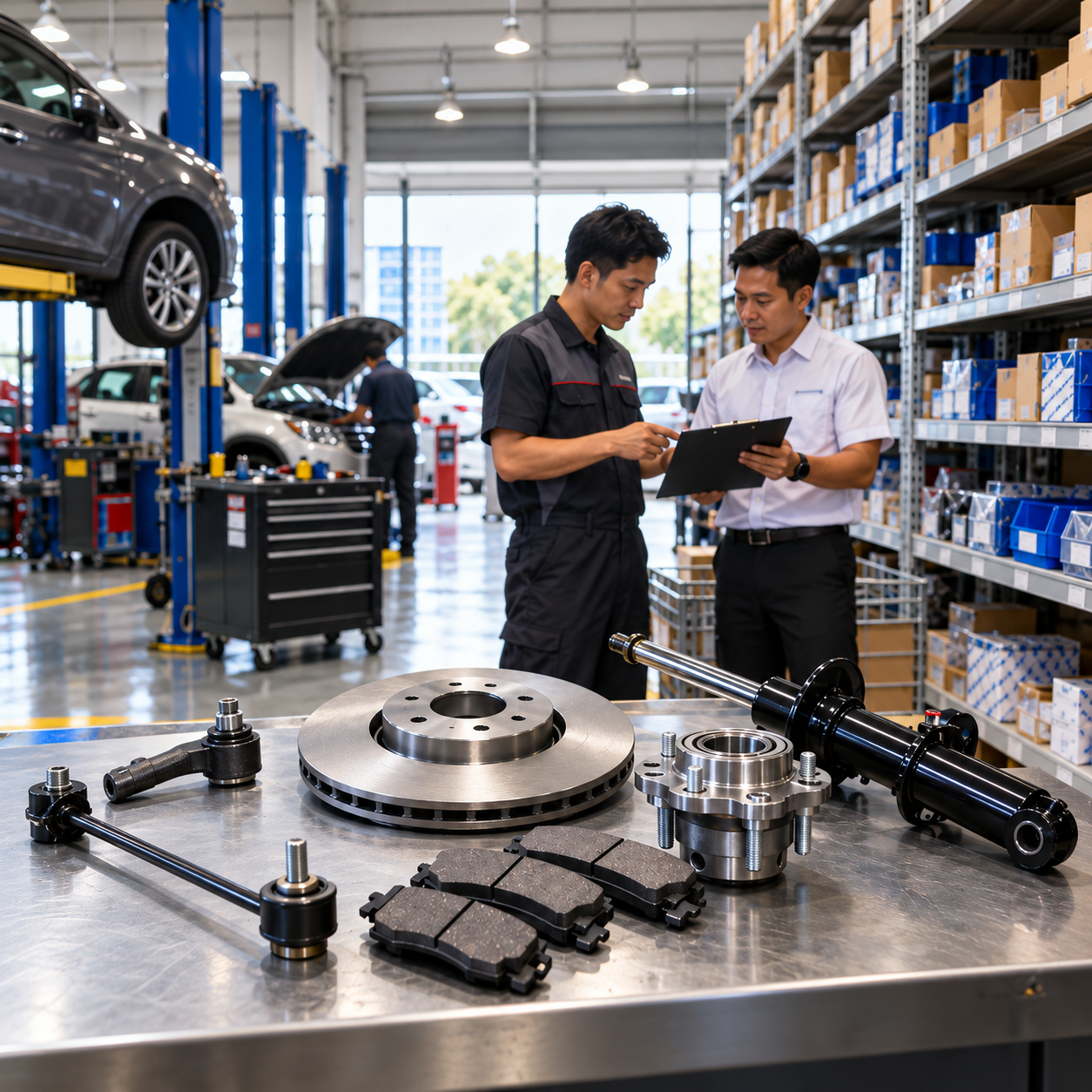
Parts Availability Is the New Aftersales Battleground. Here's Why It Matters to Every Driver
05 Oct 2026
 Whatsapp Us NowSaiko Automotive

