


Malaysia's EV Localisation Push: What It Means for the Parts Aftermarket
EV localisation is turning into one of the defining questions of Malaysia's automotive policy this year, and BYD's stalled Tanjung Malim plant is the clearest example of why. On 4 August, MITI minister Datuk Seri Johari Abdul Ghani told parliament that the ministry has still not received formal notification on whether BYD will proceed with its proposed Tanjung Malim, Perak assembly plant, according to Bernama. His response to a question from Senator Tan Sri Low Kian Chuan was direct: any decision to proceed, defer, or revise the investment "is a commercial decision for the company."
That single line captures the position Malaysia's government has staked out — it will support local EV assembly through incentives, but it isn't going to chase individual carmakers to take them up.
The government has offered import duty, excise duty, and sales tax exemptions for locally assembled EVs through 31 December 2027, but eligibility depends on compliance with the Customs Regulations 1988 and a set of newer conditions that raise the bar for what counts as genuine local production. According to the same report, the rules that reshaped BYD's calculus include:
BYD's own next move is still unclear — a visit by BYD Asia Pacific auto sales VP Liu Xueliang to Sime Motors' Inokom plant in Kulim, Kedah, has fuelled speculation that contract assembly through its Malaysian distributor could be the path forward instead of a standalone Tanjung Malim facility.
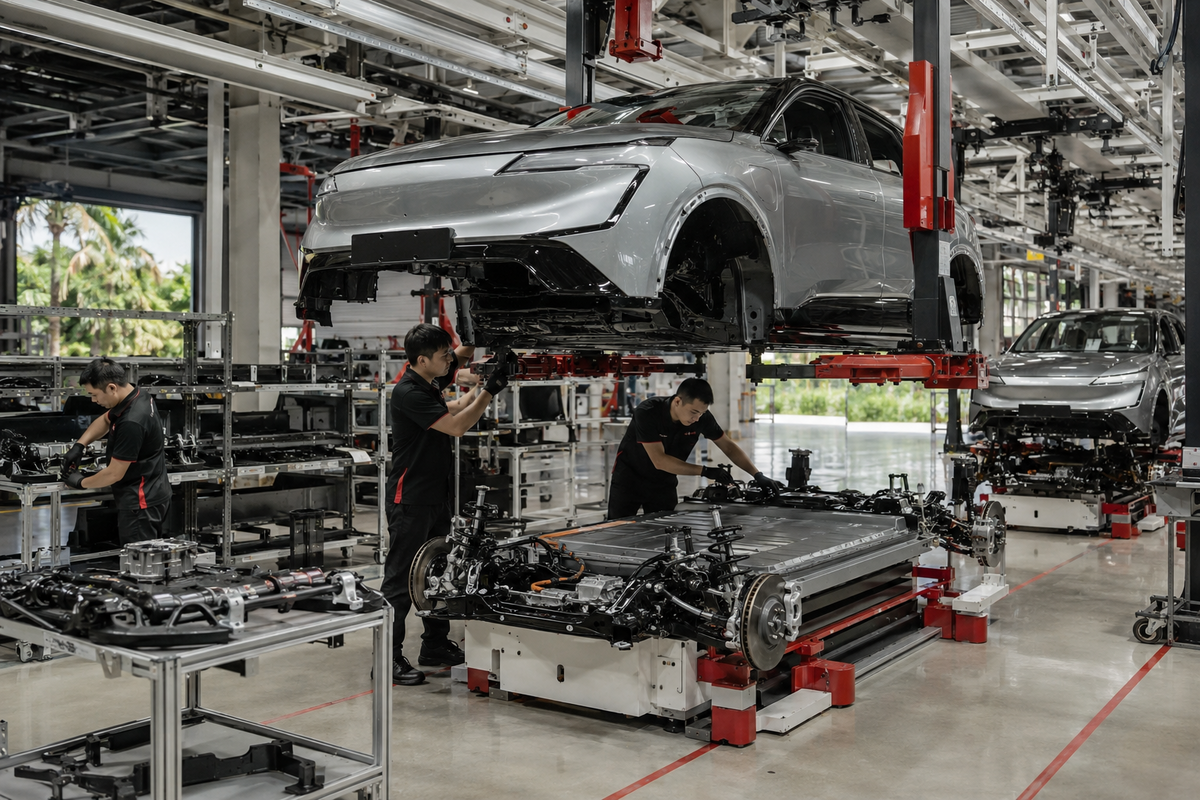
Because where and how a vehicle is built shapes how long it stays on Malaysian roads, and how well the local parts ecosystem is positioned to serve it. Johari's own framing of the government's priorities is instructive: any new investment should contribute to "higher domestic value-added, the development of local vendors, technology transfer, the creation of high-skilled jobs and stronger export activities." Every one of those outcomes — local vendor development especially — points directly at the parts supply chain, not just the assembly line.
A CKD plant with genuine local content requirements pulls component sourcing, technical training, and after-sales infrastructure into the country alongside it. A CBU-only model, by contrast, keeps that value chain offshore and leaves Malaysian distributors and workshops to build parts knowledge and stock plans from scratch once the vehicles are already on the road — regardless of how the assembly question is ultimately resolved.
The contract-manufacturing route already in use by MG, Xpeng, GWM, and TQ Wuling suggests where the next wave of EV volume in Malaysia is heading, even before BYD's own plans are settled:
Policy questions like the Tanjung Malim decision move slowly and don't always resolve the way early reporting expects. What's predictable is that Malaysia's EV parc keeps growing regardless of which carmaker builds where, and every one of those vehicles eventually needs the same chassis attention as the ICE cars they're replacing.
SAIKO has supplied quality-controlled automotive replacement parts since 2007, with coverage across more than 400 vehicle models through a nationwide dealer network — spanning Japanese, Korean, Malaysian, and other passenger vehicle applications, EV and ICE alike. As Malaysia's manufacturing landscape shifts, the suspension and steering fundamentals a heavier, faster-accelerating EV needs don't change.
Find your nearest SAIKO dealer and get ahead of the next wave of EV maintenance demand at saiko.com.my
Recent Posts
.png "Image")
Vehicle Theft in Malaysia: Why Genuine Replacement Parts Matter More Than Ever
07 Sep 2026
.png "Image")
Isuzu's 1,756km One-Tank Run and the Suspension Secret Behind Fuel Efficiency
05 Sep 2026
Bigger Budi95 Quota, More Mileage: What It Means for Your Car's Suspension
03 Sep 2026
.png "Image")
What China's 4.3 Million Car Recall Teaches Malaysian Drivers About Mechanical Reliability
01 Sep 2026
.png "Image")
Malaysia's Road Maintenance Funding Gap — What It Means for Suspension and Steering Wear
28 Aug 2026
 Whatsapp Us NowSaiko Automotive

