


AI Vehicle Inspection in Malaysia: What It Means for Suspension and Steering Care
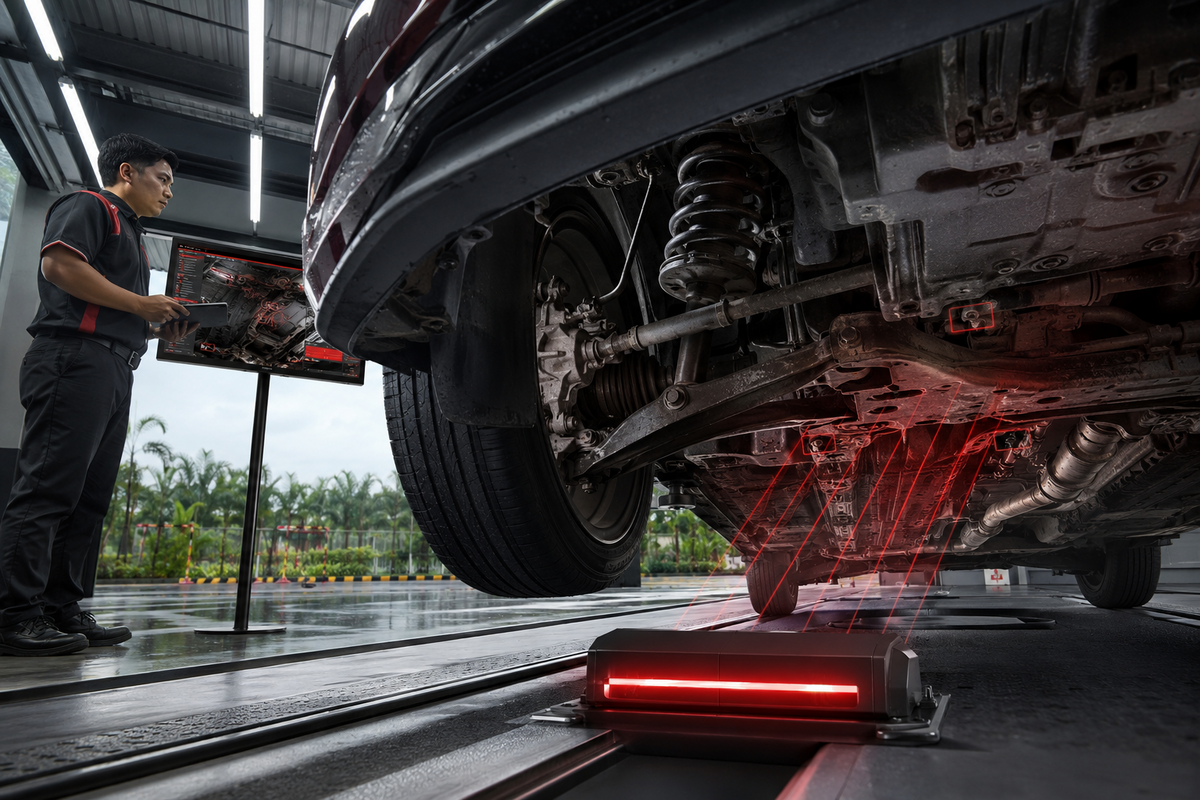
Puspakom has rolled out Malaysia's first AI vehicle inspection system for the undercarriage, and it changes what "passing inspection" actually looks like. According to SoyaCincau, the technology uses artificial intelligence to detect corrosion, oil leaks, and other undercarriage defects in about a minute, with human examiners still retaining the final call on every result. For a car owner, that's a faster trip through Puspakom. For a workshop or parts distributor, it's a signal that undercarriage condition is about to get a lot more visible than it used to be.
Vehicle inspections in Malaysia have long relied on a human examiner walking the underside of a car with a torch, working through a checklist at whatever pace attention and fatigue allow. AI-assisted scanning doesn't replace that judgement, but it does make the process faster and more consistent, and consistency is exactly what surfaces problems that used to slip through on a rushed or borderline call. Corrosion on a mounting face, a slow oil leak from a joint, a hairline crack starting to show — these are the kinds of defects that get caught earlier when the first pass is automated and repeatable.
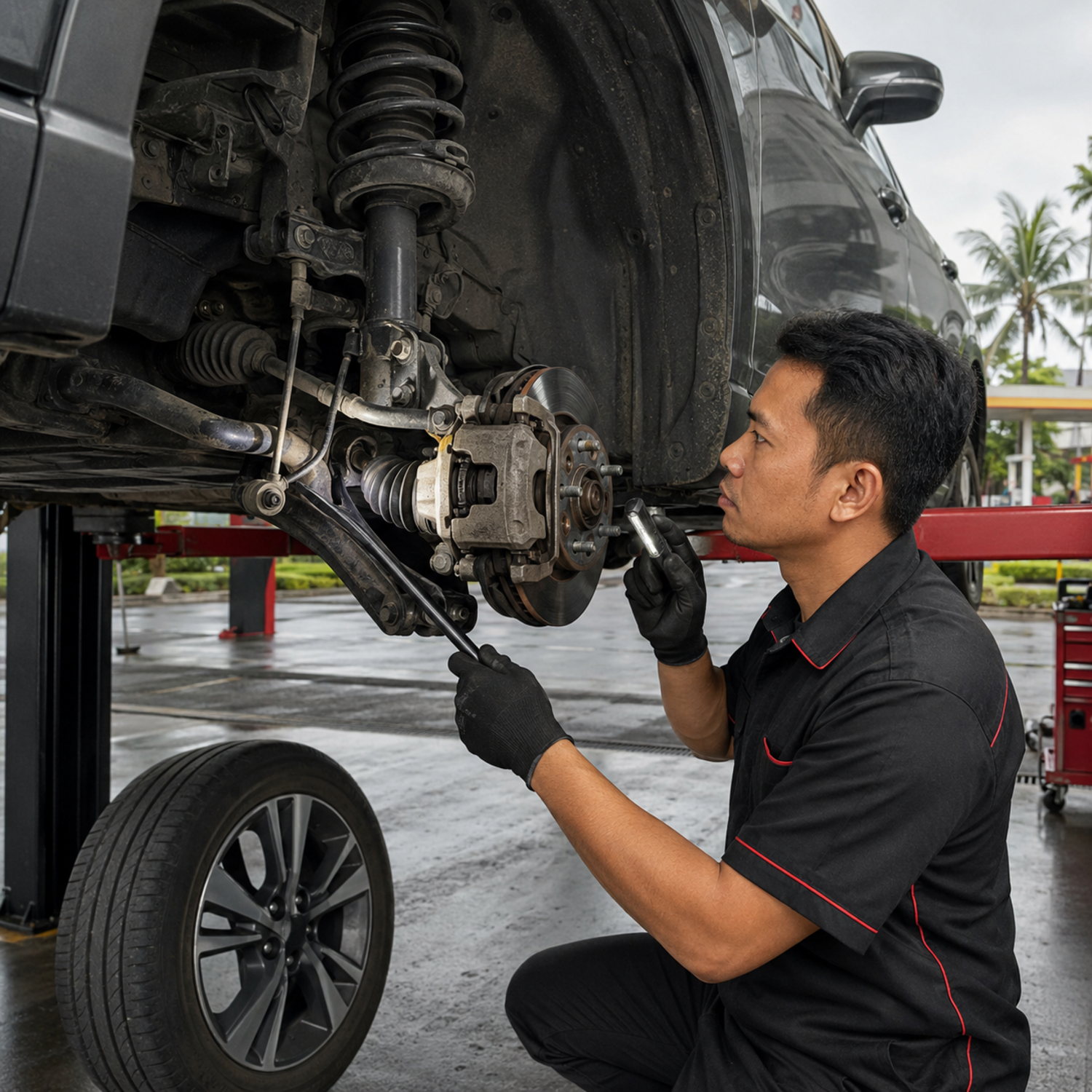
The underside of a vehicle takes the most abuse and gets the least attention. Suspension and steering components sit directly in the path of water, road salt, gravel, and heat cycling from the road surface, yet they're rarely inspected unless something already feels wrong — a knock over a bump, a pull to one side, a vibration through the wheel. By the time a driver notices, the underlying part has often been degrading for months.
This is precisely the failure mode SAIKO's own component engineering is built around. A MacPherson strut assembly, for example, isn't one part — it's a chain of parts working together, and wear at any single link can cause premature damper failure:
A wheel hub tells the same story: the mounting face, bearing unit, sealing system, and (where fitted) wheel-speed sensor all have to work together to the vehicle's specification. Corrosion on a mounting face or a failed seal doesn't stay isolated — it works its way through the rest of the assembly, which is exactly the kind of defect an undercarriage scan is designed to flag early.
In principle, yes — and that's the practical upside for everyday motorists. A one-minute AI scan that flags early-stage corrosion or a developing leak gives a driver the chance to act before a marginal component becomes a failed one, rather than finding out only when a part gives way on the road. It shifts undercarriage care from a reactive fix to something closer to preventive maintenance, provided drivers and workshops treat an early flag as a prompt to inspect properly rather than something to defer.
That's where workshop judgement still matters most. A scan can tell you something looks off; a technician still needs to work out whether it's a component nearing the end of its service life or one that's already failed. Malaysia's tropical climate — heat, humidity, and heavy rain in quick succession — accelerates exactly the kind of corrosion and seal degradation this technology is built to catch, so the underlying wear patterns aren't new. What's new is how quickly and consistently they can now be surfaced.
Whether a defect is caught by an AI scan or a technician's own inspection, the signs that a suspension or steering component needs attention tend to repeat:
Technology that makes undercarriage condition easier to see is good news for anyone who wants their vehicle to stay safe and predictable for longer — and it puts a premium on using components built to hold up under exactly the conditions inspectors are now scanning for. SAIKO's suspension and steering parts are engineered with sealed, corrosion-resistant construction and OE-grade fit, built for the same tropical operating conditions that make undercarriage wear a fact of life on Malaysian roads.
As inspection technology gets sharper, the parts underneath a vehicle matter more, not less. Talk to your nearest SAIKO dealer about a suspension and steering check — find one at saiko.com.my
Recent Posts
.png "Image")
Vehicle Theft in Malaysia: Why Genuine Replacement Parts Matter More Than Ever
07 Sep 2026
.png "Image")
Isuzu's 1,756km One-Tank Run and the Suspension Secret Behind Fuel Efficiency
05 Sep 2026
Bigger Budi95 Quota, More Mileage: What It Means for Your Car's Suspension
03 Sep 2026
.png "Image")
What China's 4.3 Million Car Recall Teaches Malaysian Drivers About Mechanical Reliability
01 Sep 2026
.png "Image")
Malaysia's Road Maintenance Funding Gap — What It Means for Suspension and Steering Wear
28 Aug 2026
 Whatsapp Us NowSaiko Automotive

