


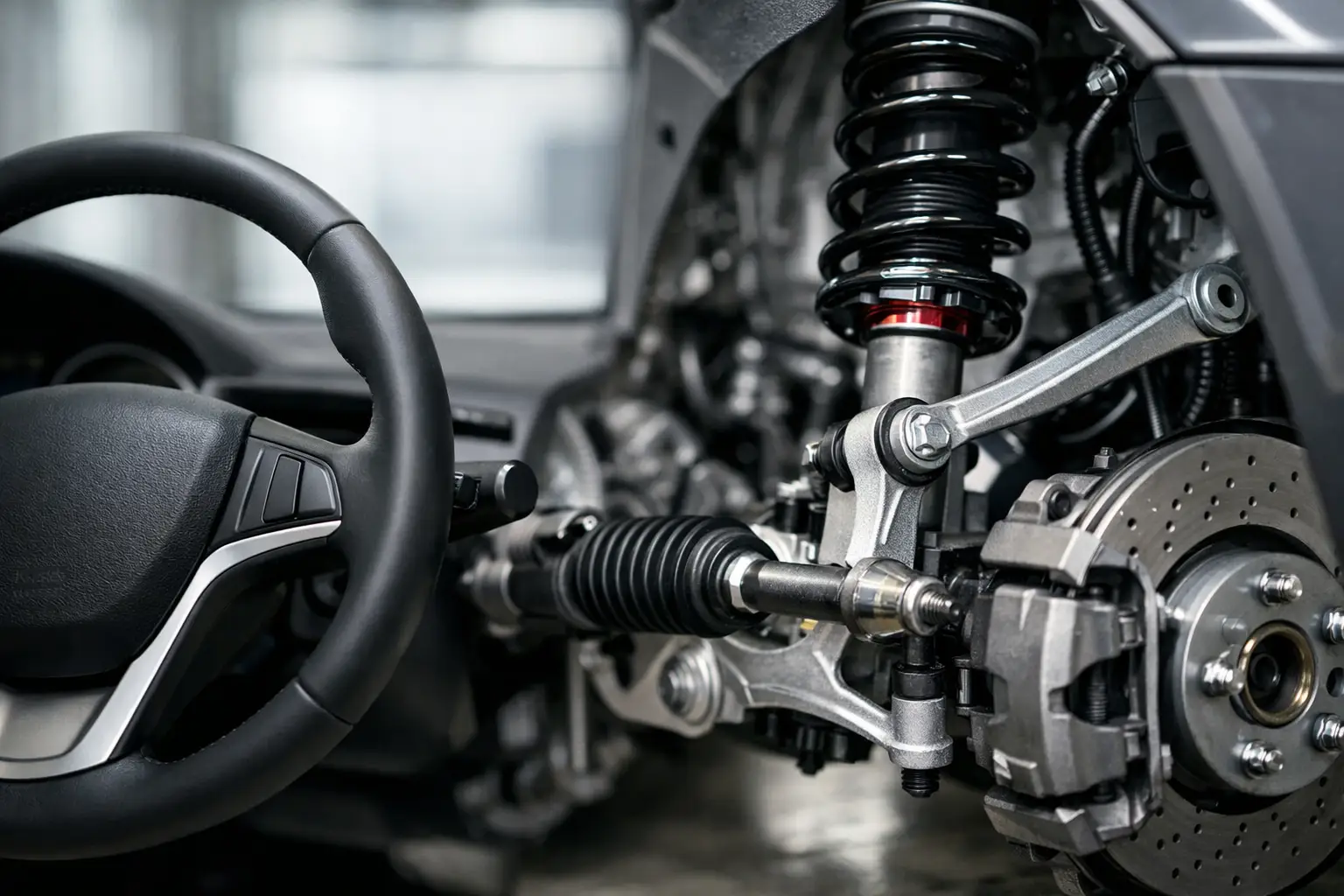
Is Steering Part of Suspension?
A car that wanders on the highway, clunks over bumps, or feels loose in the wheel usually raises the same question at the parts counter or in the workshop: is steering part of suspension? The short answer is no - steering and suspension are separate systems. But in real-world vehicle behavior, they are closely connected, and many of the parts people complain about sit right at that overlap.
That distinction matters. If you diagnose the problem as only steering when the real issue is in the suspension, you can waste time, replace the wrong part, and still send the vehicle back with poor handling. The same goes the other way around. For workshops, retailers, and drivers, understanding where one system ends and the other begins helps make better repair decisions.
Steering is not technically part of the suspension. Its main job is to control the direction of the front wheels. Suspension, on the other hand, supports vehicle weight, absorbs road impact, and helps keep the tires in contact with the road.
Even though they are different systems, they work as a team. When the suspension is worn, steering response suffers. When steering components have play, the suspension cannot maintain stable wheel control the way it should. That is why many front-end problems feel like both at once.
A simple way to think about it is this: steering tells the wheels where to go, while suspension helps the tires stay planted and stable while getting there.
Most people group these systems together because they share the same working area at the front end of the vehicle, and several components directly influence both handling and ride quality. On many passenger cars, especially MacPherson strut designs, the relationship is even tighter because the strut assembly, knuckle, lower control arm, tie rod, and ball joint all work around the same wheel hub area.
If one part develops looseness or wear, the driver may only notice a broad symptom like vibration, uneven tire wear, poor cornering stability, or a steering wheel that does not feel centered. Those are not symptoms that point neatly to one system without inspection.
For aftermarket buyers, this is also why steering and suspension categories are often sold side by side. Workshops often inspect them together because wear in one area commonly affects the other.
The steering system includes the parts that transfer the driver's input at the steering wheel to the road wheels. Depending on the vehicle, that usually means the steering rack or steering gearbox, inner tie rods or rack ends, outer tie rod ends, steering column, and in many modern vehicles, power steering assist components.
When these parts wear, the symptoms usually show up as looseness in the steering wheel, poor directional control, knocking during turns, or a vehicle that does not track straight even after alignment. Tie rod ends and rack ends are especially common wear items because they move constantly and are exposed to road contamination.
For workshops, accurate fitment matters here. Poor-quality steering parts can create play early, affect alignment stability, and lead to repeat jobs. That is why OE-standard testing and consistent quality control are not just selling points - they directly affect road feel, safety, and customer confidence.
The suspension system includes the parts that support and control wheel movement as the vehicle travels over different road surfaces. Common components include shock absorbers, struts, coil springs, control arms, bushings, ball joints, stabilizer links, and strut mounts.
These parts manage ride comfort, body control, and tire contact. A worn shock absorber may not directly change steering geometry, but it can reduce tire grip and make the steering feel unstable. A worn control arm bushing or ball joint can shift wheel position enough to cause pulling, uneven tire wear, and vague steering response.
That is why suspension problems often feel like steering problems from the driver’s seat. The systems are separate in design, but not separate in the way the vehicle behaves on the road.
This is where the confusion usually starts. Some parts are clearly in one category, while others affect both systems so strongly that they are discussed together.
Ball joints are a good example. They are generally considered suspension components because they connect the control arm to the steering knuckle and allow controlled movement as the suspension travels. But if a ball joint wears out, steering precision suffers immediately.
Tie rod ends are steering parts, yet their condition directly affects wheel angle, alignment, and front-end stability. Strut mounts also create overlap. They are suspension parts, but on many vehicles they rotate with the steering system, so wear can lead to noise, binding, or poor steering return.
In practice, front-end service is often less about strict category labels and more about how the whole assembly performs under load.
When a customer says, "the steering feels off," that description can point to several areas. A clunk over bumps may come from stabilizer links, strut mounts, ball joints, or control arm bushings. Loose steering may come from inner or outer tie rods, a worn steering rack, or excessive play in related joints.
If the vehicle pulls to one side, the issue might be alignment, uneven tire wear, a seized brake component, weak suspension parts, or steering wear. If the steering wheel vibrates, suspect tire balance first, but do not rule out worn suspension joints, bent components, or wheel hub issues.
This is why a proper inspection matters more than guessing based on one symptom. For workshops, that means checking movement at each joint, looking at bushing condition, verifying strut and shock performance, and confirming alignment readings before recommending parts.
Replacing only the most obvious failed part can solve the noise and still leave the vehicle with poor handling. For example, changing tie rod ends on a car with worn lower arm bushings may tighten steering slightly, but the driver can still experience instability under braking or cornering. Replacing struts without checking strut mounts and stabilizer links can also leave behind the very noise the customer came in for.
There is also a cost trade-off. Some customers want the lowest immediate repair bill, while others prefer to handle related wear items in one job to avoid repeat alignment charges and downtime. Neither choice is always wrong. It depends on mileage, vehicle condition, and budget. What matters is giving a clear explanation of what is failed now, what is worn, and what may soon become a problem.
For retailers and distributors, this is where reliable category coverage matters. Workshops want access to the full front-end repair set, not just one isolated part number.
In everyday workshop language, people often say "steering and suspension" as one combined area of service. That does not mean steering is part of the suspension in a technical sense. It means the systems are inspected, diagnosed, and repaired together because they affect the same driving concerns - handling, comfort, stability, and tire wear.
This wording is common in the aftermarket because it reflects how vehicles are serviced in the real world. A front-end inspection rarely stops at just the steering rack or just the shock absorber. Good technicians look at the full system around the wheel assembly.
For brands with broad market coverage, that combined view is useful. A supplier that supports steering and suspension categories across many vehicle models helps workshops reduce delays, match fitment more accurately, and complete repairs with fewer issues.
If the question is strictly technical, the answer is clear: steering is not part of suspension. They are separate systems with different primary jobs. If the question is practical, the answer is more nuanced: they are tightly linked, and one often affects the performance of the other.
That is why front-end repairs should never be treated as isolated guesswork. A vehicle with worn tie rod ends, ball joints, control arm bushings, or strut mounts may show overlapping symptoms, and the best result comes from inspecting the whole assembly, using dependable replacement parts, and restoring alignment once the worn components are replaced. For workshops and parts buyers, that approach saves time, protects handling and safety, and gives the customer a repair that actually feels right on the road.
The next time someone asks if steering is part of suspension, the better answer is this: not exactly - but if you want the car to drive properly, you need both systems working together.
Recent Posts
Drove Through Flood Water? The Parts Under Your Car That Need a Look Next
19 Oct 2026
A Record Year on the Road Means a Record Year Ahead for Maintenance
12 Oct 2026
Budget 2027 Puts E-Hailing Car Maintenance on the National Agenda
12 Oct 2026
A Rear Axle Recall Is a Reminder: The Back of the Car Matters Too
12 Oct 2026
Scrap or Maintain? What a Proposed Old-Car Rebate Means for Malaysia's Older Vehicles
09 Oct 2026
 Whatsapp Us NowSaiko Automotive

