


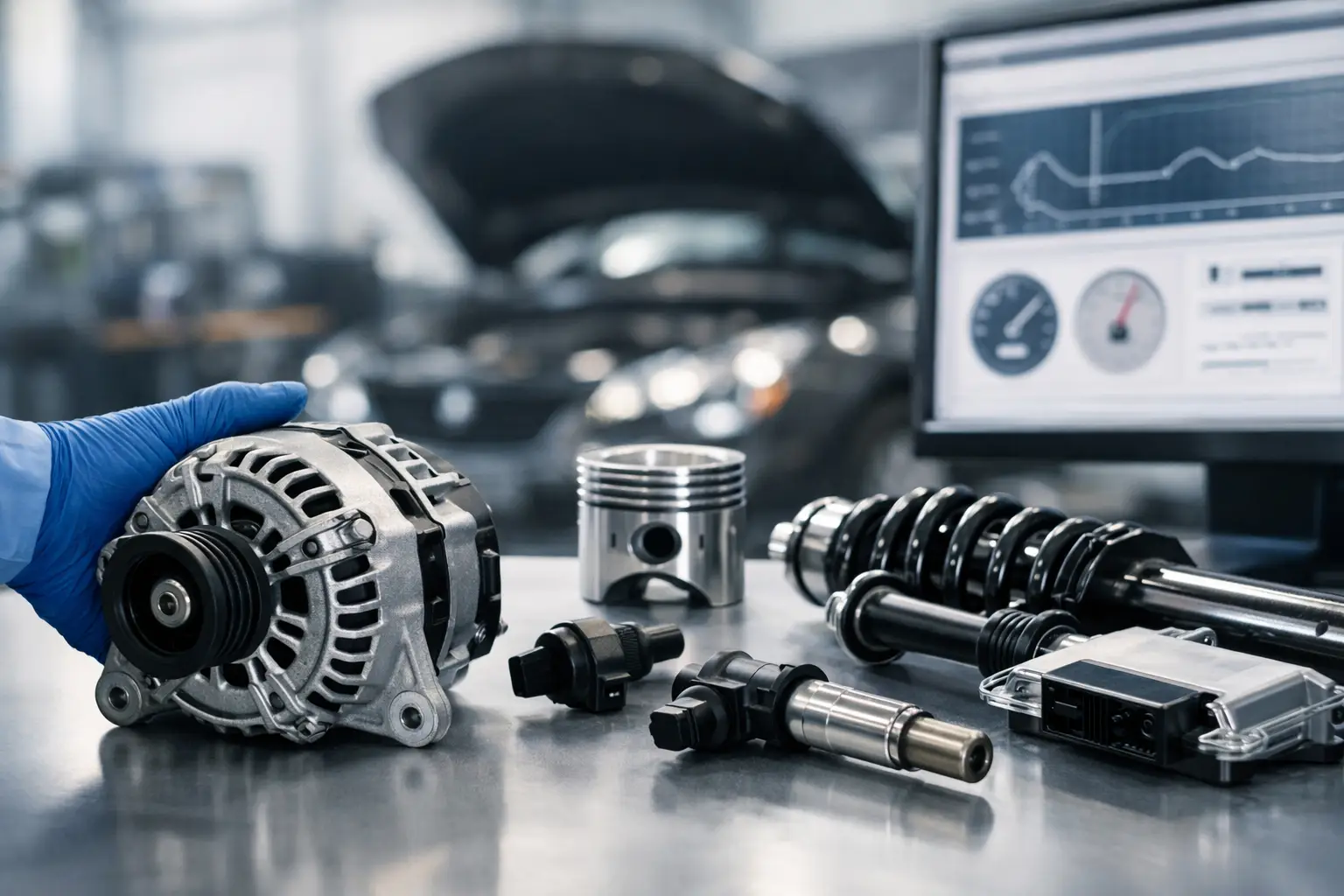
OE Standard Parts Testing: What It Proves
A wheel hub that fits poorly, a brake pad with inconsistent friction material, or a lower arm bushing that fails early can turn a routine repair into a safety issue and a costly comeback. That is why OE standard parts testing matters when choosing aftermarket components. It gives workshops, retailers, and drivers a practical way to judge whether a replacement part is designed to perform close to the original equipment specification in the areas that matter most: fitment, function, durability, and safety.
For Malaysian vehicles used in heat, heavy rain, traffic congestion, uneven roads, and frequent stop-start driving, quality cannot be judged by appearance alone. A part may look correct in the box but still create noise, vibration, premature wear, or installation difficulty once fitted. Testing is the discipline that separates a dependable replacement component from a risky low-cost substitute.
OE refers to original equipment - the parts specification associated with the vehicle as supplied when new. An OE-standard aftermarket part is not necessarily made by the vehicle manufacturer or identical to its branded service part. Instead, it is designed and evaluated to meet relevant performance, dimensional, and material expectations for that application.
The wording matters. “OE standard” should not be treated as a blanket guarantee that every aftermarket part performs exactly the same as an original dealer part under every condition. The value of the claim depends on the testing process, production control, application data, and consistency from one batch to the next.
For a workshop, the most useful question is not simply, “Is this part OE standard?” It is, “What has been checked, and is the part correct for this vehicle?” A reliable supplier should be able to support accurate cataloging, clear vehicle applications, and consistent product quality.
Dimensional accuracy is one of the first requirements. Mounting points, splines, thread pitch, bearing seat diameters, bushing positions, sensor locations, and brake disc dimensions must match the intended vehicle application. Even a minor variation can lead to difficult installation, uneven loading, warning lights, or reduced component life.
This is especially relevant for high-fitment categories such as wheel hubs, hub bearings, drive shafts, control arms, tie rod ends, strut mounts, steering racks, and timing kits. A drive shaft may have the correct overall length but an incorrect spline profile. A brake disc may match the diameter but have the wrong center bore or offset. Good testing and catalog discipline catch these issues before the part reaches the workshop.
The tests vary by component because a shock absorber and a brake pad fail in very different ways. Still, quality-controlled aftermarket programs commonly assess the areas below.
| Test area | What it checks | Why it matters in service | |---|---|---| | Dimensional inspection | Critical measurements, threads, mounting locations, and tolerances | Supports proper fitment and reduces installation problems | | Material verification | Steel grade, rubber compound, friction material, or bearing material | Helps prevent cracking, deformation, rapid wear, and unstable performance | | Load and fatigue testing | Repeated force cycles under simulated operating loads | Indicates how a part may withstand daily use over time | | Performance testing | Damping force, braking behavior, rotational smoothness, or joint movement | Confirms that the part performs its intended vehicle function | | Environmental testing | Heat, moisture, corrosion, dust, and temperature exposure | Relevant to Malaysia’s humid climate and wet-road conditions |
A shock absorber, for example, should be checked for damping consistency, leakage resistance, piston rod condition, and mounting integrity. Weak or uneven damping can cause excessive bounce, longer braking distances on rough surfaces, unstable cornering, and uneven tire wear.
A wheel hub or hub bearing requires close attention to rotational smoothness, noise, bearing preload, sealing, and mounting accuracy. Poor sealing can allow water and contaminants to enter, while incorrect tolerances can create humming noise, vibration, or premature bearing failure.
For brake pads and brake discs, the focus includes correct dimensions, friction behavior, heat handling, surface quality, and stable operation. There is always a trade-off: a pad formulated for strong initial bite may produce more dust or noise than one designed for quiet, everyday driving. The right choice depends on the vehicle, driving pattern, and the driver’s priorities.
The cheapest replacement part can appear attractive when a vehicle needs several repairs at once. However, the purchase price is only one part of the job cost. If a lower arm bushing tears early, a ball joint develops play, or a brake disc causes vibration shortly after installation, the customer may pay again for labor, alignment, and replacement parts.
For workshops, this can mean lost time and reduced customer confidence. For retailers and distributors, inconsistent quality can create returns, warranty conversations, and stock that does not move. A value-driven part should balance competitive cost with dependable fitment and controlled quality, rather than simply being the lowest-priced option on the shelf.
This is where established aftermarket brands can offer a practical advantage. SAIKO has supplied OE-standard tested replacement parts since 2007 for more than 400 vehicle models, covering many Japanese, Korean, Malaysian, and international passenger vehicles. Its range supports common repair needs across suspension, steering, braking, drivetrain, and engine-timing systems, backed by a nationwide dealer and distributor network.
A label alone is not enough. Workshops and buyers should assess the part in the context of the repair and vehicle application.
First, confirm the exact fitment using the vehicle model, year, engine, transmission, and where applicable, chassis or VIN information. Model names alone can be misleading because one vehicle may use different components across production years or trim levels. This is particularly important for brake pads, wheel hubs, drive shafts, and timing components.
Next, inspect the component before installation. Check machining quality, threads, seals, rubber boots, mounting holes, sensor connections, and included hardware. On suspension and steering parts, boots should be properly seated and free of damage. On brake discs, confirm the correct diameter, thickness, center bore, and bolt pattern. On timing kits, verify that every supplied pulley, tensioner, belt, and gasket is appropriate for the application.
Then consider the supplier’s consistency. Reliable product availability, accurate application support, and clear warranty handling often matter as much as the individual component. A workshop cannot serve customers well if the right replacement part is difficult to source or if catalog information is uncertain.
Some defects can be identified before fitting, while others only appear in service. Warning signs include rough casting or machining, incomplete protective coating, weak-looking rubber components, damaged threads, inconsistent packaging information, missing hardware, or unclear vehicle application details.
After installation, pay attention to abnormal noise, pulling under braking, steering looseness, uneven tire wear, fluid leakage, vibration, or warning lights. These symptoms do not always prove that the new part is defective. Incorrect installation, worn related components, alignment problems, and damaged mounting surfaces can produce similar complaints. A proper diagnosis protects both the workshop and the customer.
Not every vehicle needs the same replacement strategy. A car used mainly for short city trips may wear brake pads and steering components differently from one that regularly carries passengers on highway journeys. A vehicle driven on flood-prone roads needs dependable seals and corrosion resistance around hubs, bearings, and suspension components. A higher-mileage car may need related wear items replaced together to avoid repeated labor.
For example, replacing a noisy wheel bearing without checking the hub mounting surface, axle nut torque, and nearby suspension condition may shorten the life of the new bearing. Installing new shock absorbers while leaving damaged strut mounts or worn stabilizer links in place can leave the customer with continued noise or poor ride control. OE-standard testing supports the part itself, but correct diagnosis and installation remain essential.
Retailers can add real value by asking the right application questions before supplying a part. Workshops can protect their reputation by following torque specifications, using suitable installation tools, and carrying out alignment or brake bedding procedures when required. Car owners benefit by choosing quality-controlled parts that suit their vehicle rather than selecting only by price.
When a replacement part affects steering, braking, suspension, or drivetrain operation, ask what was tested, verify the exact application, and have it installed correctly. That small amount of discipline is often what turns a repair from a short-term fix into dependable daily driving.
Recent Posts

A Record Year on the Road Means a Record Year Ahead for Maintenance
12 Oct 2026

A Rear Axle Recall Is a Reminder: The Back of the Car Matters Too
12 Oct 2026
Scrap or Maintain? What a Proposed Old-Car Rebate Means for Malaysia's Older Vehicles
09 Oct 2026
Price Transparency Is Coming to the Parts Counter. Here's What Else You Should Check
07 Oct 2026

Parts Availability Is the New Aftersales Battleground. Here's Why It Matters to Every Driver
05 Oct 2026
 Whatsapp Us NowSaiko Automotive

