


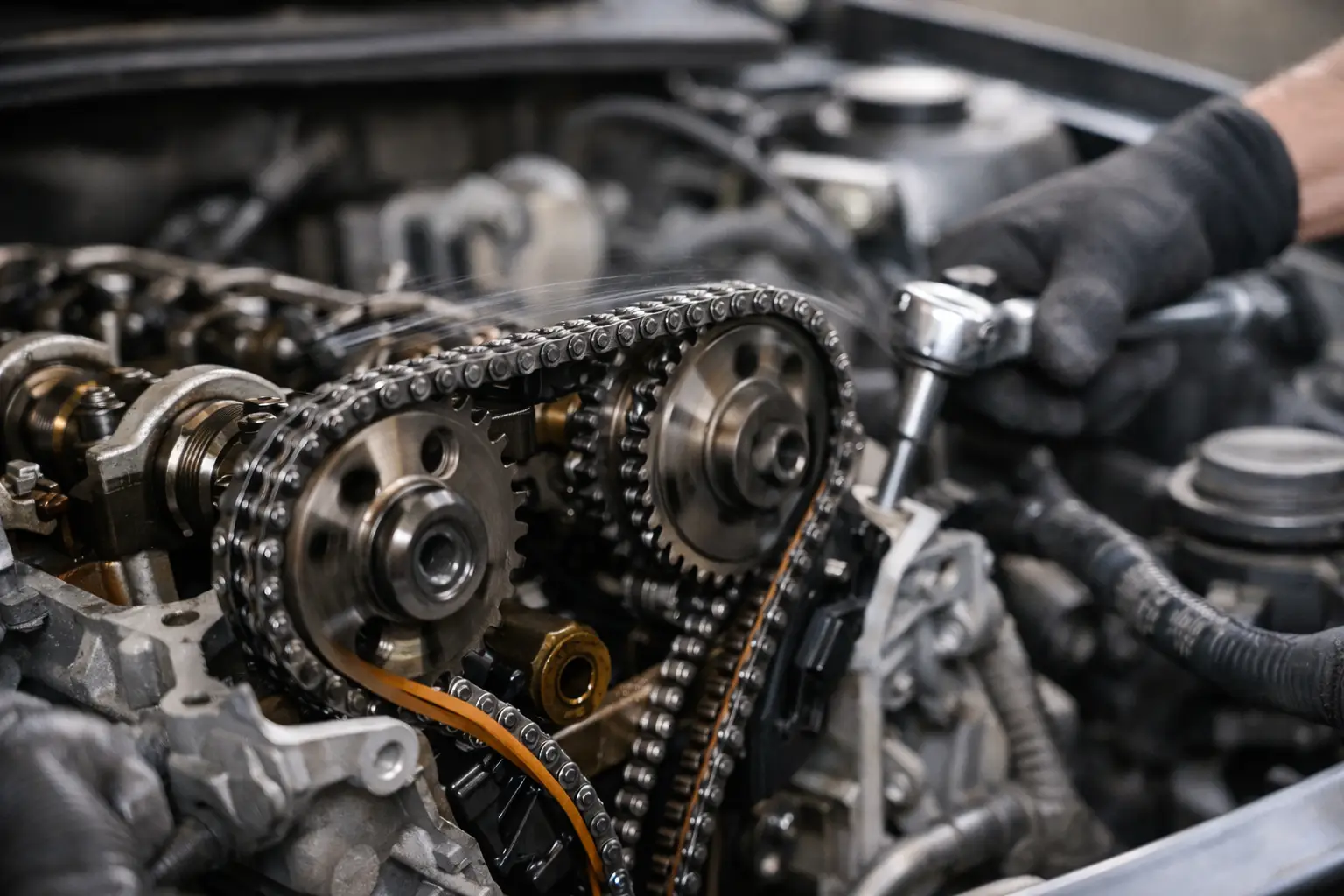
Why Do Timing Chains Rattle? Causes and Fixes
A brief rattle for a second at startup can be easy to dismiss, especially on a high-mileage engine. But if you are asking, why do timing chains rattle, the noise may be the first warning that the components keeping the engine synchronized are no longer operating as intended. Left unresolved, a timing-chain fault can progress from an irritating sound to poor performance, engine warning lights, or serious internal engine damage.
Unlike a timing belt, a timing chain is designed to last a long time. It is not maintenance-free, however. The chain, guides, tensioner, sprockets, and oil supply all work together. When one part loses its ability to control chain movement, the chain can strike its guides or covers and create the familiar metallic rattle.
The most common pattern is a rattle that lasts one to three seconds immediately after the engine starts. In many engines, the hydraulic timing-chain tensioner relies on engine oil pressure to extend and hold the chain tight. After the vehicle sits overnight, oil can drain from the tensioner or its internal check valve may no longer hold pressure effectively.
When the engine starts, the chain briefly has too much slack until oil pressure builds. That slack allows it to whip against the plastic guides or timing cover. A very short, occasional noise does not automatically mean the chain is about to fail, but repeated startup rattling deserves a proper inspection. It is often an early-stage sign, when repair is simpler than waiting for a complete timing-system failure.
A rattle that continues after startup, becomes louder with rpm, or appears while driving is more urgent. Persistent noise can indicate a worn chain, broken guide, weak tensioner, worn sprockets, or a lubrication issue that is preventing the tensioner from doing its job.
Timing chains do not literally stretch like an elastic band. Over time, the pins and links wear, increasing the chain's effective length. The extra clearance changes the relationship between the crankshaft and camshaft. The tensioner may compensate for some wear, but eventually it reaches the end of its travel or cannot keep the chain adequately controlled.
Engines with high mileage, frequent short trips, long oil-change intervals, or a history of poor-quality oil are more likely to develop this issue. Once chain wear is significant, replacing only the tensioner may provide a temporary improvement but may not correct the underlying timing variation.
A tensioner is responsible for maintaining correct chain tension as the engine heats up, cools down, and wears over time. Hydraulic designs use pressurized oil, often with a spring and a locking or ratcheting mechanism. Internal wear, sludge, a failed seal, or a faulty check valve can reduce its holding force.
This is why some engines rattle only after sitting for several hours. The tensioner loses its oil charge while parked, then takes a moment to refill. If the sound is getting longer or more frequent, the tensioner should not be ignored.
Chain guides are usually made from durable engineered plastic over a metal backing. They provide the smooth surface that directs the chain and controls vibration. Heat cycles, contaminated oil, age, and repeated chain contact can wear down their surfaces.
A cracked or broken guide can produce a sharper rattle, scraping sound, or loose debris in the oil pan. It may also let the chain move far enough to jump a tooth on a sprocket. That risk is one reason timing-system repairs should normally include guides rather than focusing only on the chain.
Engine oil is part of the timing-chain system. Low oil level, the wrong viscosity, degraded oil, sludge buildup, or restricted passages can delay oil pressure to a hydraulic tensioner. An oil-pressure problem can also affect variable valve timing components, creating additional noises and fault codes.
Changing oil may reduce noise if the cause is poor oil condition and no physical damage has occurred. It will not restore a worn chain, damaged guide, or failed tensioner. Treat oil service as a diagnostic starting point, not a guaranteed repair.
The chain runs on crankshaft and camshaft sprockets. As the system ages, sprocket teeth can wear and no longer support smooth chain movement. Some modern engines also use variable valve timing phasers that can rattle internally, particularly at startup. The sound can resemble a timing-chain problem, so accurate diagnosis matters before ordering parts.
A timing-chain rattle is usually metallic and fast, often described as a brief clatter, loose chain sound, or diesel-like knock near the front of the engine. It may be most noticeable on a cold start with the hood open. Because engine accessories, heat shields, valve train parts, and VVT components can make similar noises, sound alone is not enough for a final diagnosis.
A workshop should listen to the engine, check oil level and condition, scan for diagnostic trouble codes, and compare camshaft and crankshaft timing data where the vehicle supports it. Codes related to cam/crank correlation, such as timing over-advanced or over-retarded faults, can support a chain-wear diagnosis but still need mechanical confirmation.
| Symptom | Likely concern | Sensible action | |---|---|---| | Brief rattle only after an overnight start | Tensioner bleed-down, early chain or guide wear | Schedule an inspection and verify oil condition | | Rattle lasts longer than a few seconds | Weak tensioner, stretched chain, worn guides | Avoid delaying repair; inspect timing components | | Noise continues at idle or rises with rpm | Significant guide, chain, or sprocket wear | Stop driving if noise is severe and arrange diagnosis | | Check engine light, rough running, or loss of power | Timing correlation issue or possible skipped timing | Do not continue driving until the engine is checked |
The trade-off is straightforward. A diagnostic visit and timely timing-kit replacement cost less than repairing valves, pistons, or a damaged cylinder head after the chain jumps timing. On interference engines, incorrect valve timing can allow valves and pistons to contact each other.
In most cases, a complete timing kit is the smarter repair. A chain that has worn enough to rattle has worked alongside the same guides, tensioner, and sprockets for thousands of miles. Reusing questionable parts can leave the original cause in place and create repeat labor later.
A quality kit should be specified for the exact engine, not merely the vehicle model and year. A single vehicle platform may use different engines, chain lengths, guide shapes, tensioner designs, or variable valve timing arrangements. Confirm the engine code, VIN details where applicable, and original part numbers before fitting components.
For workshops, accurate fitment reduces installation delays and comebacks. For vehicle owners, it means the replacement parts are designed to restore correct timing geometry rather than merely silence the noise temporarily. Use the manufacturer's torque procedures, timing marks, and any required locking tools. Timing work is precision engine work, not a repair to guess through.
SAIKO has supplied quality-controlled automotive replacement components since 2007, including timing kits for a broad range of passenger vehicles. For workshops and retailers, selecting an OE-standard tested kit with precise fitment and dependable local supply helps support a repair that is built to last.
Good maintenance cannot reverse mechanical wear, but it can significantly reduce the conditions that accelerate it. Use the engine oil grade specified by the vehicle manufacturer, keep the oil level within the correct range, and change oil and filters on schedule. Vehicles used for short journeys, heavy traffic, towing, or frequent stop-and-go driving may benefit from more conservative oil-change intervals because moisture, fuel dilution, and heat can degrade oil faster.
Do not ignore a low-oil warning light or assume that topping up oil resolves the cause of low oil level. Find out why the level dropped. Also pay attention to new startup noises after an oil service. An incorrect filter, incorrect viscosity, or an existing oil-pressure issue can affect tensioner operation.
A faint, brief startup rattle may allow enough time to book a workshop inspection, but it should not be treated as normal. If the rattle is continuous, loud, accompanied by a check engine light, rough idle, misfires, or reduced power, stop driving and have the vehicle assessed. The consequences of skipped timing can be expensive.
Using a thicker oil than specified may mask a noise in some cases, but it is not a correct repair. Modern engines are designed around specific oil flow and pressure characteristics. The wrong viscosity can create problems elsewhere, including variable valve timing operation. Follow the manufacturer specification and diagnose the mechanical cause.
There is no universal mileage interval. Some chains last the life of the engine with proper maintenance, while others develop wear earlier due to engine design, oil-service history, driving conditions, or component quality. The condition of the system matters more than mileage alone.
A timing-chain rattle is your engine asking for attention before a small clearance problem becomes a major mechanical repair. Address the sound early, insist on correct diagnosis and exact-fit components, and give the engine the oil care its timing system depends on.
Recent Posts
A Record Year on the Road Means a Record Year Ahead for Maintenance
12 Oct 2026
A Rear Axle Recall Is a Reminder: The Back of the Car Matters Too
12 Oct 2026
Scrap or Maintain? What a Proposed Old-Car Rebate Means for Malaysia's Older Vehicles
09 Oct 2026
Price Transparency Is Coming to the Parts Counter. Here's What Else You Should Check
07 Oct 2026
Parts Availability Is the New Aftersales Battleground. Here's Why It Matters to Every Driver
05 Oct 2026
 Whatsapp Us NowSaiko Automotive

