


How to Inspect Steering and Suspension Components
A vehicle that wanders on straight roads, clunks over bumps, or wears tires unevenly is already telling you something. If you inspect steering and suspension components early, you can catch wear before it turns into poor handling, customer comebacks, or a larger repair bill.
For workshops, this is more than a routine check. It affects road feel, braking stability, alignment retention, and driver confidence. For parts retailers and vehicle owners, it is also one of the clearest ways to separate normal aging from a safety concern that needs immediate attention.
Steering and suspension parts work under constant load. Every pothole, curb strike, speed bump, and hard brake event adds stress to joints, bushings, mounts, and bearings. Over time, even well-made components develop play, harden, leak, or shift out of spec.
The problem is that wear rarely appears all at once. A tie rod end may start with light looseness. A control arm bushing may crack before it fully fails. A strut mount may make noise only on turns. Left alone, small issues can affect tire wear, alignment angles, braking behavior, and steering response.
That is why inspections matter. They help workshops recommend repairs based on clear evidence, help retailers guide customers toward the right replacement categories, and help drivers avoid the false economy of waiting until the vehicle becomes difficult or unsafe to control.
A good inspection starts with symptoms. Before touching any tools, pay attention to how the vehicle sits and how it behaves. If one corner rides lower than the others, the cause may be a weak spring, worn strut, or damaged mount. If the steering wheel is off-center while driving straight, that may point to alignment issues, worn steering linkage, or previous impact damage.
Tire condition also tells a useful story. Feathered edges can suggest toe problems. Inside or outside shoulder wear may indicate camber changes or worn suspension components that no longer hold geometry correctly. Cupping often points to weak damping from worn shocks or struts.
During a short road test, listen for knocking over uneven surfaces, clicking on turns, or a dull thud during braking and acceleration transitions. Also note whether the vehicle drifts, feels loose at highway speed, or needs constant steering correction. Those symptoms help narrow the inspection instead of turning it into guesswork.
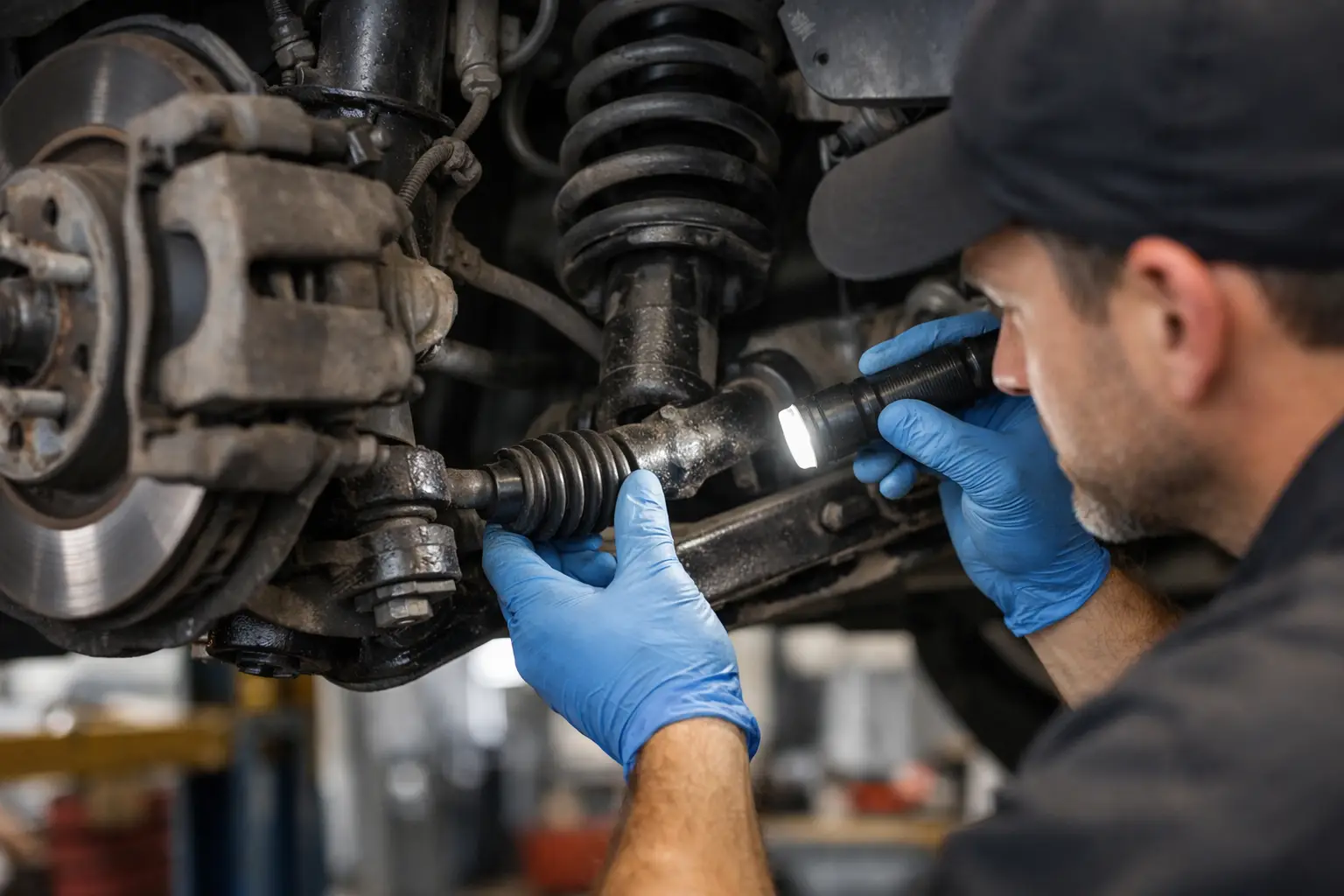
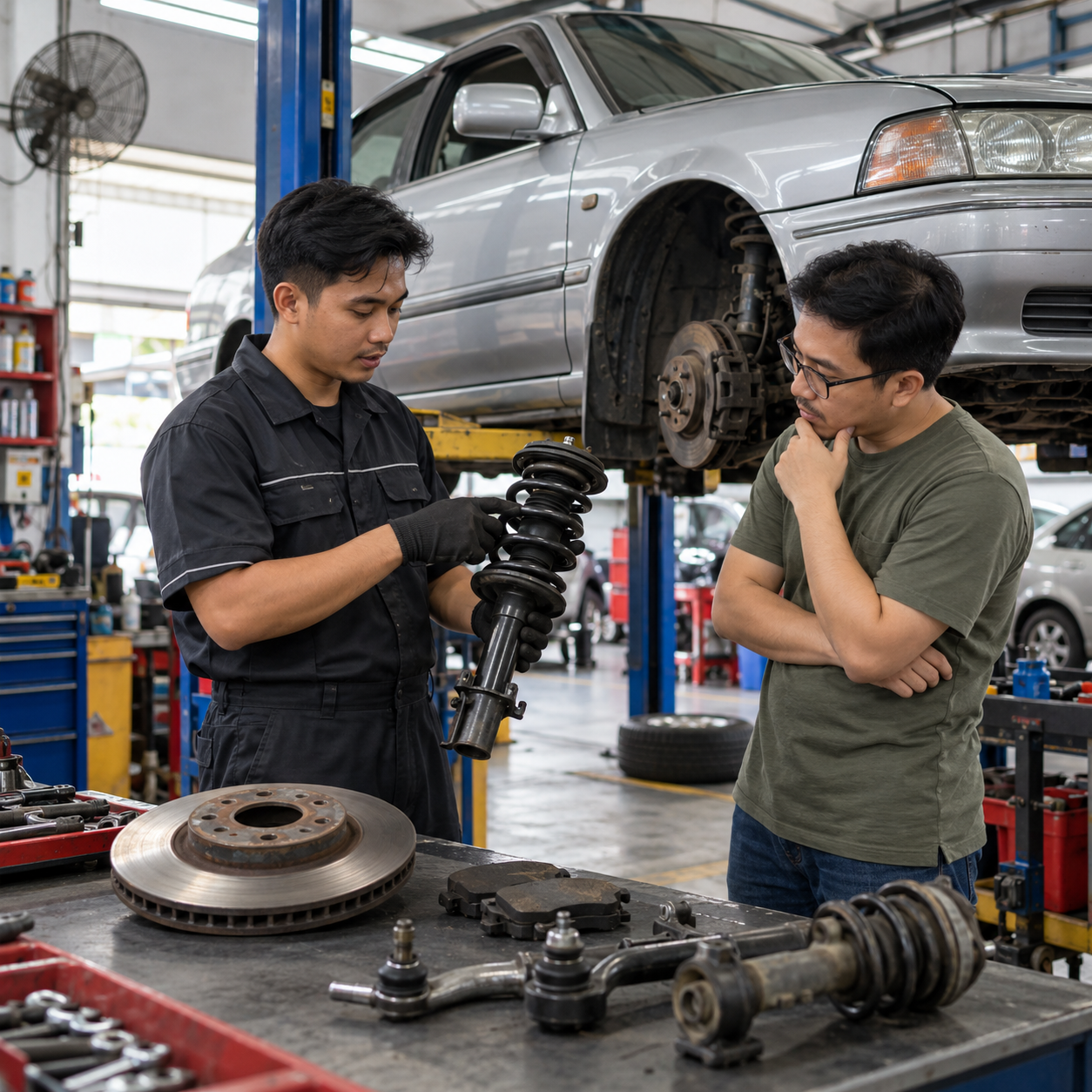
Once the vehicle is safely lifted and supported, the inspection becomes more precise. Start with the parts most directly tied to steering control and wheel location.
Check outer tie rod ends for torn boots, grease loss, corrosion, and looseness. Any visible play in the joint can affect steering accuracy and alignment. Inner tie rods or rack ends deserve the same attention, though access is often less direct. If the steering feels vague but the outer ends look acceptable, the inner joint may be where the wear is hiding.
This is also where quality matters. A steering linkage part may fit physically, but poor joint tolerance or weak sealing can shorten service life and bring the same problem back too soon.
Ball joints carry load while allowing movement, so they deserve close inspection. Look for split dust boots, leaking grease, rust staining, or vertical and horizontal play beyond specification. A worn ball joint can produce clunks, wandering, and unstable steering feel, especially during lane changes or braking.
Control arms should be checked for bends, impact damage, and worn bushings. Bushings that are cracked, separated, or excessively soft can let the wheel shift under load. That movement may be small in the workshop but very noticeable on the road.
On many modern vehicles, replacing the complete control arm can be more practical than changing individual bushings or joints. It depends on design, labor time, and part availability, but fitment accuracy and long-term reliability should guide the decision.
When a vehicle rattles over small bumps but feels acceptable on larger road inputs, stabilizer links are often worth a closer look. Check link joints for looseness, torn boots, and noise when moved by hand. Inspect stabilizer bar bushings for cracks, hardening, or signs that the bar has been shifting.
These parts are small compared with control arms or struts, but they have a clear effect on ride quality and body control. Ignoring them can leave a vehicle feeling unfinished even after larger suspension work has been done.
A leaking shock absorber or strut is an obvious warning sign, but not every worn damper leaks. Some simply lose damping force gradually. If the vehicle bounces excessively, dips hard under braking, or feels unsettled after bumps, damping performance may already be compromised.
Inspect the shock or strut body for oil leakage, dents, and damaged mounting points. Check upper mounts and strut mounts for cracking, separation, bearing noise, or excess movement during steering. A bad mount can create noise and steering stiffness even if the strut itself is still functioning.
Springs should also be checked for cracks, sagging, or poor seating. A broken coil is easy to miss if dirt or wheel placement hides it, but it can change ride height and place abnormal load on nearby parts.
Suspension bushings do not always fail dramatically. Many simply age, harden, and lose their ability to absorb movement properly. Inspect for cracking, tearing, fluid leakage on hydraulic bushings, and metal-to-metal contact.
Wheel hubs and hub bearings can sometimes be mistaken for suspension noise, so they should not be overlooked during the same inspection. Roughness during wheel rotation, looseness, or humming complaints from the road test may point in that direction rather than a steering joint.
Not every worn part needs emergency replacement, but some conditions leave very little room for waiting. Excessive play in a ball joint or tie rod end is one of them. A leaking strut combined with poor body control is another. Torn dust boots may seem minor, yet once contamination enters a joint, wear usually accelerates.
The key is to judge the part in context. Slight bushing wear on a low-mileage vehicle with no symptoms may be monitored. The same wear on a vehicle with tire wear, noise, and unstable handling should not be treated casually. Good inspection is not only about spotting defects. It is about matching what you see with what the vehicle is doing.
Inspection is only half the job. The replacement part determines whether the repair restores confidence or creates another return visit. Workshops need parts that install cleanly, fit correctly, and hold alignment and steering feel over time. Retailers need dependable product quality that supports repeat business. Drivers need value, but value only counts when the part lasts and performs safely.
That is why many buyers look for aftermarket parts built to OE-standard testing and consistent quality control, especially in high-stress categories like control arms, stabilizer links, tie rod ends, rack ends, ball joints, strut mounts, wheel hubs, and shock absorbers. Broad vehicle coverage matters too, because a reliable supplier should be able to support local, Japanese, Korean, and other popular passenger models without turning every repair into a sourcing problem.
For businesses handling varied makes every day, that consistency saves time. For end users, it means the car feels right after the repair - stable, predictable, and comfortable, not just temporarily quiet.
One common mistake is checking only the noisy corner and assuming the rest of the system is fine. Steering and suspension wear often develops in pairs or in related components. Replacing one part without checking adjacent joints, bushings, and mounts can leave the original complaint unresolved.
Another mistake is overlooking alignment and tire evidence. A new suspension part cannot fully prove its value if worn tires or incorrect geometry remain in place. Likewise, judging parts only by appearance can be misleading. Some joints look acceptable until load is applied or movement is measured properly.
There is also the temptation to choose the cheapest possible replacement for a price-sensitive customer. That can make sense in the short term, but for steering and suspension parts, premature wear, poor sealing, or inconsistent dimensions can quickly erase any savings.
A careful inspection gives you more than a fault list. It gives you a clearer picture of how the vehicle has been behaving, what the customer has been feeling, and what it will take to restore safe, stable handling. When that inspection is paired with dependable replacement parts, the result is not just a repair - it is a vehicle that feels controlled, predictable, and ready for the road again.
The best time to inspect these components is before the driver notices a serious problem, because a small amount of play today is often the start of a much bigger issue tomorrow.
Recent Posts
Drove Through Flood Water? The Parts Under Your Car That Need a Look Next
19 Oct 2026

A Record Year on the Road Means a Record Year Ahead for Maintenance
12 Oct 2026
Budget 2027 Puts E-Hailing Car Maintenance on the National Agenda
12 Oct 2026
A Rear Axle Recall Is a Reminder: The Back of the Car Matters Too
12 Oct 2026
Scrap or Maintain? What a Proposed Old-Car Rebate Means for Malaysia's Older Vehicles
09 Oct 2026
 Whatsapp Us NowSaiko Automotive

