


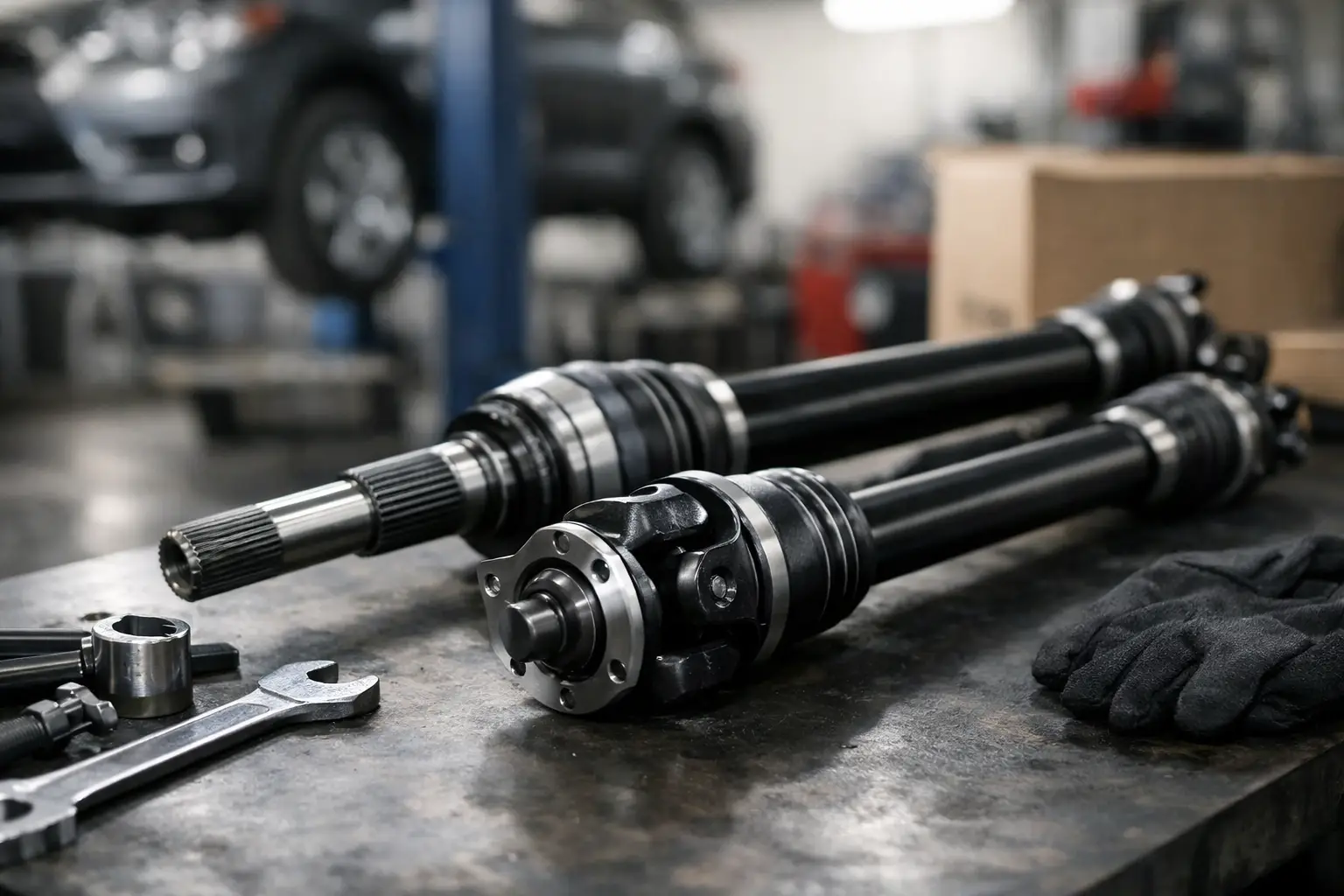
How to Buy Aftermarket Drive Shafts
A drive shaft usually gets attention only after the car starts clicking on turns, vibrating under load, or leaking grease from a torn boot. By then, the buying decision gets rushed, and that is when many owners and workshops end up with the wrong part. If you are researching how to buy aftermarket drive shafts, the goal is not just to find a cheaper replacement. It is to get the right fit, stable quality, and dependable service life for the vehicle you are working on.
A good aftermarket drive shaft should restore smooth power delivery without creating new problems such as vibration, poor fitment, or premature joint wear. That sounds simple, but the market is crowded with parts that look similar on the outside and perform very differently once installed.
The first step is to confirm exactly what the vehicle needs. That means more than matching the brand and model. You need the correct year, engine variant, transmission type, driven axle position, and where relevant, ABS or non-ABS configuration. Even within the same nameplate, one small specification difference can change spline count, overall shaft length, or joint design.
This matters because a drive shaft is a precision fitment part. If the dimensions are slightly off, you may get installation trouble, axle nut issues, oil seal leaks, or vibration during acceleration. Workshops know this well - a low-priced shaft that takes extra time to fit or comes back with noise is not a bargain.
If the original part is still on the car, compare key details before ordering. Check the outer and inner joint style, shaft length, number of splines, and whether the boot design matches the application. When the old shaft is badly worn or already replaced before, use the vehicle identification details and supplier catalog data rather than guessing from appearance alone.
Many buyers begin by sorting options from lowest price to highest. That is understandable, but it is the wrong order. A drive shaft has to fit correctly first, perform consistently second, and offer good value after that.
An extremely cheap shaft often cuts cost in areas you cannot easily inspect from the box. The steel quality may be inconsistent. The CV joints may have rough machining. The boots may harden early under heat. The grease quality may be poor. Any of those issues can shorten service life, especially in stop-and-go urban traffic, rough roads, and hot weather.
That does not mean the most expensive option is automatically the best choice. For many passenger vehicles, a well-made aftermarket part with OE-standard testing and dependable quality control is the smart middle ground. It gives workshops and car owners a better balance of durability, availability, and cost.
When comparing aftermarket drive shafts, focus on a few practical indicators. The first is material and build consistency. A quality shaft should have clean machining, proper balancing, and CV joints that move smoothly without excessive free play. Boots should feel durable and properly clamped, not thin or loosely secured.
The second is manufacturing control. Reliable aftermarket suppliers do not just copy dimensions loosely. They check tolerances, fitment accuracy, and basic performance standards across multiple applications. This is especially important for workshops and retailers handling fast-moving Japanese, Korean, Malaysian, and other common passenger vehicle models where repeatability matters.
The third is product coverage and supply support. A part can be decent on paper, but if the supplier cannot support common vehicle models consistently, it becomes difficult for workshops and spare parts sellers to rely on. Established aftermarket brands with broad model coverage and dealer support usually create fewer headaches in daily operations.
Poor aftermarket drive shafts tend to reveal themselves in familiar ways. Some arrive with rough finishing, thin paint or coating, weak boot clamps, or joints that feel uneven when articulated by hand. Others fit, but only after forcing alignment during installation. That is usually a warning sign, not a minor inconvenience.
After installation, common symptoms of poor quality include vibration during acceleration, clicking while turning, grease leakage shortly after replacement, or early failure under normal driving. In some cases, the issue is not total failure but a steady decline in smoothness that the driver feels as harshness through the steering or floor.
For workshops, comebacks cost more than the price difference between a weak part and a reliable one. For car owners, repeated labor charges quickly erase any initial savings.
Local driving conditions put real stress on drivetrain parts. Frequent stop-and-go traffic, potholes, speed bumps, uneven road surfaces, heat, and water exposure can all affect CV joint life and boot durability. That is why a drive shaft that seems acceptable in a low-demand use case may not hold up well in daily city driving or mixed urban-highway conditions.
Buyers in Malaysia often do best with aftermarket drive shafts built for dependable everyday use rather than chasing the lowest market price. A value-driven option should still offer precise fitment, stable boot quality, and consistent joint performance across common passenger car applications.
For distributors and spare parts retailers, this is also where brand reputation matters. A supplier with long-term market presence, broad coverage, and established dealer support is generally a safer business choice than an unknown line with inconsistent stock and uneven quality.
If you are deciding between new aftermarket, remanufactured, and used drive shafts, the answer depends on the vehicle and budget. Used shafts are usually the riskiest option because boot condition, joint wear, and internal grease contamination are hard to judge accurately. They may work for a while, but service life is unpredictable.
Remanufactured shafts can be acceptable when rebuilding standards are high, but quality varies widely. Some are rebuilt carefully with proper inspection and replacement of wear items. Others are little more than cleaned-up cores with limited consistency.
For most daily-driven passenger vehicles, a new aftermarket drive shaft from a dependable supplier is the most practical choice. It reduces uncertainty and usually gives a better balance of fitment accuracy, reliability, and total repair value.
A drive shaft should not be bought as an isolated part number. Workshops need to think about installation time, comeback risk, and customer confidence. Retailers need to think about repeat sales, return rates, and supplier consistency.
That is why established aftermarket brands often make more commercial sense than unknown budget imports. Consistent product quality, wider vehicle coverage, and available dealer support help workshops finish jobs faster and help retailers serve customers with more confidence. Since 2007, SAIKO has built that kind of trust in the Malaysian aftermarket by supplying OE-standard tested parts across a wide range of passenger vehicle models through a strong dealer and distributor network.
Before you confirm a purchase, ask a few direct questions. Is the shaft new or remanufactured? Has fitment been verified for the exact vehicle specification? Does the supplier cover common replacement issues such as spline match, length, and joint configuration? Is the brand known for stable quality across multiple batches, or does quality vary depending on stock source?
Those questions are practical, not technical. They help you avoid the most common buying mistakes, especially when the vehicle is already on the lift and time is limited.
For most drivers, the best approach is simple. Buy the correct fitment from a supplier known for reliable aftermarket quality, not just a low headline price. If you are a workshop, choose a part line that reduces installation issues and protects your reputation. If you are a retailer, stock brands that offer consistent coverage and dependable turnover. If you are a car owner, ask your workshop what they trust to install repeatedly with minimal comebacks.
A drive shaft is not a glamorous purchase, but it directly affects drivability, comfort, and confidence on the road. The right part should fit properly, run smoothly, and last under real-world conditions. That is what good value looks like in the aftermarket - not the cheapest box on the shelf, but the one that saves trouble after the job is done.
When you are deciding how to buy aftermarket drive shafts, slow down just enough to verify fitment, build quality, and supplier reliability. A careful choice at the counter is always cheaper than fixing the wrong one later.
Recent Posts
A Record Year on the Road Means a Record Year Ahead for Maintenance
12 Oct 2026
A Rear Axle Recall Is a Reminder: The Back of the Car Matters Too
12 Oct 2026
Scrap or Maintain? What a Proposed Old-Car Rebate Means for Malaysia's Older Vehicles
09 Oct 2026
Price Transparency Is Coming to the Parts Counter. Here's What Else You Should Check
07 Oct 2026
Parts Availability Is the New Aftersales Battleground. Here's Why It Matters to Every Driver
05 Oct 2026
 Whatsapp Us NowSaiko Automotive

