


How Does Steering and Suspension Work Together?
A car that pulls to one side, feels loose in corners, or knocks over bumps is not dealing with one isolated problem. In most cases, the answer to how does steering and suspension work together comes down to control. Steering points the vehicle where the driver wants to go. Suspension keeps the tires planted, the body stable, and the steering response predictable.
That connection matters for workshops diagnosing complaints, for parts retailers advising customers, and for drivers who want a safer, smoother car. When these systems are working properly, the vehicle feels stable, tracks straight, and reacts cleanly to driver input. When one side of the equation wears out, the other side almost always suffers.
Steering and suspension are separate systems, but they share the same job at the road surface. The steering system changes the angle of the front wheels. The suspension system manages wheel movement, absorbs road shock, and controls how the vehicle body reacts to braking, acceleration, and cornering.
The key point is simple: steering can only be accurate if the suspension keeps the tire in the correct position. If a wheel moves too much because of worn ball joints, weak struts, tired bushings, or loose control arm components, the steering angle the driver requests may not be the angle the tire actually holds on the road.
This is why a vehicle with worn suspension parts often feels like it has a steering problem, and a vehicle with steering wear can feel unstable like a suspension issue. The systems are connected through geometry, load transfer, and tire contact.
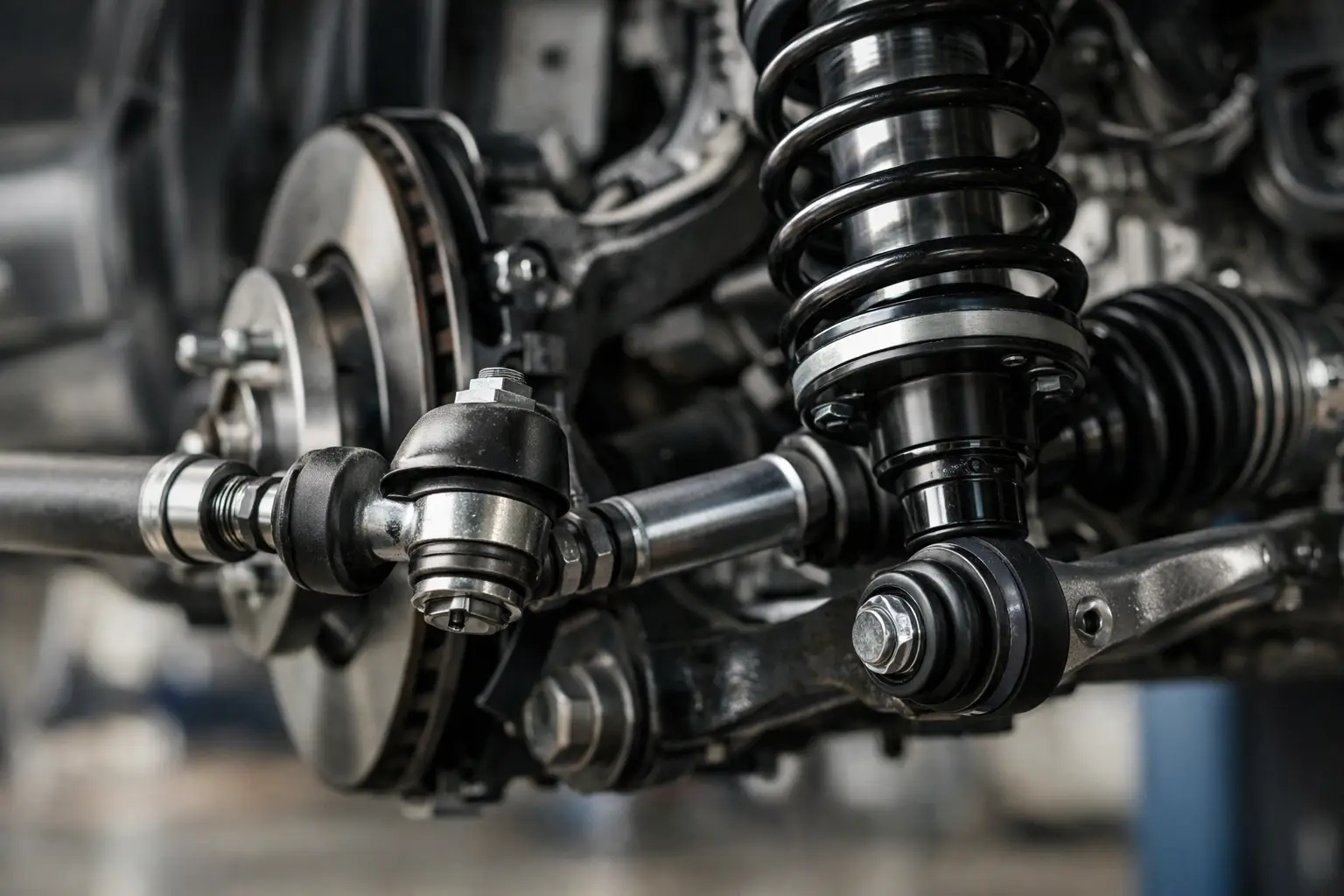
The steering wheel input travels through components such as the steering rack, tie rod ends, and rack ends to turn the wheels. In a healthy system, this movement is direct and controlled. The driver turns the wheel, and the tires respond with minimal delay or unwanted play.
Tie rods and rack ends are especially important because they connect steering movement to the wheel assembly. If these parts develop looseness, the vehicle may wander, respond slowly, or feel vague on center. That is not just a comfort issue. It affects lane stability, braking confidence, and tire wear.
Modern passenger vehicles are designed for a balance of light steering effort and consistent road feel. Too much free play reduces precision. Steering that is too stiff can also point to binding parts, damaged mounts, or related suspension issues.
The suspension includes parts such as shock absorbers, struts, control arms, ball joints, stabilizer links, bushings, and strut mounts. Their job is not only to make the ride more comfortable. They also keep the tires in contact with the road while controlling body motion.
If a shock absorber or strut loses damping force, the wheel can bounce instead of following the road cleanly. If a ball joint or control arm bushing wears out, wheel alignment angles can shift under load. If a stabilizer link fails, body roll may increase and reduce cornering confidence.
This is where steering and suspension meet. The driver may be steering correctly, but if the suspension cannot hold geometry under real-world conditions, the car will not respond the way it should.
Wheel alignment is often discussed as if it is a simple adjustment. In reality, alignment only stays correct when steering and suspension parts are in good condition. Camber, caster, and toe are all influenced by the condition of joints, arms, mounts, and steering linkages.
For example, toe is directly affected by tie rod adjustment, but worn control arm bushings or ball joints can let the wheel shift while driving. That means a vehicle can pass a static alignment check yet still feel unstable on the road. The numbers may look acceptable in the shop, but the geometry changes under braking or cornering.
This is why replacing worn parts before alignment is the right order. Otherwise, the adjustment may not hold, and the customer comes back with the same complaint.
A common mistake is treating steering and suspension faults separately. In practice, wear usually spreads its effects across both systems.
A worn tie rod end can create vague steering and uneven tire wear. A weak strut can increase body movement, which changes how the steering feels entering a turn. A bad strut mount can cause noise and poor steering return. A loose ball joint can affect alignment, braking stability, and steering accuracy all at once.
The symptoms often overlap. Drivers may report clunking sounds, excessive vibration, steering pull, drifting, poor high-speed stability, or rapid tire wear. Workshops know that these complaints need a full front-end inspection, not a guess.
It also depends on the vehicle and how it is used. A compact city car with worn stabilizer links may mainly show noise and mild roll. A heavier SUV with the same issue may feel significantly less stable in lane changes. Road conditions, load, tire condition, and driving habits all influence how quickly problems become noticeable.
Several front-end components have an outsized effect because they sit at the connection point between steering input and suspension movement.
Ball joints allow controlled pivoting while supporting load. When they wear, steering precision drops and alignment can shift.
Control arms position the wheel assembly and manage movement through bushings and joints. If the bushings crack or soften, the wheel can move more than intended under braking and cornering.
Tie rod ends and rack ends transmit steering force. Any looseness here reduces directional control.
Strut mounts support the upper end of the strut and help with steering movement in many suspension designs. When they fail, drivers may feel binding, hear knocking, or notice poor steering return.
Shock absorbers and struts control bounce and body motion. Without proper damping, steering becomes less consistent because tire contact becomes less stable.
Stabilizer links help control roll. They do not steer the car directly, but by limiting excessive body lean, they help maintain more predictable handling.
For workshops and parts buyers, this is why quality matters. A front-end repair is only as reliable as the fitment, material quality, and durability of each connected part.
The best diagnostic approach starts with the customer complaint, then confirms it through inspection and road testing. If the issue is steering pull, the cause could be alignment, tire condition, a sticking brake, worn suspension bushings, or steering linkage wear. If the issue is knocking over bumps, the cause might be stabilizer links, strut mounts, ball joints, or control arm components.
Looking at one part in isolation can waste time. A better approach is to inspect the whole system for play, damage, leakage, cracked rubber, and abnormal movement. Tire wear patterns are also useful because they often show how long the problem has been affecting geometry.
For retailers and distributors, clear product categorization helps workshops source all related parts in one job. That saves labor time, reduces repeat visits, and improves customer trust.
Steering and suspension repairs are not just about replacing a failed component. They are about restoring predictable handling, proper tire contact, and long-term durability. Poor-quality parts may fit loosely, wear quickly, or fail to maintain alignment and ride control over time.
That creates a direct cost for workshops through comebacks and a safety risk for drivers. Reliable aftermarket parts should offer consistent dimensions, durable materials, and OE-standard performance where it matters most. For high-volume workshops and retailers, broad vehicle coverage is also important because demand is spread across many Japanese, Korean, local, and international passenger models.
This is where a trusted aftermarket supplier such as Saiko adds practical value - not just by supplying parts, but by supporting dependable repairs across a wide range of vehicles.
Steering and suspension problems rarely fix themselves. Small issues usually become expensive ones. A slight steering looseness today can turn into heavy tire wear later. A weak shock absorber can gradually increase braking instability and reduce control on wet roads.
Drivers should not wait for a major failure before checking the front end. Uneven tire wear, clunking sounds, vibration through the wheel, poor straight-line stability, and excessive body roll are all signs worth inspecting early. For workshops, catching these signs before they affect multiple parts is good service and good business.
The real value in understanding how steering and suspension work together is this: better diagnosis leads to better repairs, and better repairs lead to safer, more confident driving every day.
Recent Posts
Drove Through Flood Water? The Parts Under Your Car That Need a Look Next
19 Oct 2026
A Record Year on the Road Means a Record Year Ahead for Maintenance
12 Oct 2026
Budget 2027 Puts E-Hailing Car Maintenance on the National Agenda
12 Oct 2026
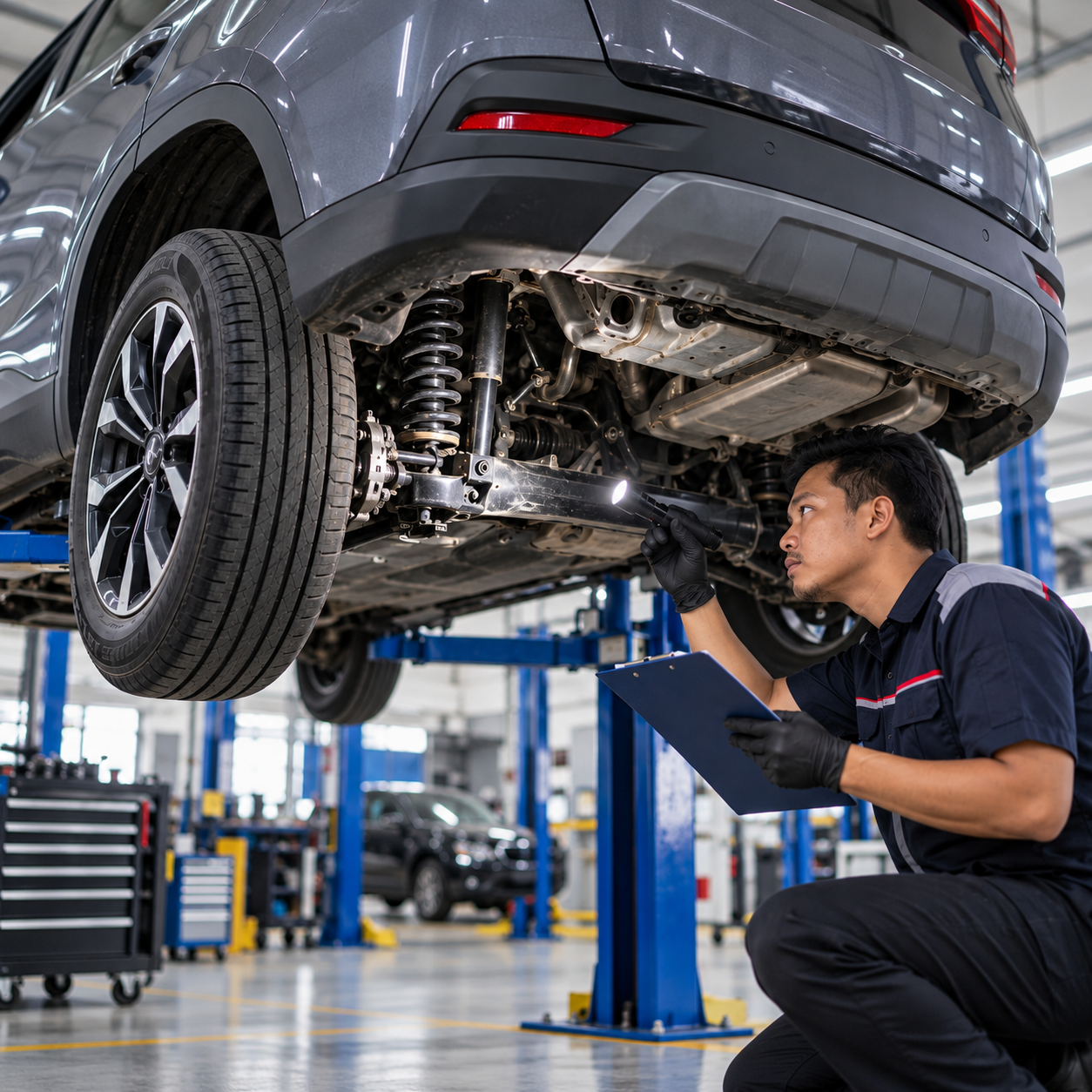
A Rear Axle Recall Is a Reminder: The Back of the Car Matters Too
12 Oct 2026
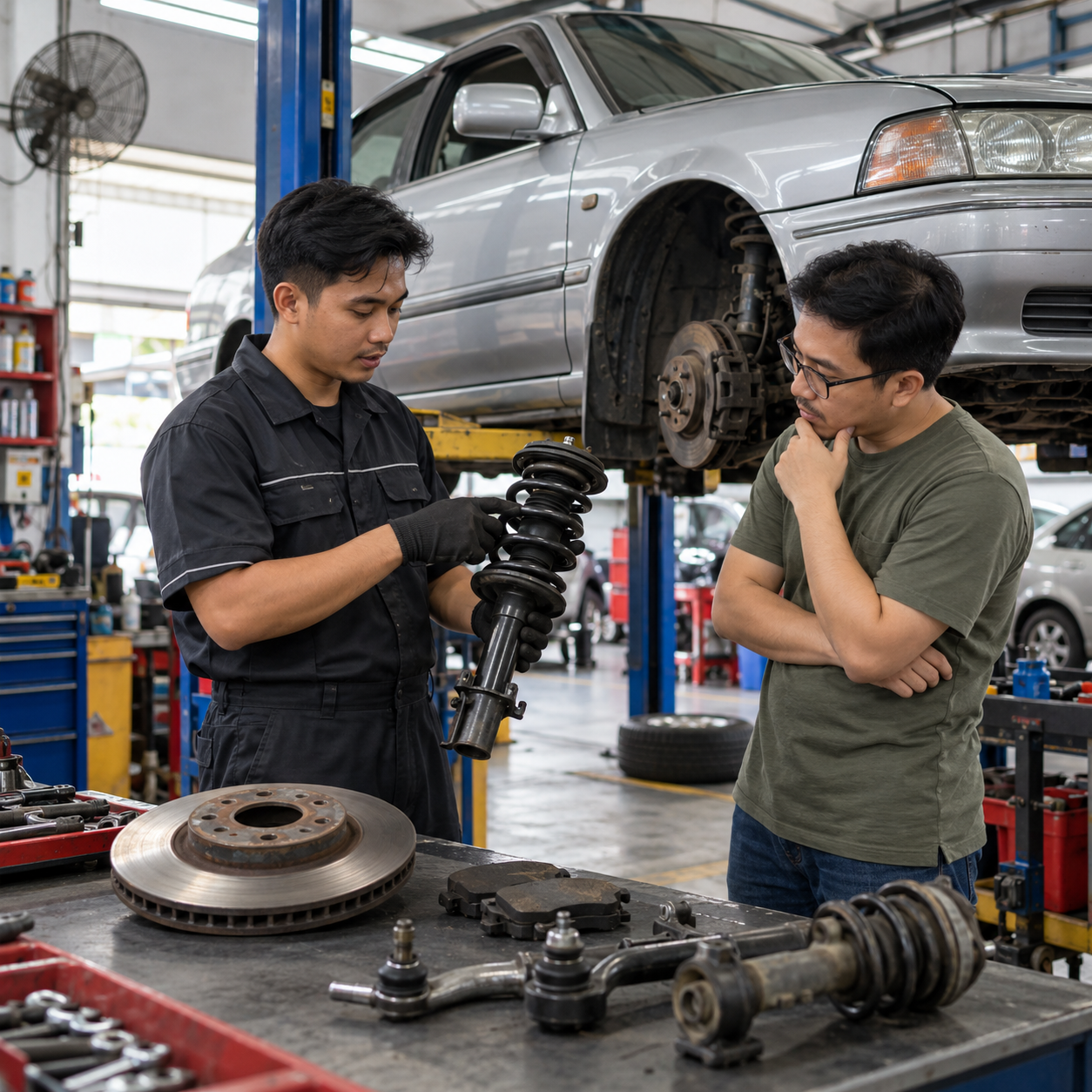
Scrap or Maintain? What a Proposed Old-Car Rebate Means for Malaysia's Older Vehicles
09 Oct 2026
 Whatsapp Us NowSaiko Automotive

