


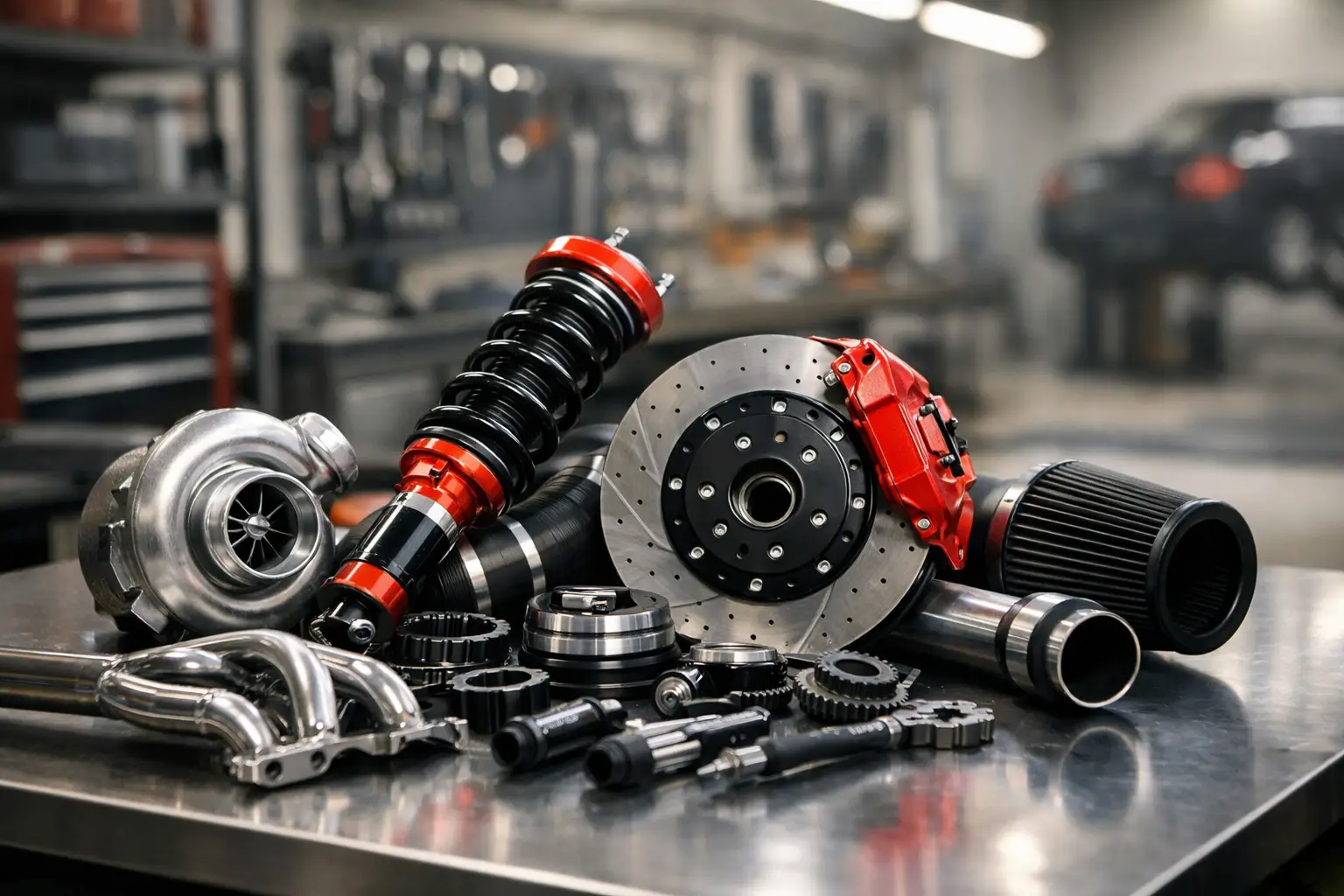
Best Aftermarket Parts for Workshops
A comeback job rarely starts with the installation. It usually starts at the parts counter, when a workshop chooses a component that looks right on paper but fails on fitment, durability, or consistency. That is why identifying the best aftermarket parts for workshops is not just a purchasing decision. It is a direct decision about labor efficiency, customer trust, and profit.
For most workshops, the right aftermarket part is not simply the cheapest option or the one with the biggest label. It is the part that installs correctly, performs reliably, and helps the vehicle leave the bay without repeat issues. When volume is high and margins are tight, those details matter.
Workshops judge parts differently than retail buyers do. A car owner may focus on upfront price, but a workshop has to think about installation time, warranty exposure, and the risk of customer dissatisfaction. The best aftermarket parts for workshops are the ones that support smooth daily operations.
Fitment comes first. Even a well-made part becomes a problem if mounting points, dimensions, or tolerances are inconsistent. Accurate fitment saves technician time and reduces the chance of rework. This is especially important in suspension, steering, and drivetrain jobs, where small variations can create major delays.
Consistency matters just as much as individual quality. A workshop may install the same part across multiple vehicles every week. If one batch performs well and the next causes issues, confidence drops fast. Reliable workshops prefer brands that maintain stable standards across product lines, not just standout items in a few categories.
Then there is coverage. A supplier with broad application across Japanese, Korean, local Malaysian, and other popular passenger vehicle models gives workshops a practical advantage. It reduces sourcing time, simplifies purchasing, and helps service advisors quote jobs faster. A narrower catalog can still work for specialty shops, but general repair workshops usually benefit more from a one-stop source.
Not every category carries the same operational impact. Some parts move faster, create more wear-related service demand, and influence ride quality or safety more directly.
Control arms, stabilizer links, tie rod ends, rack ends, ball joints, shock absorbers, and strut mounts are among the most important fast-moving categories for workshops. These parts affect steering response, ride comfort, tire wear, and overall vehicle stability.
For workshops, the best choice here is a part that balances durability with precise fitment. A low-cost suspension component may look attractive at ordering stage, but if bushing quality is poor or joint tolerances are inconsistent, the workshop takes the hit later through noise complaints, uneven wear, or repeat repairs. In this category, saving a little on purchase price can cost more in labor and reputation.
Drive shafts, wheel hubs, and hub bearings are high-value repairs where installation accuracy is critical. Workshops need components that run smoothly under load, maintain balance, and hold up over time. A drivetrain part that introduces vibration, noise, or premature wear creates immediate customer dissatisfaction.
This is one area where OE-standard testing and quality control are not just marketing claims. They have real workshop value. The more dependable the part, the lower the risk of post-installation complaints.
Brake parts are non-negotiable from a safety standpoint. Workshops need dependable friction performance, stable material quality, and accurate fitment. A brake job should leave the customer feeling immediate confidence, not returning with noise, poor pedal feel, or uneven braking.
There is always pressure in the market to compete on brake pricing. Still, workshops that want fewer issues usually avoid treating brake parts as a pure commodity. Consistent quality matters more than a small price difference when safety and reputation are involved.
Timing chain kits are a category where failure has serious consequences. Workshops should be especially selective here. The right kit needs more than basic compatibility. It should deliver reliable material quality and dimensional accuracy across the full assembly.
These repairs often involve significant labor. That changes the value equation. A workshop may accept tighter margins on parts if it means reducing the risk of expensive warranty work later.
A strong product is only part of the equation. The supplier behind it matters just as much. Workshops need consistent stock, clear cataloging, and dependable support.
Catalog accuracy is often underrated. A supplier with clear application data helps workshops avoid ordering mistakes and speeds up parts identification. That can make a noticeable difference in front-office efficiency, especially when handling multiple makes and models in one day.
Stock availability is another practical issue. Even the best part loses value if it cannot be sourced quickly. Workshops rely on turnaround time. A supplier with broad distribution and stable inventory supports better scheduling and fewer stalled jobs.
Support also matters in a very practical sense. Workshops prefer suppliers who understand the category, can guide application matching, and stand behind the product. The relationship is not purely transactional. It affects daily workflow.
Every workshop watches margins. That is reality. But the cheapest part is not always the most economical part.
Total cost includes technician time, alignment after suspension work, possible repeat labor, and the hidden cost of upsetting a regular customer. A workshop that installs low-grade components may win the invoice on day one but lose time and trust over the next few weeks.
This does not mean the highest-priced part is always the right choice either. Some premium labels carry branding costs that do not translate into better workshop results. The real goal is value - dependable performance, accurate fitment, and competitive pricing that makes sense for the local market.
That is why many workshops prefer brands built around practical reliability rather than image. A dependable aftermarket supplier should offer product integrity, broad vehicle coverage, and pricing that supports healthy repair margins.
A workshop serving mixed passenger vehicles cannot afford to source from five different suppliers for every repair category. Broad coverage creates speed. It simplifies purchasing, reduces administrative friction, and helps workshops standardize around brands they trust.
For Malaysian-market vehicle mix and wider Asian applications, this is especially relevant. Workshops often need parts for Japanese, Korean, and local models on the same day. A supplier with strong range across those segments helps the business stay flexible and responsive.
This is where established aftermarket brands have a real advantage. One example is Saiko, which has built broad coverage across more than 400 vehicle models and multiple core categories used daily by workshops. That kind of range supports better sourcing efficiency, especially for businesses that want reliable supply from one trusted channel.
One common mistake is buying based on unit price alone. Another is assuming all aftermarket parts in the same category perform at the same level. They do not. Materials, manufacturing control, and testing standards vary widely.
Workshops also run into problems when they choose suppliers with weak catalog support. A part that is technically close but not exact can turn a standard repair into a time-consuming problem. That is avoidable.
Another mistake is ignoring product line depth. A supplier may be strong in one category but inconsistent in others. Workshops that want smoother operations should look for balanced strength across steering, suspension, braking, drivetrain, and timing components, not just a few fast sellers.
The best aftermarket parts strategy is not about chasing the lowest invoice. It is about building a repeatable repair process with fewer delays, fewer claims, and more satisfied customers. Good parts protect labor time. Great parts also protect the workshop brand.
When a workshop chooses parts with stable quality, accurate fitment, and wide application coverage, the benefits show up everywhere. Estimates are easier to prepare. Technicians work faster. Customers come back for service instead of complaints.
For retailers and distributors, the same principle applies. Fast-moving products with consistent quality are easier to sell and easier to stand behind. Good margins matter, but confidence at the counter matters too.
The market for replacement components will always be competitive, and there will always be lower-priced options. But workshops that think long term usually make the same decision: they choose parts that keep vehicles safe, repairs efficient, and customer trust intact. That is what the best aftermarket parts should do every single day.
Recent Posts
Automotive Trade Is on the Table in the Malaysia-EU FTA. Here's Why It Matters at the Parts Counter
23 Oct 2026
The Road Transport Act Just Got Tougher. Here's What It Means for Your Car's Parts
21 Oct 2026
Drove Through Flood Water? The Parts Under Your Car That Need a Look Next
19 Oct 2026
A Record Year on the Road Means a Record Year Ahead for Maintenance
12 Oct 2026
Budget 2027 Puts E-Hailing Car Maintenance on the National Agenda
12 Oct 2026
 Whatsapp Us NowSaiko Automotive

