


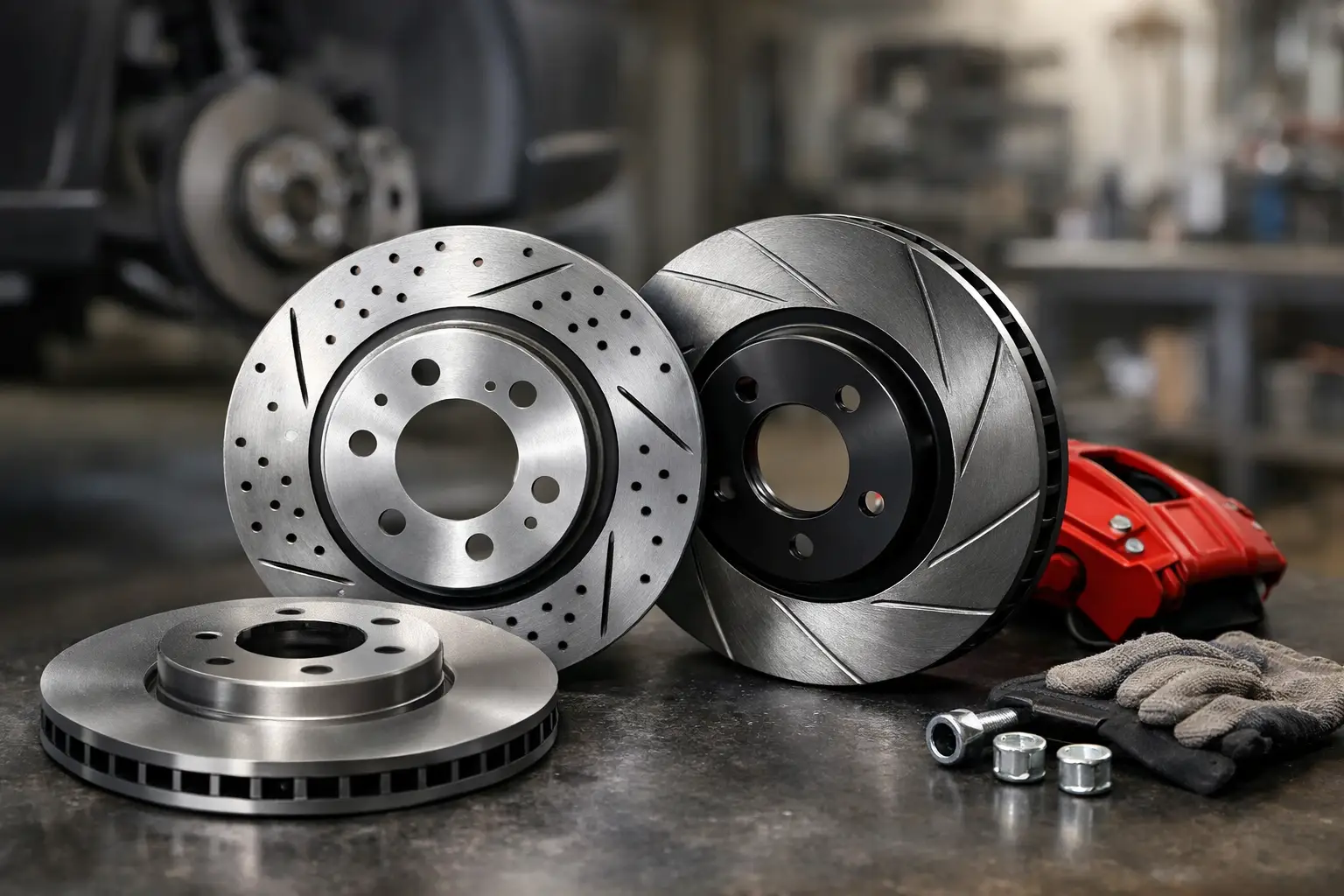
How to Choose Aftermarket Brake Discs
A brake job should not turn into a comeback job. If the discs are wrong for the vehicle, poorly machined, or inconsistent in quality, the result can be noise, vibration, uneven pad wear, and unhappy customers. That is why knowing how to choose aftermarket brake discs matters for workshops, spare parts retailers, and drivers who want dependable braking without wasting time or money.
Brake discs are not all the same, even when the box says they fit your car. The right choice depends on vehicle application, driving conditions, material quality, machining accuracy, and the standard of testing behind the part. In daily use, especially in stop-start traffic, hot weather, and wet-road conditions common in Malaysia, those differences show up quickly.
The first checkpoint is fitment. A disc can look similar to another model and still be wrong in the details. Outer diameter, thickness, minimum thickness, overall height, center bore, bolt pattern, and whether the design is solid or ventilated all need to match the vehicle specification. If one measurement is off, installation may become difficult or braking performance may suffer.
This is where many buying mistakes begin. Some buyers choose based on price first, then try to match the part later. For a workshop, that can mean delays at the service bay. For a retailer, it can mean returns and customer complaints. For a car owner, it can mean paying twice.
A better approach is to confirm the exact vehicle year, engine variant, and trim level before ordering. Brake system specifications can change within the same model range. A 1.5L variant may use a different disc than a 1.8L version, and fleet or premium trims may have different braking hardware.
Solid discs are usually found on lighter-duty rear applications, while ventilated discs are more common at the front because they handle heat better. Some vehicles may use coated discs for better corrosion resistance, and some performance-oriented applications may have slotted or drilled patterns. For most passenger cars, a standard OE-style disc is the right choice because it balances cost, durability, and everyday braking performance.
Fancy designs are not automatically better. Drilled or slotted discs can help in certain performance uses, but they may also wear pads faster, create more noise, or offer little real benefit in normal city driving. If the car is mainly used for commuting, school runs, or regular highway travel, a high-quality OE-standard replacement is usually the smarter buy.
If you are comparing brands, look past packaging and focus on manufacturing quality. Good aftermarket brake discs are typically made from quality-grade cast iron with controlled metallurgy, consistent hardness, and precise machining. That affects heat handling, wear rate, and the chance of brake judder.
Poor-quality discs often reveal themselves in familiar ways. The braking surface may be rough or uneven. The balancing may be inconsistent. The internal vane structure on ventilated discs may be poorly formed. These issues can lead to vibration under braking, hot spots, and shorter service life.
Machining accuracy is especially important. Disc thickness variation, lateral runout, and surface finish all influence pedal feel and pad contact. Even a new disc can create problems if tolerances are not controlled properly. That is why workshops and retailers usually prefer brands with stable quality control rather than the lowest-cost option available that week.
A brake disc is a safety part, so consistency across batches matters as much as the performance of one individual unit. Reliable aftermarket brands put products through OE-standard testing, fitment verification, and regular quality checks. That reduces the risk of receiving one good set and one problematic set the next month.
For workshops, consistency means fewer installation issues and fewer customer comebacks. For parts sellers, it means a stronger reputation and more repeat business. For car owners, it means confidence that the part will perform as expected in daily driving.
The cheapest brake disc is often the most expensive one in practice. A low purchase price can be offset by shorter lifespan, more noise, poor corrosion resistance, or extra labor if the part needs to be replaced early. Value should be measured across the full service cycle.
Ask a simple question: will this disc provide accurate fitment, stable braking, and reasonable service life for the vehicle’s usage? If the answer is yes, that part is likely the better buy than a cheaper option with uncertain quality. This matters even more for high-mileage cars, family vehicles, and workshop customers who expect reliable everyday performance.
There is also a trade-off between premium and budget tiers. Not every vehicle needs a high-performance disc, but every vehicle does need a safe and properly made one. For most passenger vehicles, the best value sits in the middle - a dependable OE-standard aftermarket disc from a trusted supplier with broad vehicle coverage and local availability.
Driving style and operating conditions should influence the final choice. A compact sedan used mainly in urban traffic puts repeated heat cycles into the front brakes. A multipurpose vehicle carrying passengers or cargo may need discs that manage heat and wear more effectively. A car used mostly for long highway runs may see less stop-start stress but still needs stable high-speed braking.
Road and climate conditions matter too. Heat, humidity, standing water, and heavy traffic all affect brake wear. In these conditions, corrosion resistance, material stability, and proper ventilation become practical buying factors, not minor details.
If the vehicle is used aggressively, tows loads, or often carries full passengers, it makes sense to prioritize higher thermal stability and trusted manufacturing quality over the cheapest option. If it is a lightly used daily driver, a standard OE-style replacement from a reliable aftermarket brand is usually sufficient.
Brake discs and pads work as a pair. Installing new discs with low-quality, overly hard, or mismatched pads can reduce braking performance and increase noise or uneven wear. If the disc surface and pad compound do not work well together, the driver may feel poor bite, shudder, or glazing.
For best results, match the disc with a quality pad designed for the vehicle’s normal use. Workshops know this already, but it is worth stating because many DIY buyers focus on the disc and treat the pad as an afterthought. That usually leads to disappointing results.
A reliable part should inspire confidence before installation. If product data is unclear, fitment information is vague, or the supplier cannot confirm key specifications, that is a warning sign. The same applies if the disc shows visible surface imperfections, inconsistent finishing, poor packaging protection, or no clear quality documentation.
Another red flag is unstable supply. Workshops and retailers benefit from brands that support a wide range of applications and maintain product availability. If a customer cannot get the same quality replacement next time, or if stock is unpredictable, that creates unnecessary friction. A dependable aftermarket supplier should offer broad model coverage, consistent standards, and practical local support.
This is one reason many buyers prefer established aftermarket specialists with proven coverage across Japanese, Korean, Malaysian, and other passenger vehicles. A brand such as SAIKO, with OE-standard tested products, broad model support, and a strong dealer network, fits what workshops and parts businesses typically need - accurate fitment, steady quality, and good value in day-to-day operations.
If you are buying for resale or installation, think beyond the single transaction. The right brake disc supplier helps reduce returns, protects workshop labor time, and supports customer trust. Good fitment data, stable product quality, and available stock are commercial advantages, not just technical details.
For workshops, the right choice often comes down to fewer headaches at installation and fewer brake complaints afterward. For retailers, it comes down to confidence that the part will fit as expected and deliver the value customers are paying for. Those practical outcomes matter more than flashy branding.
A good aftermarket brake disc should be precise, durable, and appropriate for the vehicle’s real-world use. If you choose with fitment, material quality, machining, testing, and driving conditions in mind, you are far more likely to get braking performance that feels right from day one and stays that way over time. When safety parts are involved, the smart buy is usually the one that saves trouble later.
Recent Posts
Drove Through Flood Water? The Parts Under Your Car That Need a Look Next
19 Oct 2026
A Record Year on the Road Means a Record Year Ahead for Maintenance
12 Oct 2026
Budget 2027 Puts E-Hailing Car Maintenance on the National Agenda
12 Oct 2026
A Rear Axle Recall Is a Reminder: The Back of the Car Matters Too
12 Oct 2026
Scrap or Maintain? What a Proposed Old-Car Rebate Means for Malaysia's Older Vehicles
09 Oct 2026
 Whatsapp Us NowSaiko Automotive

