


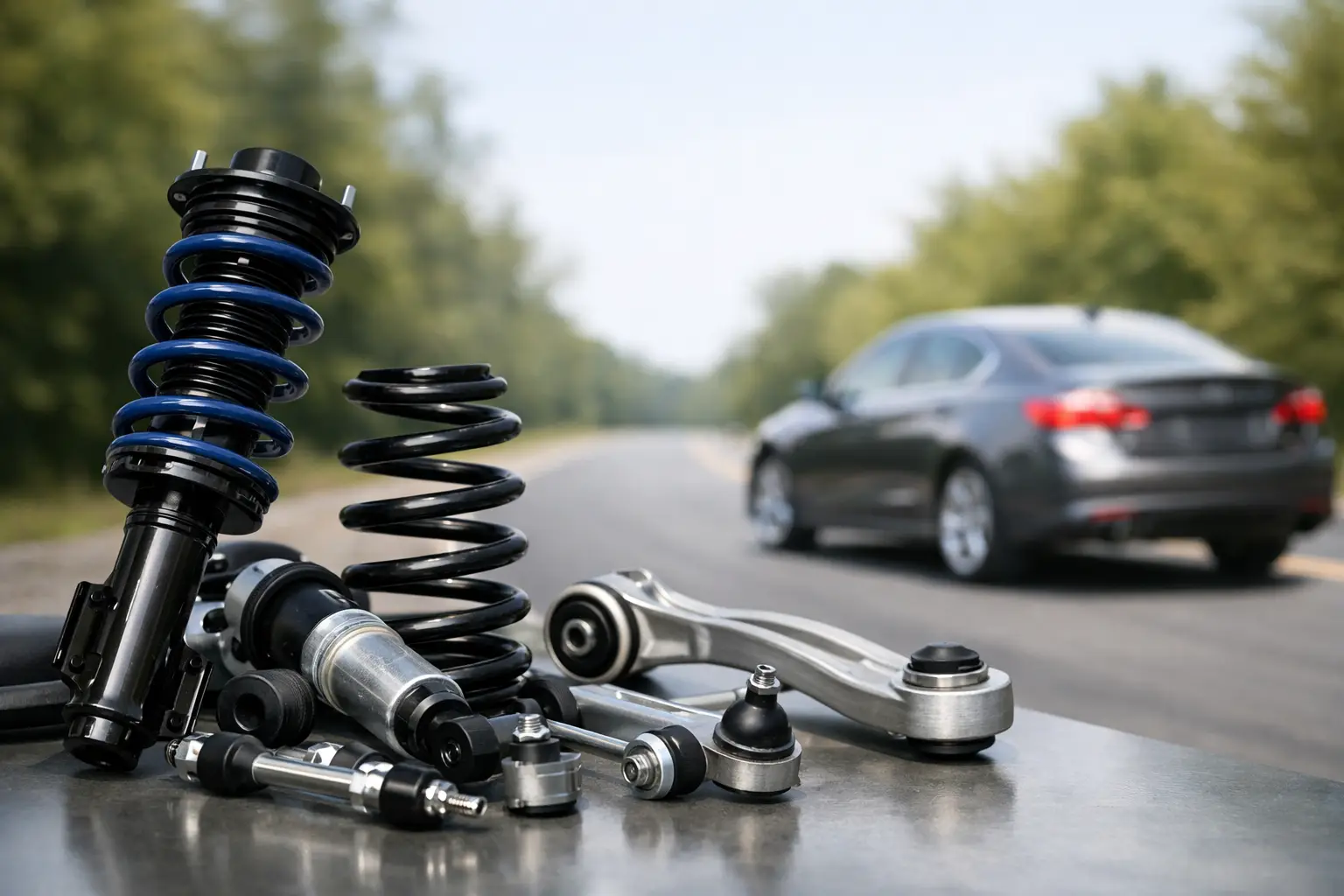
Best Suspension Parts for Daily Driving
A daily driver tells the truth about suspension parts fast. If the ride feels harsh over patched roads, the steering wanders on the highway, or the car clunks over speed bumps, the problem is rarely just "old age." It usually means one or more of the best suspension parts for daily driving have been ignored for too long, replaced with the wrong grade, or mixed with low-quality components that never matched the vehicle properly in the first place.
For most drivers, the goal is not a stiffer setup or a lowered stance. It is stable handling, predictable braking, even tire wear, and comfort that still feels controlled when roads are wet, broken, or full of expansion joints. That is why choosing the right replacement parts matters more than choosing the cheapest box on the shelf.
Daily driving puts different demands on a vehicle than spirited weekend use. You want compliance over rough roads, but not so much softness that the car floats or leans excessively in corners. You want durability, but also proper fitment so the vehicle tracks straight and does not come back to the workshop with noise, vibration, or premature tire wear.
The best suspension setup for daily use usually comes down to balance. A quality shock absorber paired with a stable strut mount, correctly sized control arm bushings, sound ball joints, and healthy stabilizer links will almost always outperform a random mix of bargain parts. Even a single weak component can compromise the rest of the system.
This is where many buyers get caught out. They replace only the visibly failed part, but leave worn supporting components in place. The new part then has to work harder, ride quality stays disappointing, and the customer assumes the replacement itself was poor. In reality, suspension performance depends on the condition of the whole assembly.
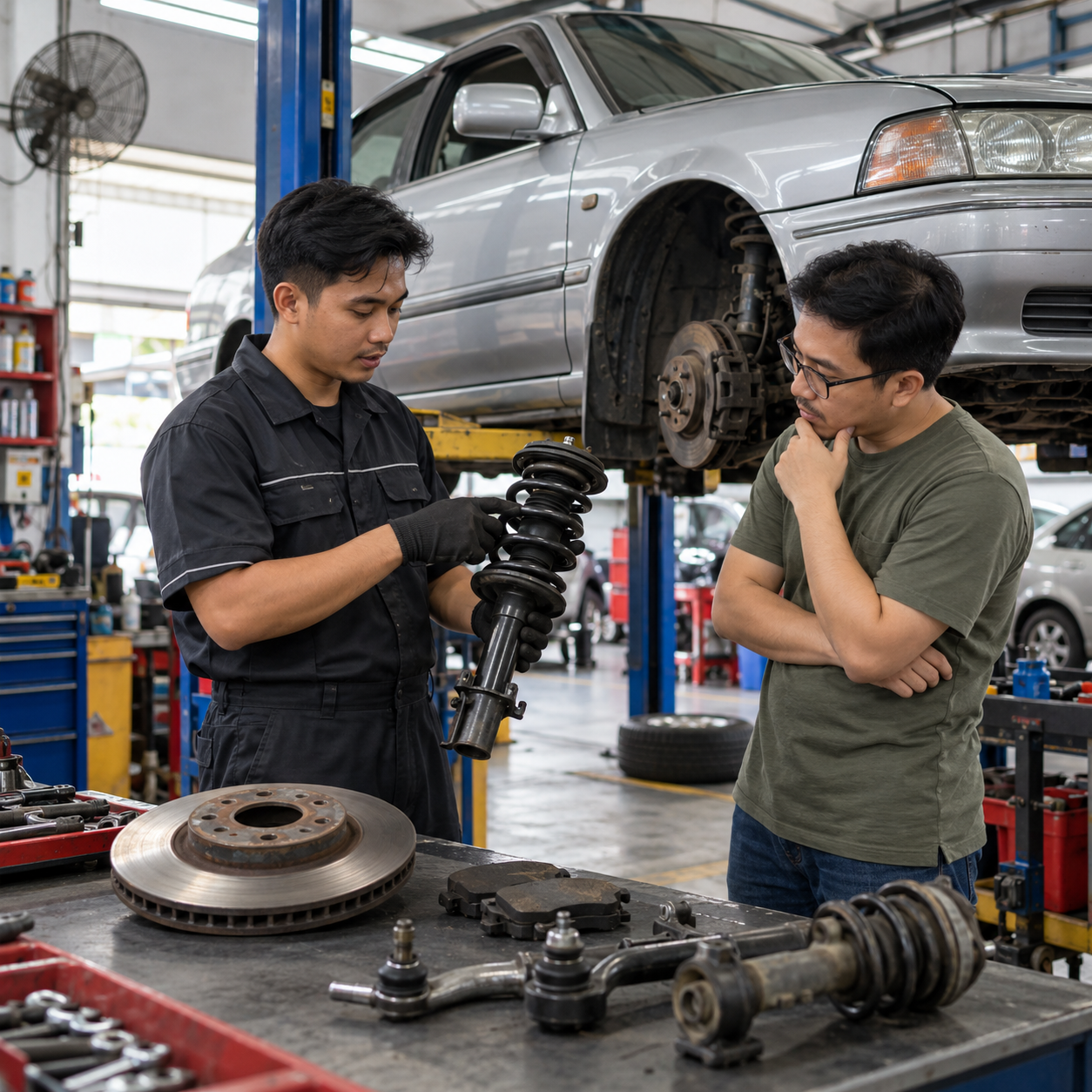
If one part defines everyday ride quality, it is the shock absorber. Good shocks control spring movement, keep the tire in contact with the road, and reduce body bounce after bumps. When they wear out, drivers usually notice longer stopping distances on uneven roads, extra nose dive under braking, and a loose or floaty feeling at speed.
For daily use, the best choice is usually an OE-standard shock absorber rather than an overly firm performance unit. A stiffer shock may sound attractive, but it can make ordinary commuting tiring and may not suit the spring rate or vehicle weight distribution. On rough urban roads, that often translates to more cabin harshness and faster wear on related components.
A dependable aftermarket shock should offer consistent damping, proper sealing, and accurate fitment for the intended vehicle model. It should also be matched left and right. Replacing only one side saves money today, but it often creates uneven damping and compromised handling tomorrow.
Drivers often focus on shocks and ignore the hardware around them. That is a mistake. Strut mounts, control arm bushings, stabilizer links, and ball joints all affect how the suspension behaves in real road conditions.
A worn strut mount can create knocking sounds, steering memory, or vibration. Bad control arm bushings can cause wandering, braking instability, and rapid tire wear. Weak stabilizer links may not seem serious at first, but they can make the car feel unsettled during lane changes or cornering.
For workshops and parts retailers, this is one of the most practical upsell opportunities because it is also one of the most honest. If a customer is already replacing shocks or lower arms, checking adjacent wear items is simply good service. It reduces repeat labor, improves the result, and helps the vehicle leave the shop feeling genuinely sorted rather than only partly repaired.
Lower arms and ball joints do more than hold things together. They control wheel position through suspension travel and help maintain alignment angles under load. On a daily driver, that affects steering precision, tire life, braking stability, and confidence over uneven roads.
When these parts wear, symptoms often include clunking over bumps, pulling under braking, vague steering, and uneven front tire wear. In more advanced cases, the car may feel unstable on highways or react unpredictably over potholes.
The best replacement lower arms for daily driving are not simply the lowest-priced ones available. Material quality, bushing durability, joint sealing, and dimensional accuracy all matter. Poorly manufactured arms may install, but if geometry or bushing quality is off, the vehicle will remind you quickly. Accurate fitment is what keeps alignment within range and reduces installation headaches.
There is no single "best" suspension part in isolation because the right choice depends on the vehicle, mileage, load, and road conditions. A compact city car used mostly for short trips may prioritize comfort and noise reduction. A family SUV carrying passengers and cargo regularly may need stronger support and tighter body control. A ride-hailing vehicle may value durability and stable performance over long daily mileage.
That is why reputable aftermarket brands focus on OE-standard testing, consistent manufacturing, and broad vehicle coverage rather than flashy claims. For workshops and car owners, the practical question is simple: will the part fit correctly, perform predictably, and last reasonably well under normal use?
Established brands with wide coverage across Japanese, Korean, Malaysian, and other passenger vehicles tend to offer an advantage here. They understand common fitment requirements, supply fast-moving models, and reduce the risk of mismatched parts. For the Malaysian market, SAIKO has built that kind of reputation since 2007 by supplying quality-controlled replacement parts for more than 400 vehicle models through a broad dealer and distributor network.
A good part usually shows its quality before it even goes on the car. The machining should be clean, rubber components should feel properly molded rather than overly soft or brittle, and mounting points should align without forcing the installation. Packaging alone proves nothing, but labeling, traceability, and consistent presentation are still useful signs that the supplier takes quality control seriously.
For parts retailers and workshops, stable supply is part of quality too. A product that performs well but is hard to source consistently creates delays and unhappy customers. Reliable availability across common vehicle applications matters because daily drivers need quick turnaround, not special-order uncertainty.
It also helps to think in systems, not single items. If the shocks are worn and the strut mounts are cracked, replacing both at once usually delivers better value than staggering the job. If lower arms are being changed, inspect rack ends, tie rod ends, and stabilizer links at the same time. That approach protects alignment and gives the customer a more complete repair.
One common mistake is buying performance-oriented parts for a car that only needs comfort, safety, and low running costs. Another is mixing unknown components from different quality levels just to reduce invoice total. The result can be a car that feels inconsistent, with one repair masking another issue.
Another frequent problem is ignoring fitment detail. Even small differences by year, engine variant, or trim can affect suspension parts. Workshops know this well, but retail buyers sometimes assume all versions are interchangeable. They are not. Accurate application data saves time and prevents returns.
The last major mistake is waiting too long. Suspension wear is progressive, so drivers adapt to declining performance without realizing it. Then, after replacement, they are surprised by how much quieter, straighter, and more controlled the car feels. Good suspension rarely calls attention to itself. It simply makes the whole vehicle feel right.
If the budget does not allow a full suspension refresh, start with the parts affecting control and safety most directly. Worn shocks, failed ball joints, damaged lower arms, and badly deteriorated strut mounts should move to the front of the line. After that, focus on links, bushings, and alignment-related items that influence ride quality and tire wear.
For retailers and service advisors, the right recommendation is usually the one that balances immediate need with long-term value. Not every customer needs a full overhaul, but every customer deserves a repair that solves the actual problem rather than postponing it.
The best suspension parts for daily driving are the ones that restore confidence without making ownership more complicated. Choose OE-standard quality, prioritize precise fitment, and treat the suspension as a working system. When the car tracks straight, absorbs rough roads cleanly, and stays composed in everyday traffic, that is money well spent.
Recent Posts
Drove Through Flood Water? The Parts Under Your Car That Need a Look Next
19 Oct 2026

A Record Year on the Road Means a Record Year Ahead for Maintenance
12 Oct 2026
Budget 2027 Puts E-Hailing Car Maintenance on the National Agenda
12 Oct 2026
A Rear Axle Recall Is a Reminder: The Back of the Car Matters Too
12 Oct 2026
Scrap or Maintain? What a Proposed Old-Car Rebate Means for Malaysia's Older Vehicles
09 Oct 2026
 Whatsapp Us NowSaiko Automotive

