


7 Ball Joint Failure Signs to Watch For
A customer comes in for uneven tire wear, but the real problem is deeper in the suspension. That is often how ball joint failure signs show up - not as one dramatic breakdown, but as a mix of looseness, noise, wandering steering, and poor tire contact that gets worse over time. For workshops and car owners alike, spotting those signs early can prevent bigger repair bills and reduce safety risks on the road.
A ball joint connects the control arm to the steering knuckle and allows controlled movement in the suspension and steering system. It has to move up and down with the suspension while also allowing the wheels to turn left and right. That sounds simple, but in real driving conditions it handles constant load, vibration, heat, water, and road debris.
When a ball joint starts wearing out, the effect is rarely isolated. Steering precision can drop, tire wear can increase, and braking stability may feel less consistent, especially over rough roads, potholes, and speed bumps. In heavier traffic or during long-distance driving, that extra looseness can become more obvious.
Some vehicles use load-bearing ball joints that support more vehicle weight, while others use follower ball joints with a slightly different job. Either way, wear in this component should never be treated as minor.
One of the most common ball joint failure signs is a clunking or knocking noise from the front end. This usually happens when driving over bumps, uneven pavement, potholes, or speed humps. As the internal bearing surfaces wear, the joint develops play, and that movement creates noise when the suspension loads and unloads.
Not every front-end clunk comes from a ball joint. Stabilizer links, control arm bushings, and strut mounts can make similar sounds. That is why proper inspection matters instead of replacing parts based on noise alone.
If the steering feels vague, drifts more than usual, or needs frequent correction to stay in lane, a worn ball joint may be contributing to the problem. The extra play changes how the wheel holds its position against the road.
Drivers often describe this as the car feeling less planted or less confident at highway speed. Workshops may notice the symptom more clearly during a road test, especially on uneven roads or during light steering input.
Abnormal tire wear is one of the most overlooked warning signs. A failing ball joint can disturb wheel alignment angles enough to cause feathering, inner-edge wear, or patchy wear across the tread.
If a customer keeps replacing tires or doing alignments but the wear pattern returns, the suspension should be checked closely. Alignment settings will not stay correct for long if a ball joint has excessive play.
A worn ball joint can create front-end vibration, especially as speed increases. This does not always feel severe at first. Sometimes it starts as a mild shake that drivers blame on tire balance or road surface.
The challenge is that vibration has many possible causes, including wheel hubs, tires, tie rod ends, and lower arm issues. Still, when vibration appears together with noise and loose steering, the ball joint becomes a strong suspect.
Older or deteriorating ball joints can squeak when the suspension moves. The sound may be more noticeable at low speed, when turning into parking spaces, or when going over ramps and bumps.
In some cases, lubrication has already broken down or the protective boot has failed, allowing dirt and moisture to enter. Once contamination gets inside, wear tends to accelerate.
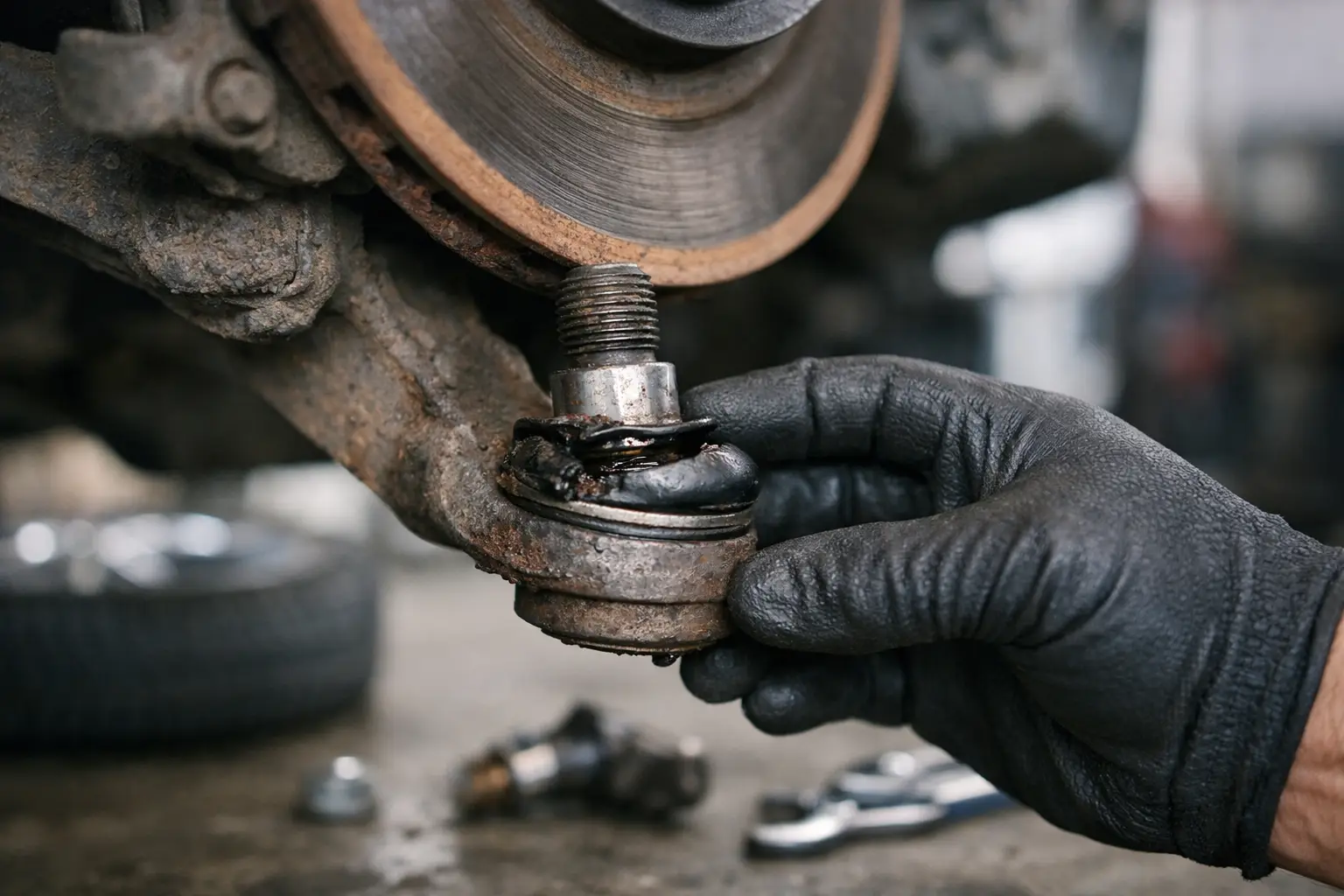
A torn or cracked dust boot is not the same as total ball joint failure, but it is a serious early warning. The boot protects the joint from water, road grit, and grease loss. Once it is damaged, contamination can enter and shorten service life quickly.
This is one reason visual inspection during routine service is valuable. A customer may not hear noise yet, but a damaged boot can tell you that the joint is already on borrowed time.
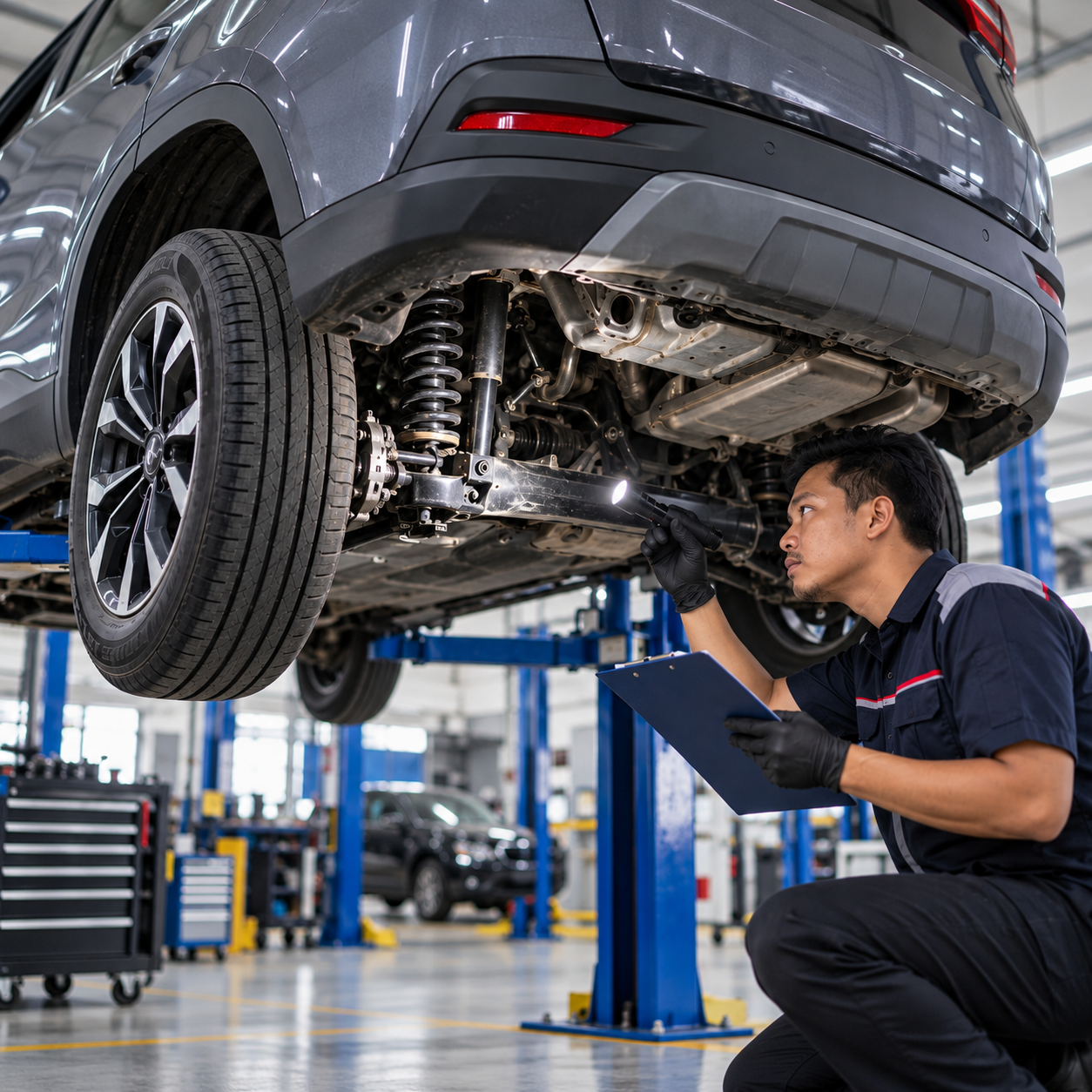
The clearest confirmation often comes during a proper physical inspection. When the wheel is lifted and checked for movement, excessive vertical or horizontal play may indicate a worn ball joint. The exact test method depends on whether the joint is load-bearing and on the suspension design.
For workshops, this is where experience matters. Some looseness may come from wheel bearings or tie rod ends instead. The goal is not just to find play, but to identify the correct source before ordering parts.
Wear is the most common reason, but not the only one. High mileage, rough road conditions, repeated pothole impact, water intrusion, and torn boots all speed up deterioration. Vehicles driven regularly on broken roads, construction routes, or flood-affected streets may see shorter ball joint life than vehicles used mostly on smooth highways.
Part quality also makes a difference. Low-grade materials, poor sealing, and inconsistent fitment can lead to premature wear. For workshops, a part that installs easily but does not last creates comeback risk. For car owners, the cheapest option can become more expensive if it wears out early or affects tires and alignment.
A worn ball joint does not always fail suddenly, but it can. As wear increases, steering control becomes less predictable and suspension geometry becomes less stable. In advanced cases, the joint can separate, which may cause the wheel assembly to move out of position. That is a serious safety issue.
Even before that point, there are practical costs. Tire wear increases, alignment becomes harder to maintain, and related suspension parts may carry extra stress. Replacing a ball joint early is usually cheaper than ignoring it until multiple components are affected.
There is no universal mileage rule because service life depends on vehicle design, road conditions, driving habits, and part quality. Some joints last a long time. Others wear much earlier in harsh use.
The better rule is condition-based replacement. If there is confirmed play beyond specification, a torn boot with contamination, persistent noise linked to the joint, or handling issues traced to that part, replacement is the right move. On some vehicles, it also makes sense to inspect both sides carefully and consider replacing them as a pair for balanced performance.
Fitment accuracy matters just as much as durability. A well-made ball joint should match the vehicle application correctly, install without forcing, and maintain stable performance under daily driving loads. Workshops usually look for consistent dimensions, dependable boot quality, proper machining, and fewer fitment issues at the bench.
For retailers and car owners, the key is buying from a source that understands local vehicle coverage and can supply reliable suspension parts without guesswork. In Malaysia’s aftermarket, brands with broad model coverage, quality-controlled production, and stable dealer support offer a practical advantage. SAIKO is one example of an established aftermarket option for workshops, dealers, and drivers who need dependable replacement parts across a wide range of passenger vehicles.
Do not rely on one symptom alone. Noise, vibration, and tire wear can overlap with several front-end faults. A better approach is to combine road test feedback, visual inspection, wheel play checks, and alignment or tire wear clues.
If the vehicle has recently had new tires, an alignment, or related suspension work but still feels unstable, it is worth checking the ball joints again. Small amounts of looseness can be missed early, especially if the issue is only beginning to develop.
For owners, the practical move is simple: if the front end starts clunking, steering feels loose, or tire wear looks unusual, have the suspension inspected promptly. For workshops, accurate diagnosis protects both safety and customer trust.
Ball joints are not the most visible suspension part, but they have a direct effect on steering feel, tire life, and vehicle control. Catching wear early is not just good maintenance - it is one of the smarter ways to keep a vehicle stable, safe, and cost-effective to run.
Recent Posts
Drove Through Flood Water? The Parts Under Your Car That Need a Look Next
19 Oct 2026
A Record Year on the Road Means a Record Year Ahead for Maintenance
12 Oct 2026
Budget 2027 Puts E-Hailing Car Maintenance on the National Agenda
12 Oct 2026
A Rear Axle Recall Is a Reminder: The Back of the Car Matters Too
12 Oct 2026
Scrap or Maintain? What a Proposed Old-Car Rebate Means for Malaysia's Older Vehicles
09 Oct 2026
 Whatsapp Us NowSaiko Automotive

