


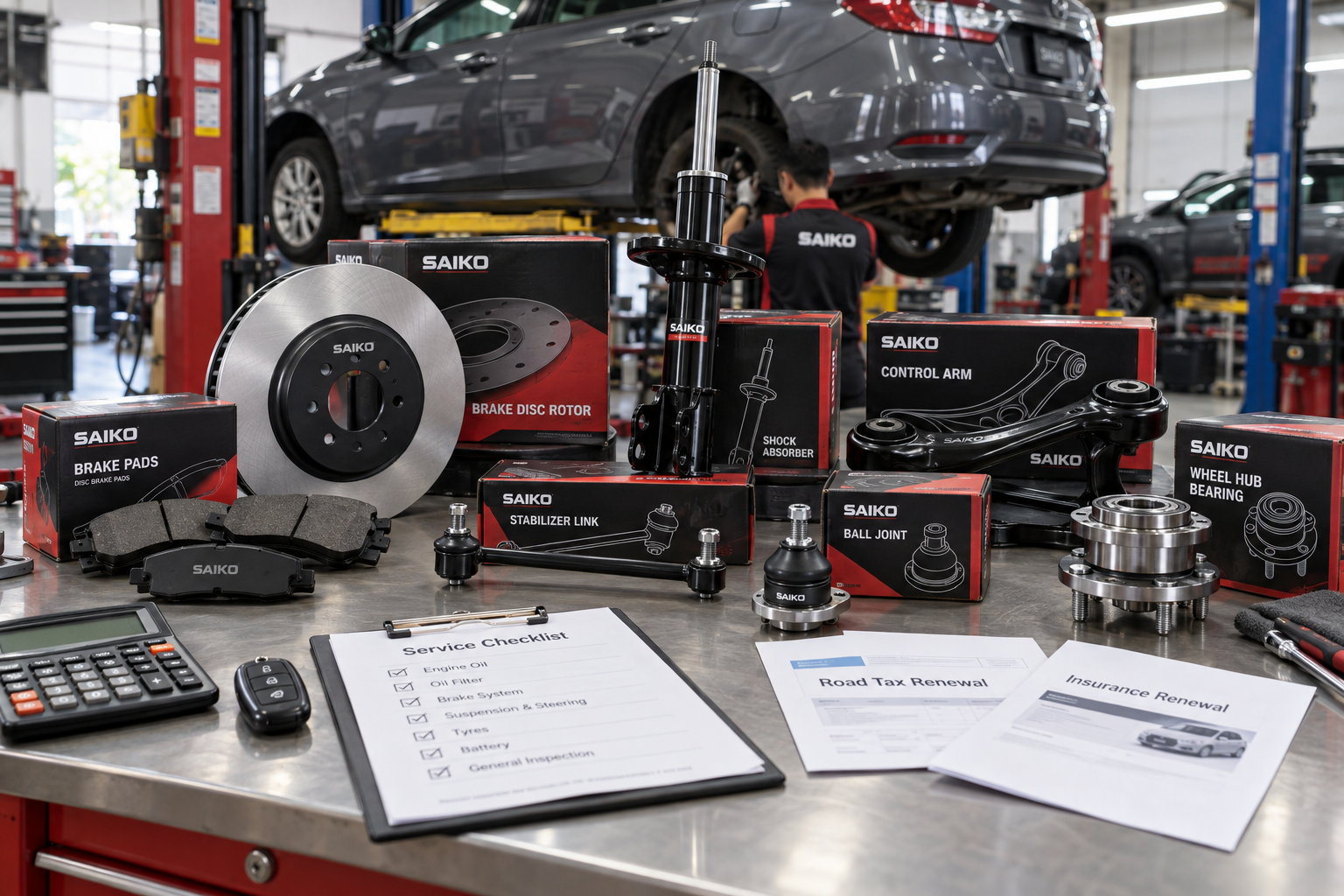
Road Tax Is Only the Start: Budgeting for the True Cost of Owning a Car
Any honest conversation about the true cost of car ownership in Malaysia has to start with the basics: road tax, insurance and a car that's fit to be on the road. A striking enforcement figure released this week is a reminder that even those basics are not always taken care of.
On 27 September 2026, Bernama reported that the Road Transport Department (JPJ) has seized 3,790 luxury vehicles worth approximately RM550 million under Ops Luxury, between June 2025 and 26 September 2026. Of those, 3,005 were seized in 2026 alone. Negeri Sembilan recorded the most seizures (469), followed by Selangor (410), Kuala Lumpur (382), Johor (367) and Penang (357).
JPJ Senior Director of Enforcement Datuk Muhammad Kifli Ma Hassan made a pointed observation: "What is puzzling is that lower-income groups can come forward to renew their road tax, while owners of luxury vehicles from the T20 group give various reasons for not doing so." Two days earlier, on 25 September, paultan.org reported that Selangor JPJ had seized vehicles with expired road tax and no valid insurance in separate operations.
The lesson isn't really about luxury cars. It's that owning any vehicle comes with recurring responsibilities, and the costs that don't appear on the sticker price are the ones most likely to be pushed back.
The purchase price or monthly instalment is only one part of the picture. A realistic ownership budget covers three layers:
The first two are predictable and easy to diarise. The third is where many owners get caught, because chassis parts wear gradually and the bill tends to arrive all at once when several components reach the end of their life together.
Suspension, steering and brake components do the hardest physical work on any car. They carry its weight, absorb every pothole and speed bump, and turn steering and brake inputs into real-world control. On Malaysian roads, with heavy rain, heat and uneven surfaces, that work never stops.
Planning for these parts in advance has clear advantages:
A useful reference point: SAIKO's workshop guidance recommends reviewing a suspension kit every 50,000 km or two years, and coil springs at around 100,000 km, adjusted for how and where you drive.
You don't need to be a mechanic to spot the early signs. Watch and listen for:
Brake pads and discs should be inspected and replaced in axle pairs, with thickness, uneven wear and hardware condition assessed together. The same "whole system" thinking applies to suspension: every chassis component is part of one ecosystem, and compromising one part compromises overall safety.
Keeping a car legal, safe and affordable doesn't require expensive shortcuts. It requires consistency.
On that last point, durability pays. In SAIKO's own 7.0 kN load cycle test, a SAIKO ball-joint-style part completed 247,274 cycles with no damage, versus 100,000 cycles for the OEM part and 50,000 cycles for an unnamed aftermarket competitor tested. A part that lasts longer means fewer replacements, less workshop time and more predictable ownership costs.
JPJ's Ops Luxury figures are a reminder that compliance is non-negotiable, whatever the value of the car. But the most responsible owners go one step further: they treat maintenance as part of the cost of driving, not an optional extra.
SAIKO has supplied quality-controlled automotive replacement parts since 2007, with coverage for more than 400 vehicle models and a nationwide dealer network. Our promise is simple: reliable safety, exceptional comfort and outstanding value, built part by part.
Find the right steering, suspension and brake parts for your car at saiko.com.my
Recent Posts
Parts Availability Is the New Aftersales Battleground. Here's Why It Matters to Every Driver
05 Oct 2026
Budget 2027 and the Push for Local Components: What It Means for Every Car on the Road
30 Sep 2026
An Eight-Year Warranty Is Great News. Here's What It Won't Replace
28 Sep 2026
.png "Image")
Plug-In Hybrids Are Going Mainstream. Here Are the Parts That Still Need Care
25 Sep 2026
.png "Image")
Budi Diesel Transfers Now Cover Any Actual User. Who's Looking After the Vehicle?
24 Sep 2026
 Whatsapp Us NowSaiko Automotive

