


.png "Image")
BYD's Tanjung Malim U-Turn: What It Really Means for Your Car's Parts
Malaysia's electric vehicle story took an unexpected turn this month. After more than a year of signalling plans to build its own assembly plant in Tanjung Malim, BYD confirmed on 11 September 2026 that it is scrapping that plan and will instead work with an existing local CKD (completely knocked down) partner to assemble its models in Malaysia. BYD Malaysia's managing director was quick to reassure the market that the company is "here to stay," framing the pivot as a faster, less capital-intensive route to local assembly rather than a retreat. For EV parts Malaysia owners and workshops need to service, the headline detail isn't really about factories — it's about what happens to the car once it's already on the road.
It's easy to get caught up in the manufacturing drama: who owns the plant, which partner gets the contract, how quickly CKD lines can be retooled. But whether a BYD model rolls out of a purpose-built BYD factory or an established Malaysian CKD line, the fundamentals of what keeps that car safe and comfortable on Malaysian roads don't change. Control arms still wear. Bearings still take a beating on patched-up secondary roads. Steering racks still need to stay precise. The assembly story shapes price, availability, and how quickly new models reach showrooms — it has very little bearing on how well-built the aftermarket ecosystem around those cars will be.
CKD assembly has long been the backbone of Malaysia's automotive manufacturing policy, giving locally assembled vehicles a cost advantage over fully imported (CBU) units under the National Automotive Policy framework. BYD's move to partner with an established CKD operator rather than build from scratch suggests the brand is prioritising speed to market and cost efficiency over long-term vertical control — a pragmatic call, and one other EV entrants are likely watching closely.
For the broader industry, this matters because:
This is the question that actually matters to someone who already owns, or is about to buy, an EV in Malaysia. The honest answer is: not directly, but indirectly, yes.
CKD assembly done well can mean tighter quality control on local builds — panel gaps, fitment, and workmanship benefit from a plant that has already ironed out its processes on other models. But suspension geometry, steering components, and braking hardware are engineering decisions made by the manufacturer long before assembly begins. What CKD transition periods do sometimes affect is:
This is exactly where a well-established aftermarket supplier earns its keep — bridging the gap between a brand-new model's launch hype and the point where parts support catches up.
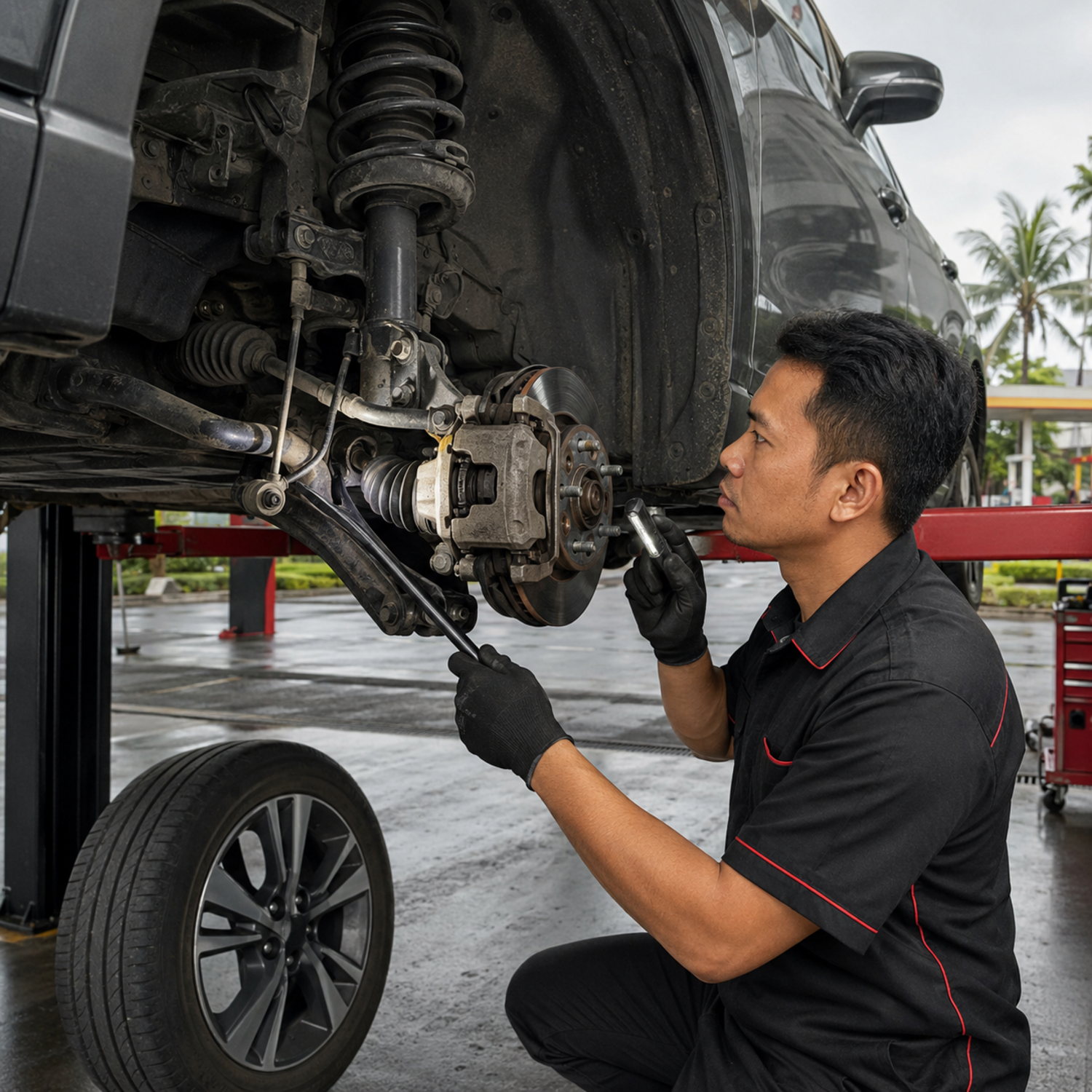
A common misconception is that EVs are somehow lower-maintenance across the board because they lack a combustion engine. That's true for oil changes and timing components, but it's misleading when it comes to the chassis. EVs are typically heavier than their petrol equivalents due to battery weight, which places more sustained load on:
Heavier cars, cornering with instant torque delivery, put more stress through these components over time — not less. Malaysian road conditions, with their mix of highway cruising and pothole-riddled urban streets, don't discriminate between an EV and an internal combustion vehicle when it comes to wear and tear.
Whether your BYD, or any other CKD-assembled EV, comes from a purpose-built plant or an established local partner, the practical takeaway is the same: plan for chassis maintenance the same way you would with any vehicle, and don't assume "new EV" means "nothing to check."
Manufacturing headlines like BYD's Tanjung Malim reversal will keep coming as Malaysia's EV market matures — new entrants testing CKD versus CBU strategies, policy incentives shifting, and partnerships forming and dissolving. What doesn't need to be uncertain is where owners turn for reliable replacement parts once the initial warranty period passes or when genuine parts are backordered.
SAIKO has supplied quality-controlled automotive replacement parts since 2007, with coverage across more than 400 vehicle models and a nationwide dealer network, giving Malaysian drivers and workshops a dependable option regardless of how — or where — their car was assembled. As the EV segment grows and diversifies, that kind of consistency is worth more than ever.
Have questions about parts support for a newer EV model in your workshop or garage? Get in touch with SAIKO at saiko.com.my to find a dealer near you.
Recent Posts
.png "Image")
What BYD's Talks With Sime Motors Mean for Malaysia's EV Parts Ecosystem
11 Sep 2026
.png "Image")
Proton's Best Export Month Since 2011 — What It Means for Malaysia's Parts Supply Chain
09 Sep 2026
.png "Image")
Vehicle Theft in Malaysia: Why Genuine Replacement Parts Matter More Than Ever
07 Sep 2026
.png "Image")
Isuzu's 1,756km One-Tank Run and the Suspension Secret Behind Fuel Efficiency
05 Sep 2026
Bigger Budi95 Quota, More Mileage: What It Means for Your Car's Suspension
03 Sep 2026
 Whatsapp Us NowSaiko Automotive

