


Budget 2027 and the Push for Local Components: What It Means for Every Car on the Road
With the national budget due to be tabled on 9 October, attention across the industry is turning to how Budget 2027 EV incentives in Malaysia will be shaped, and to a quieter theme that could matter just as much to everyday drivers: where the parts in our cars come from.
On 23 September 2026, BusinessToday reported CIMB Securities' view that the upcoming budget could clarify the government's electric vehicle incentive framework, as well as a proposed levy on EV sales to fund public charging infrastructure. The same report noted that tax exemptions for locally assembled (CKD) EVs remain in place until 31 December 2027, while incentives for imported EVs were not extended. CIMB expects future incentives to become "more targeted, with greater emphasis on technology transfer, local component sourcing and deeper participation by Malaysian companies."
That last point deserves a closer look, because the conversation about incentives is ultimately a conversation about supply chains, and supply chains decide how easily and affordably cars can be kept on the road.
It's worth separating confirmed facts from expectations, since nothing is final until the budget is tabled. According to the BusinessToday report:
The report also cited an industry forecast of 800,000 total vehicle units for 2026. Whatever Budget 2027 ultimately contains, the direction of travel is clear: a larger, more diverse vehicle population, with more electrified models and more brands competing for buyers.
For most car owners, "local component sourcing" sounds like an issue for factories and policymakers. In practice, it shapes the ownership experience in several ways:
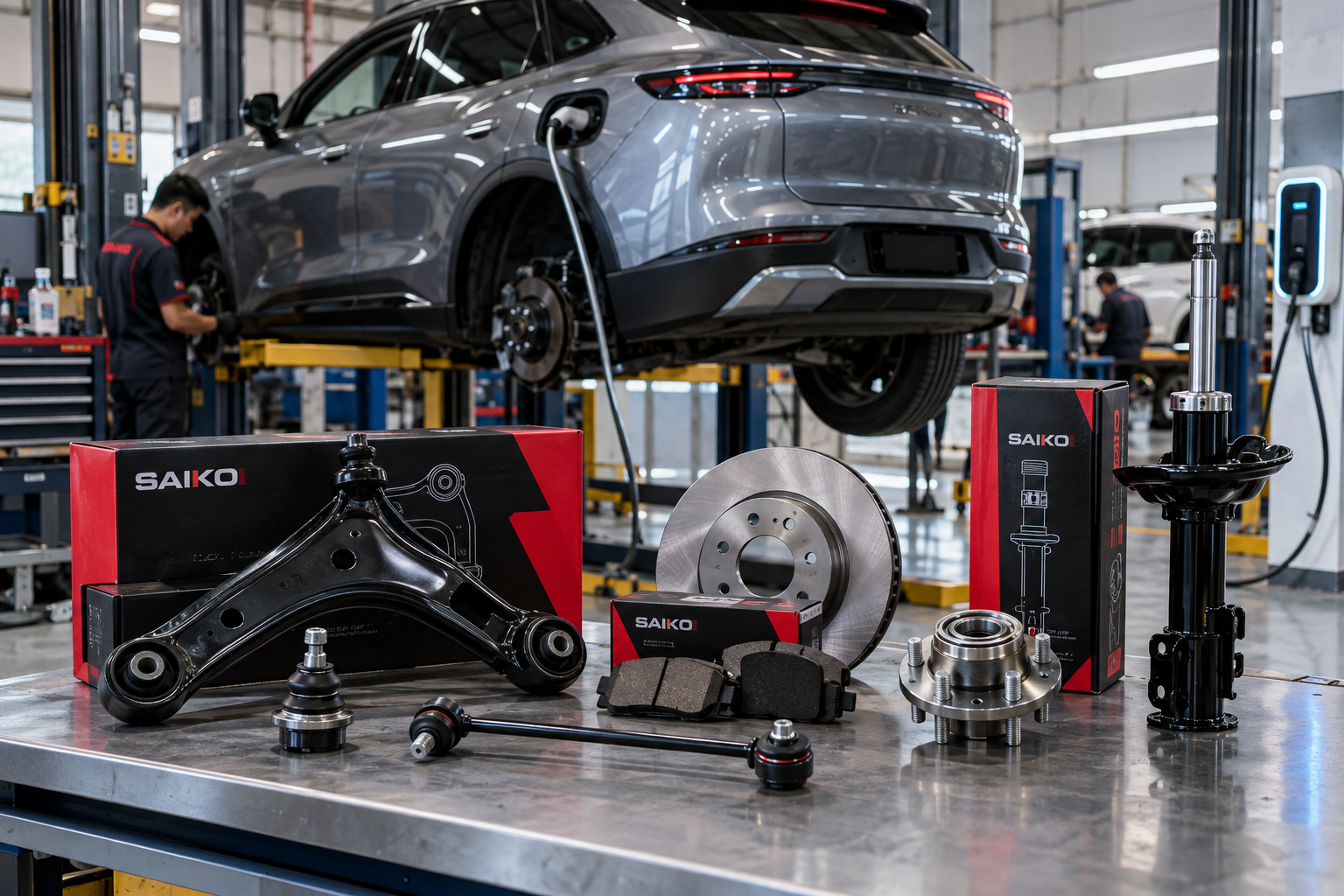
Malaysia's vehicle parc is also becoming more varied. Alongside the national brands and long-established Japanese and Korean models, owners now drive a growing mix of Chinese, European, hybrid and fully electric vehicles. Every one of those cars will eventually need replacement brakes, suspension joints, wheel bearings and steering components, regardless of what powers it.
One common misconception is that electrified cars barely need maintenance. It's true that EVs do away with oil changes and many engine-related service items. But the chassis is still very much there, and in some respects it works harder.
In other words, as EV adoption grows, so does demand for well-engineered steering, suspension and brake components that can handle higher loads over a long service life.
Until the budget is tabled, the sensible approach is to follow the announcements closely without assuming specific outcomes. For owners and workshops, a few practical points hold regardless of policy detail:
Budget 2027 may bring welcome clarity on EV incentives and charging, and the emphasis on local component sourcing points toward a more resilient automotive ecosystem. For drivers, the measure of success will be simple: can they keep their cars safe, comfortable and affordable to run, year after year?
SAIKO has supplied quality-controlled automotive replacement parts since 2007, with coverage for more than 400 vehicle models across Japanese, Korean, Malaysian and other passenger vehicles, supported by a nationwide dealer network and local warranty support. As Malaysia's vehicle mix evolves, our focus stays the same: parts that fit precisely and last, backed by people who understand local roads. It's work our growing team takes seriously, because every part we supply ends up on a real car carrying real families.
Explore SAIKO's steering, suspension and brake range at saiko.com.my
Recent Posts
An Eight-Year Warranty Is Great News. Here's What It Won't Replace
28 Sep 2026
.png "Image")
Plug-In Hybrids Are Going Mainstream. Here Are the Parts That Still Need Care
25 Sep 2026
.png "Image")
Budi Diesel Transfers Now Cover Any Actual User. Who's Looking After the Vehicle?
24 Sep 2026
.png "Image")
SUV Sales Just Hit a 2026 High. Here's What That Means for Suspension Care
23 Sep 2026
.png "Image")
Puspakom Goes Nearly 24/7 — Is Your Car Actually Ready for Inspection?
18 Sep 2026
 Whatsapp Us NowSaiko Automotive

