


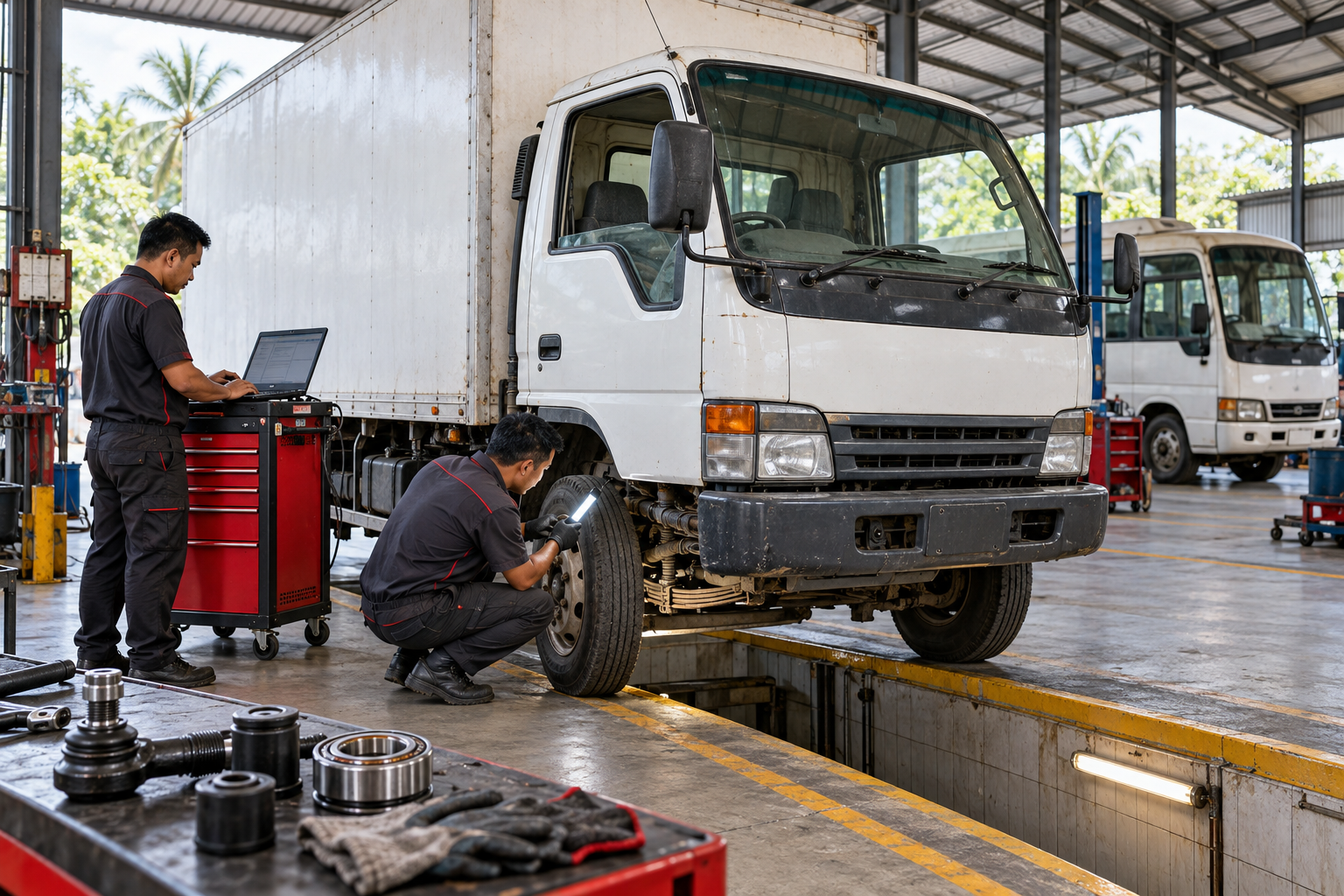
Malaysia's Automotive Workforce Is Growing. Here's Why Skills Matter for Every Repair
Every car on Malaysian roads depends on two things: well-made parts and the skilled people who build, fit and service them. That second half of the equation is now getting serious attention. The growth of the automotive workforce in Malaysia is turning into a national priority, and it matters to drivers as much as to the industry, because the quality of a repair depends on the people doing it.
Two announcements in the last week of October 2026 point in the same direction. On 27 October, The Star reported Deputy Investment, Trade and Industry Minister Sim Tze Tzin telling the Dewan Rakyat that RM7 billion in investments had been realised at the Automotive High-Tech Valley (AHTV) in Tanjung Malim since 2018. A day later, Bernama reported Deputy Prime Minister Datuk Seri Ahmad Zahid Hamidi outlining TVET 2.0, a 2026–2035 plan to set a new direction for technical and vocational education and training.
Investment headlines often focus on factories and ringgit. The more telling figures in The Star's report are about people:
According to the report, recent and ongoing work includes an EV manufacturing plant, expanded engine production, metal stamping facilities, a logistics and warehousing centre, and an R&D testing laboratory. Each of those needs engineers, technicians, quality inspectors and logistics specialists.
TVET 2.0 addresses the other side of that demand: making sure Malaysians have the skills to fill these roles. According to Bernama, the plan was shaped through engagement sessions in Kuala Lumpur, Penang, Johor and Pahang. One proposal is a National Competency Index to measure workforce competency across knowledge, skills and attitude, led by the Ministry of Higher Education through MyRIVET at Universiti Tun Hussein Onn Malaysia.
Ahmad Zahid described the index as "an important step towards identifying skills gaps more systematically," and said "TVET will continue to be strengthened as a preferred career pathway."
For the automotive sector, measuring competency is especially relevant. Modern vehicles combine mechanical systems with electronics, driver assistance features and, increasingly, electric powertrains. The skills needed to diagnose and repair them keep evolving.
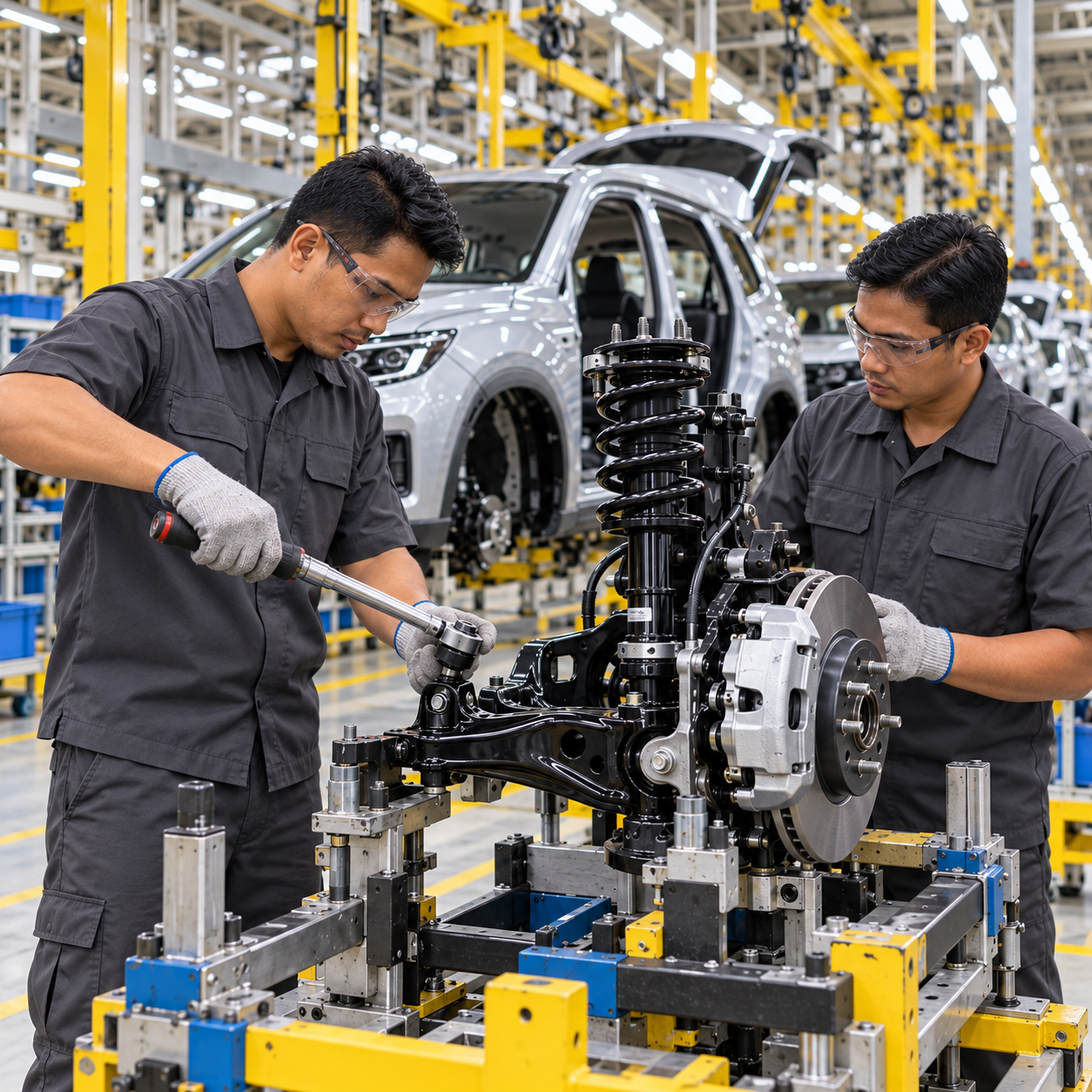
How do skills affect the safety of your car? It is easy to think of car safety in terms of parts alone. But even the best replacement part can underperform if it is fitted incorrectly. Chassis components are a clear example, because they work as one connected system:
A skilled technician diagnoses the real cause of a problem, not just the symptom. A knocking noise could come from a stabilizer link, a strut mount or a worn ball joint. Getting that right the first time saves owners money and keeps the car safe.
Most attention goes to manufacturing jobs, but the aftermarket is a large employer in its own right. Every vehicle assembled at AHTV or elsewhere in Malaysia will need years of servicing and replacement parts once it leaves the showroom. That creates steady demand across:
As the vehicle parc grows and diversifies, these roles become more specialised and more valuable. Brands that invest in technical knowledge, and in supporting the workshops that use their products, help raise standards across the industry. SAIKO's own approach includes local warranty support and an experienced technical team for fast response to dealers and workshops.
Malaysia's automotive ambitions rest on people as much as on plants. Investment at AHTV and the direction set by TVET 2.0 both point to an industry that needs more skilled hands, from the assembly line to the neighbourhood workshop. For drivers, the result should be better repairs, more accurate diagnosis and safer vehicles.
SAIKO has supplied quality-controlled automotive replacement parts since 2007, with coverage for more than 400 vehicle models and a nationwide dealer network. Quality parts in the hands of skilled technicians is what keeps Malaysian cars safe, comfortable and reliable for the long run.
Learn more about SAIKO and find your nearest dealer at saiko.com.my
Recent Posts
21,624 Protons in One Month: What a Growing National Fleet Means for Parts and Service
10 Nov 2026
Speed Limiter Retrofits and the Workshop Bottleneck: Lessons for Every Older Vehicle on Malaysian Roads
04 Nov 2026
The Monsoon Has Arrived. Is Your Car Ready to Stay in Control on Wet Roads?
02 Nov 2026

RON95 at RM1.99: Cheaper Kilometres Still Wear Out Parts
30 Oct 2026
Built Here: What CKD Assembly Means for Malaysia's Parts and Service Ecosystem
28 Oct 2026
 Whatsapp Us NowSaiko Automotive

