


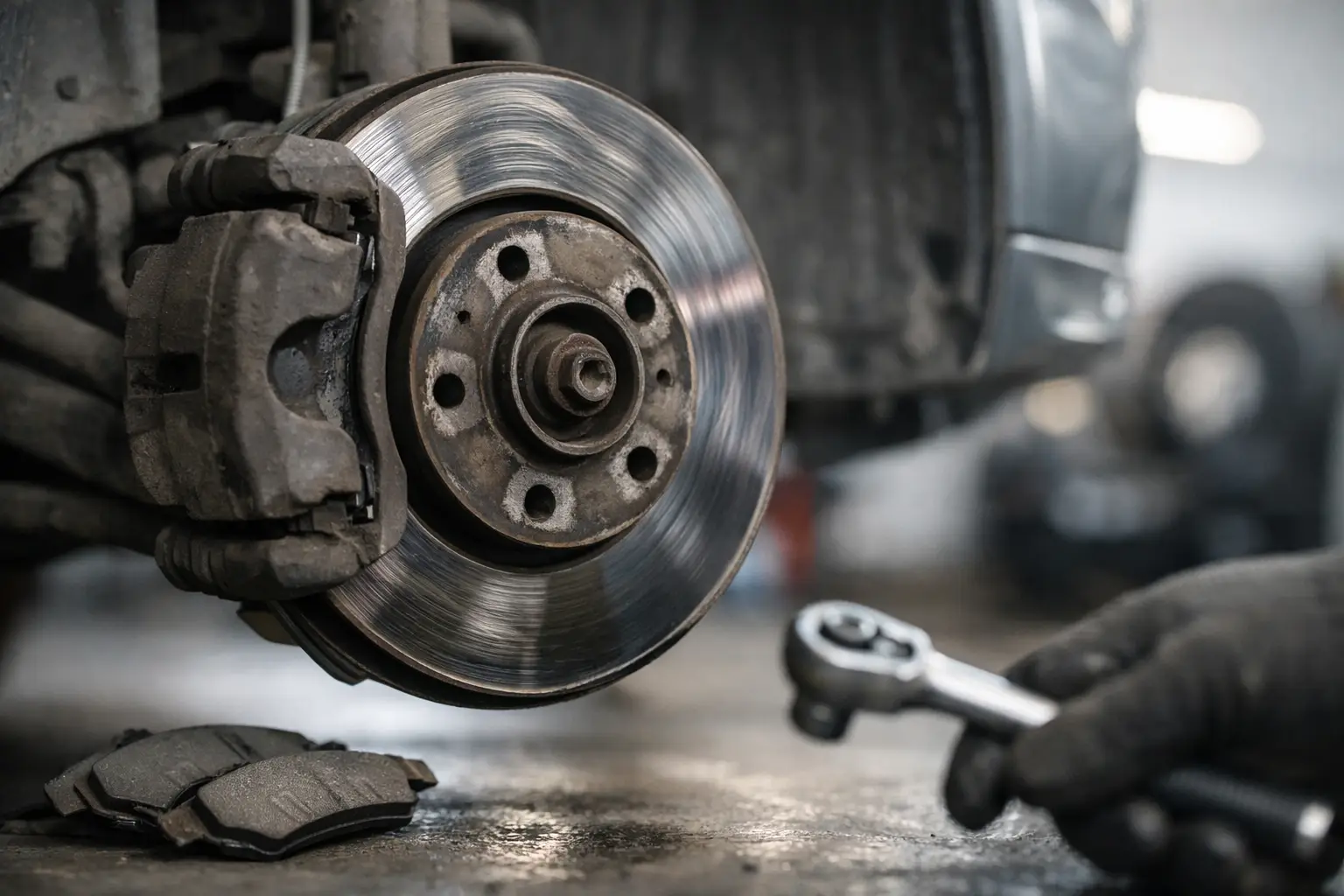
Why Do Brake Discs Warp? Causes and Fixes
A steering wheel that shakes when you brake from highway speed is more than an annoyance. It can make the car feel unsettled, increase stopping distance in severe cases, and leave drivers asking: why do brake discs warp? The short answer is excessive heat and uneven braking surfaces, but the full explanation is more useful than the common phrase “warped discs.”
In many cases, a brake disc has not physically bent like a warped pan. Instead, it has developed uneven thickness, localized pad material deposits, or excessive runout. These conditions create the same familiar symptom: brake pedal pulsation, steering vibration, or a shudder through the vehicle when the brakes are applied.
Brake discs are designed to operate under high temperatures. During repeated or hard braking, the friction between brake pads and discs converts the vehicle’s speed into heat. A quality disc can handle normal thermal cycles, but it cannot compensate for poor installation, worn related parts, incorrect bedding-in, or repeated overheating.
True disc distortion can happen after extreme heat exposure, especially when a hot disc is cooled unevenly. However, what workshops often call a warped disc is more commonly disc thickness variation, also known as DTV. This means small areas of the disc are thicker than others. As the brake pads pass over these areas, the clamping force changes slightly, producing a pulse that the driver can feel.
Another cause is uneven transfer of brake-pad friction material onto the disc face. This creates high-friction patches that mimic a thickness issue. The distinction matters because a correct diagnosis helps a workshop decide whether resurfacing is appropriate, replacement is necessary, or another fault is causing the vibration.
Long downhill driving, repeated high-speed stops, towing, carrying heavy loads, or aggressive stop-and-go use can push brake temperatures beyond their normal operating range. Heat alone is not always a problem, but excessive heat can damage the disc surface, degrade the pad compound, and create uneven material transfer.
A common situation occurs when a driver brakes hard and then keeps the brake pedal pressed while stopped. The hot pad remains clamped against one area of the disc, which can leave a concentrated deposit. This is more likely after spirited driving, mountain routes, or traffic conditions that demand repeated braking.
Wheel nuts tightened unevenly or beyond the vehicle manufacturer’s specification can distort the disc hat or hub mounting area. The distortion may be microscopic, but braking systems are sensitive to very small variations.
Impact wrenches are useful in a busy workshop, but final tightening should be done in a star pattern with a calibrated torque wrench. This spreads clamping force evenly across the wheel and helps prevent disc runout after installation.
The brake disc must sit perfectly flat against the wheel hub. Rust scale, dirt, paint buildup, or a burr on the hub face can hold the disc slightly out of position. Once the wheel is fitted and the car is driven, this small misalignment can lead to lateral runout and eventually uneven disc wear.
This is particularly relevant in humid and wet conditions, where corrosion can build up behind the disc. Cleaning the hub face thoroughly before fitting a new disc is a basic step that protects the life of the replacement part.
A brake caliper should release freely after braking. If the piston sticks, slide pins seize, or a flexible brake hose internally restricts fluid return, one pad may remain in contact with the disc. That constant contact creates excess heat and uneven wear.
Signs include a burning smell, a wheel that feels unusually hot, the car pulling to one side, reduced fuel economy, or one brake pad wearing much faster than the other. Replacing discs and pads without fixing the sticking caliper will usually bring the problem back.
Brake discs, pads, and caliper hardware work as one system. A low-quality disc may have inconsistent material properties or poor machining, while an unsuitable pad compound can transfer material unevenly under high temperature. Cheap parts can appear to offer savings at the counter but may create repeat labor, customer complaints, and premature replacement costs.
For workshops and retailers, reliable aftermarket braking parts should provide accurate fitment, stable friction performance, correct dimensions, and consistent manufacturing quality. The lowest purchase price is not always the best value when it leads to vibration complaints or comebacks.
Not every brake vibration comes from the discs. Worn control arm bushings, ball joints, tie rod ends, wheel bearings, or steering components can allow excessive movement when braking. A disc issue often causes a pulse through the brake pedal, while worn front-end components may make steering shake more noticeable.
A careful inspection is essential before recommending parts. Replacing brake discs may improve the symptom temporarily, but it will not correct loose suspension or steering joints.
The most recognizable symptom is vibration through the steering wheel during braking, usually from moderate to higher speeds. A pulsing brake pedal can also point to disc thickness variation. Some drivers notice a thumping sensation, squealing, grinding, or reduced braking confidence.
Symptoms can help narrow down the location. Vibration mainly felt through the steering wheel often involves the front brakes or front suspension. A pulse felt more through the seat or vehicle floor may involve the rear brakes. Still, this is only a starting point. Proper measurement is the dependable way to confirm the fault.
A professional diagnosis should go beyond a road test. The technician should inspect pad wear, caliper movement, slide pins, brake hoses, hub condition, wheel bearings, and steering and suspension joints. The disc surface should be checked for heat spots, deep scoring, cracks, corrosion, and uneven deposits.
Disc runout can be measured with a dial indicator, while disc thickness should be checked at several points using a micrometer. Measurements must be compared with the vehicle specification and the disc’s minimum thickness marking. If the disc is below minimum thickness, cracked, badly heat-checked, or has excessive variation, replacement is the safer choice.
It also makes sense to inspect the wheel hub runout before fitting new discs. If the hub itself is not running true, a new disc can develop the same problem quickly.
Resurfacing may be an option when the disc remains above its minimum thickness after machining, has no cracking or serious heat damage, and the workshop has equipment that can produce an accurate finish. It can remove minor deposits and correct limited thickness variation.
Replacement is generally the better option for discs that are thin, severely scored, corroded, overheated, cracked, or repeatedly causing vibration. Brake discs should normally be replaced in axle pairs, along with compatible brake pads. Reusing old pads on new discs can transfer existing uneven material and compromise bedding-in.
For dependable everyday repairs, SAIKO supplies quality-controlled brake discs and brake pads with coverage for a broad range of passenger vehicles, helping workshops match the right components to the vehicle and avoid unnecessary fitment issues.
Prevention starts during installation. The hub face and disc mounting surface should be cleaned, the disc should be checked for runout, and wheel nuts should be torqued evenly to specification. Calipers, slide pins, and pads must move freely, while worn hardware should be replaced rather than forced back into service.
Drivers can help by avoiding unnecessary hard braking and by allowing brakes to cool after sustained high-load use. After a hard stop, if it is safe to do so, avoid holding the pedal firmly for a long time with very hot brakes. New pads and discs should also be bedded in according to the component supplier’s recommendations, using a series of controlled stops rather than immediate heavy braking.
Brake vibration is a signal to inspect the whole system, not simply a reason to change discs. A properly fitted disc, compatible pad set, clean hub, free-moving caliper, and sound suspension components give drivers the smooth, confident braking performance they expect every time they press the pedal.
Recent Posts

A Record Year on the Road Means a Record Year Ahead for Maintenance
12 Oct 2026
A Rear Axle Recall Is a Reminder: The Back of the Car Matters Too
12 Oct 2026
Scrap or Maintain? What a Proposed Old-Car Rebate Means for Malaysia's Older Vehicles
09 Oct 2026
Price Transparency Is Coming to the Parts Counter. Here's What Else You Should Check
07 Oct 2026

Parts Availability Is the New Aftersales Battleground. Here's Why It Matters to Every Driver
05 Oct 2026
 Whatsapp Us NowSaiko Automotive

