


Aftermarket Brake Pads Malaysia Buying Guide
A brake pad purchase is not a place to chase the lowest price. Malaysian drivers deal with stop-start traffic, sudden rain, steep parking ramps, and long highway runs that build heat quickly. The right aftermarket brake pads Malaysia motorists choose should deliver predictable stopping power, fit the caliper correctly, and remain dependable over daily driving conditions.
For workshops and spare parts retailers, brake pads also affect customer confidence. A pad that squeals immediately, creates excessive dust, wears unevenly, or does not fit properly can turn a routine service into a return visit. Choosing a quality-controlled replacement helps protect both vehicle safety and workshop reputation.
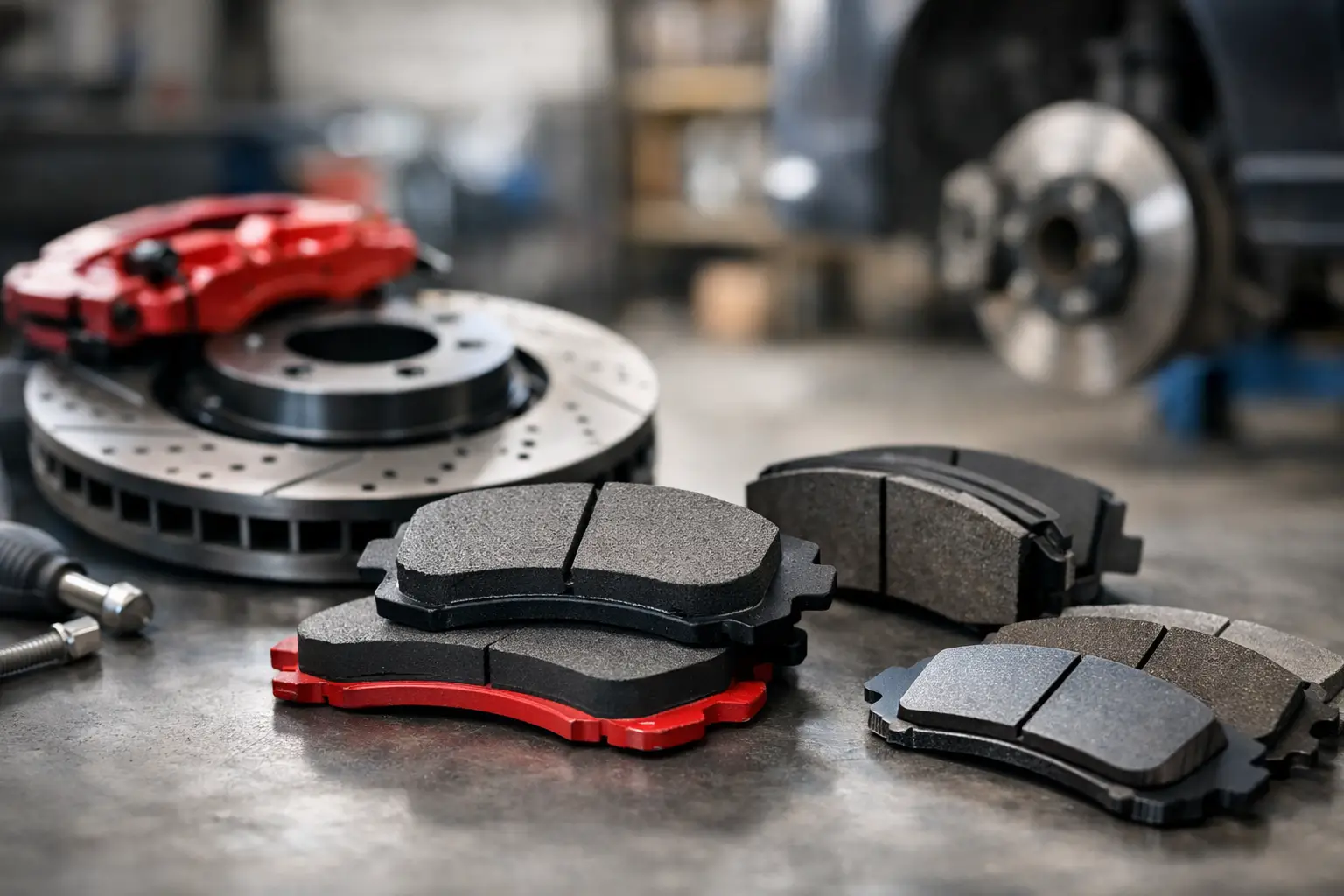
A reliable aftermarket brake pad is designed to do more than stop the car. It must work with the brake disc, caliper, shims, and hardware as a complete system. Its friction material needs to perform consistently when cold, in normal traffic, and after repeated braking. It should also resist cracking, separation, and rapid wear.
The best choice depends on the vehicle and how it is used. A compact city car generally needs quiet operation, clean braking, and good everyday wear. A heavier SUV, MPV, or commercial-use passenger vehicle may need stronger heat resistance and stable pedal feel when carrying passengers or traveling at highway speeds.
A dependable pad should offer the following practical qualities:
Low-cost pads can appear similar from the outside, but differences in friction compound, backing plate accuracy, adhesive quality, and manufacturing control become apparent after installation. Poorly made pads may cause squealing, vibration, harsh rotor wear, or reduced braking confidence.
Brake pad compounds are not identical. Understanding the main categories helps car owners, mechanics, and retailers recommend a suitable replacement instead of selecting only by price.
| Pad type | Best suited for | Main advantages | Trade-offs | |---|---|---|---| | Organic or non-asbestos organic | Light daily driving | Usually quiet and economical | Can wear faster under repeated heat | | Semi-metallic | Mixed city and highway use | Good heat handling and dependable bite | May create more dust or rotor wear | | Ceramic | Drivers prioritizing low noise and cleanliness | Low dust, quiet operation, stable daily feel | Often costs more and is not necessary for every car | | Heavy-duty formulations | Larger passenger vehicles and demanding use | Better resistance to heat and fade | May feel firmer and can be less refined if poorly matched |
There is no single pad material that suits every Malaysian vehicle. A Perodua, Proton, Honda, Toyota, Nissan, Kia, Hyundai, Mazda, or continental passenger car may have different caliper designs, pad shapes, vehicle weights, and original braking characteristics. The correct application matters as much as the pad compound.
For normal commuting, a quality OE-standard replacement is usually the practical answer. It provides familiar braking behavior without paying for performance features the vehicle may never use. For drivers who regularly carry a full load, travel through hilly areas, or spend long hours in traffic, choosing a pad with stronger heat stability can be worthwhile.
A pad listed as “close enough” is not good enough. Accurate fitment affects how the pad moves in the caliper bracket, how evenly it contacts the disc, and whether it retracts correctly after braking. An incorrect pad shape can cause noise, dragging, uneven wear, and reduced braking efficiency.
Before ordering, workshops should verify the vehicle make, model, year, engine variant, and brake system specification. Some vehicles within the same model range use different front or rear calipers. A change in production year, trim level, disc diameter, or ABS configuration can also affect the correct part number.
Car owners should be cautious when buying pads based only on photographs or generic vehicle descriptions. The safest approach is to confirm the application through a knowledgeable parts supplier or workshop. If the old pads are available, comparing their shape and dimensions can provide an additional check, but it should not replace proper catalog verification.
SAIKO has supplied quality-controlled automotive replacement parts since 2007, with coverage for more than 400 vehicle models and a nationwide dealer network. For workshops and retailers, this local availability and application support can make it easier to source brake components with the right fitment for Japanese, Korean, Malaysian, and other passenger vehicles.
Brake pad life varies widely. Some pads may last 20,000 miles, while others can provide much longer service depending on traffic, driving habits, vehicle weight, and brake condition. In congested areas such as Kuala Lumpur and the Klang Valley, frequent braking can wear pads faster than long-distance highway driving.
Do not wait for a grinding sound before arranging an inspection. Grinding can mean the friction material is already worn through and the backing plate is contacting the brake disc. At that stage, the repair may require both pads and discs.
Common signs that brake pads need attention include a high-pitched squeal, a scraping or grinding noise, longer stopping distances, steering wheel vibration during braking, a brake warning indicator, or a brake pedal that feels unusual. Pulling to one side can also point to a sticking caliper, uneven pad wear, or another brake system issue.
Visual inspection remains the most reliable method. A workshop can check the remaining friction material, pad wear pattern, disc surface, caliper slide pins, shims, and brake fluid condition. Replacing pads without examining the surrounding components can leave the original problem unresolved.
New pads cannot compensate for damaged brake discs. If discs are deeply scored, below minimum thickness, warped, heavily corroded, or affected by heat spots, they can cause vibration and prevent the new pad from bedding in evenly. Depending on the disc condition and manufacturer specification, replacement may be safer than machining.
Installation quality is equally important. The technician should clean the caliper contact points, inspect and lubricate slide pins where required, install the correct shims or hardware, and torque fasteners to specification. Grease must never touch the pad friction surface or brake disc.
After installation, bedding in the pads helps establish an even transfer layer between the pad and disc. The exact procedure depends on the pad manufacturer, but it commonly involves a series of controlled moderate stops followed by a cooling period. Hard braking immediately after installation can overheat fresh pads and leave uneven deposits on the disc, which may feel like brake judder.
The cheapest brake pads may look like a saving at the counter, but frequent replacements, noisy operation, disc damage, or customer comebacks can cost more over time. A better value decision considers service life, fitment accuracy, braking consistency, and the availability of support if an application question arises.
For retailers, stock products that cover fast-moving local models and come from a supplier with consistent part identification. For workshops, select pads that install correctly and perform predictably, reducing time spent resolving noise or fitment complaints. For car owners, choose a part matched to the actual vehicle and driving pattern rather than an unverified universal option.
Brake pads should also be replaced by axle. Installing new pads on only one front wheel or one rear wheel can create uneven braking behavior. If one pad has worn significantly faster than the other, ask the workshop to inspect the caliper and guide hardware before fitting the replacement set.
A well-chosen brake pad gives drivers something more valuable than a low upfront price: confidence at every traffic light, downhill section, and wet-road stop. Confirm the correct application, inspect the discs and calipers at the same visit, and choose a quality-controlled replacement that suits how the vehicle is actually driven.
Recent Posts
A Record Year on the Road Means a Record Year Ahead for Maintenance
12 Oct 2026
A Rear Axle Recall Is a Reminder: The Back of the Car Matters Too
12 Oct 2026
Scrap or Maintain? What a Proposed Old-Car Rebate Means for Malaysia's Older Vehicles
09 Oct 2026
Price Transparency Is Coming to the Parts Counter. Here's What Else You Should Check
07 Oct 2026
Parts Availability Is the New Aftersales Battleground. Here's Why It Matters to Every Driver
05 Oct 2026
 Whatsapp Us NowSaiko Automotive

